Waldkapelle — History & Facts
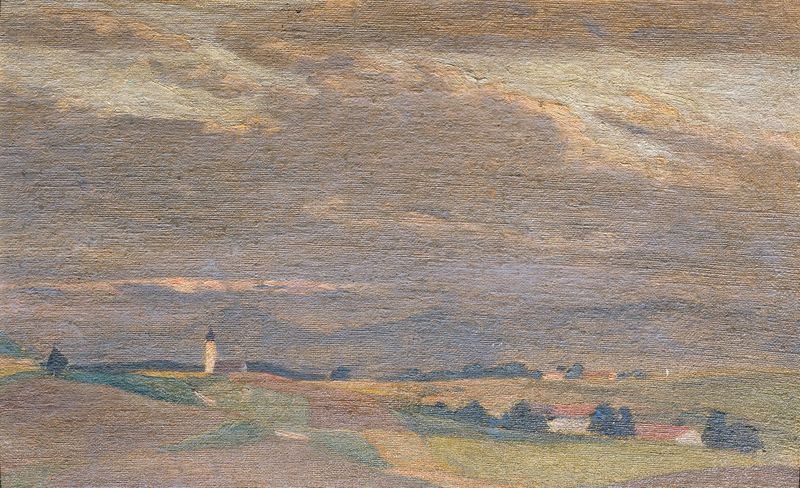
In the quiet corners of existence, where sorrow and beauty intertwine, we find a sanctuary for the heart's hidden truths. Look closely at the muted greens and browns that dominate the canvas, a reflection of nature's embrace in a remote chapel setting. Your gaze should first be drawn to the soft light filtering through the trees, illuminating the weathered stones of the structure. Notice how the play of light creates a gentle contrast with the surrounding shadows, inviting contemplation of the past and the weight of solitude upon this place. The juxtaposition of the chapel's sturdy form against the ephemeral quality of nature evokes a sense of melancholy.
The overgrown foliage hints at the passage of time, suggesting abandonment yet also a tender remembrance. Each detail—the intricate textures of the bark, the delicate way shadows dance on the chapel’s facade—speaks to our deep-seated longing for connection and sanctuary amidst life's uncertainties. Friedrich Hasslwander created Waldkapelle during a time when Romanticism was challenging the conventions of art, emphasizing emotion, nature, and individual experience. While the exact date remains unknown, Hasslwander's work reflects the broader exploration of spirituality and introspection prevalent in the 19th century.
His artistic journey was marked by a quest to depict not just landscapes, but the emotional undercurrents that resonate within them, allowing viewers to experience their own vulnerabilities through his art.