Waldweg im Herbst — History & Facts
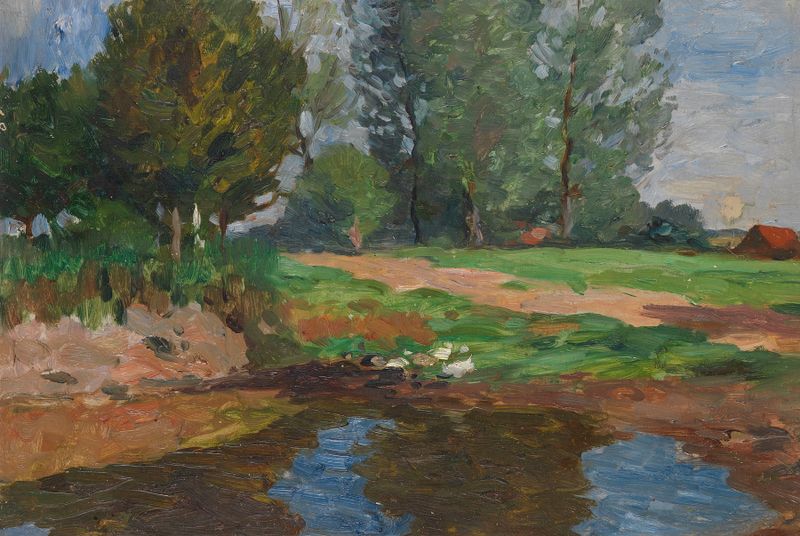
Can beauty exist without sorrow? In the quiet rustle of autumn leaves, a poignant reminder lingers: beauty is often entwined with the passage of time and the inevitability of change. Look to the left at the winding path that beckons you into the embrace of the woods, its earthy tones rich and warm against the crisp air. Notice how the artist skillfully juxtaposes golden yellows and deep russets, imbuing the scene with a sense of nostalgia. The dappled sunlight filters through the branches above, creating a mosaic of light and shadow that dances across the ground, inviting you to step into this serene moment and explore what lies ahead. As you delve deeper into the painting, observe the delicate interplay between light and shadow, which reflects the tension between joy and melancholy.
The fading leaves signify the end of a cycle, a reminder of life's transience. At first glance, the scene may appear tranquil, yet beneath the surface of this idyllic path, there lies an unspoken story of loss and renewal, of nature's eternal rhythm that echoes in the human experience. In the late 19th century, when this piece was painted, the artist found himself in a rapidly changing world—one marked by industrialization and the burgeoning of modern art movements. Creating Waldweg im Herbst around 1900, he sought to capture the fleeting beauty of nature, a reflection of his own yearning for a connection with the landscape amidst the upheaval of progress.
This artwork stands as a testament to both the beauty of nature and the complex emotions it evokes.