
Waldweiher — History & Facts
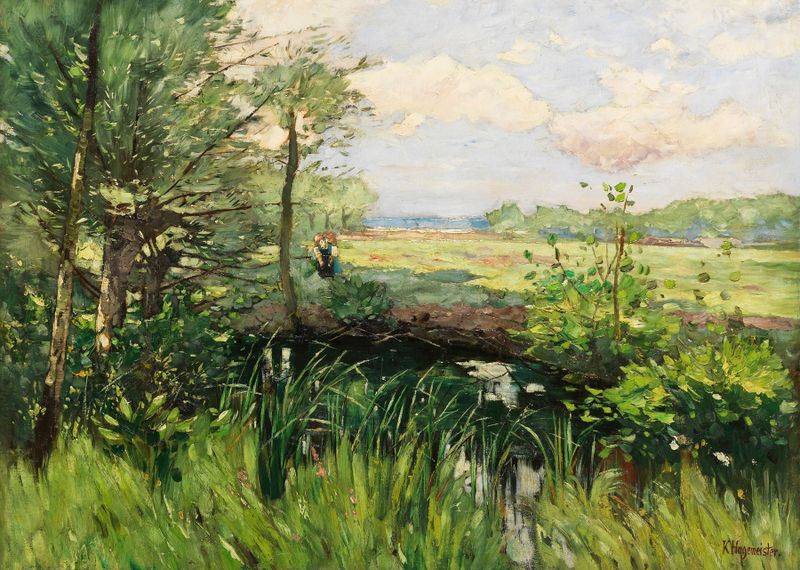
In the interplay of shadow and light, we search for meaning beyond the surface. Look closely at the serene water's edge, where gentle ripples catch the light, creating a dance of colors that blend harmoniously. Notice how the deep greens of the surrounding foliage contrast with the subtle blues and grays of the water, evoking a sense of tranquility. The placement of the trees on the canvas leads your eye inward, framing the stillness of the pond, while the soft strokes convey a palpable sense of nature's breath. Yet it is the shadows that speak the loudest in this piece.
They cast a veil over the foreground, hinting at secrets held within the depths of the water. The interplay of light and dark suggests a tension between visibility and concealment; what lies beneath the surface? The absence of figures invites the viewer into a meditative space, where time stands still, and contemplation reigns. Karl Hagemeister painted Waldweiher in 1884 during his time in Germany, a period marked by a focus on natural landscapes and the Impressionist movement's influence. Settling in the rural outskirts, he sought to capture the beauty of the natural world, striving to balance realism with poetic interpretation.
This work reflects his exploration of light, shadow, and the profound quietude found in nature, resonating with the broader artistic currents of his era.
More Artworks by Karl Hagemeister
Browse all →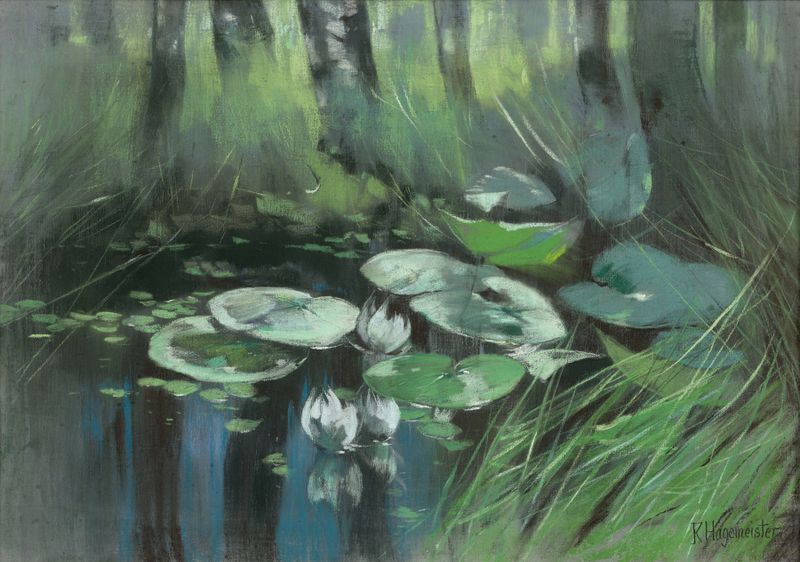
Teich in der Mark mit Seerosen
Karl Hagemeister
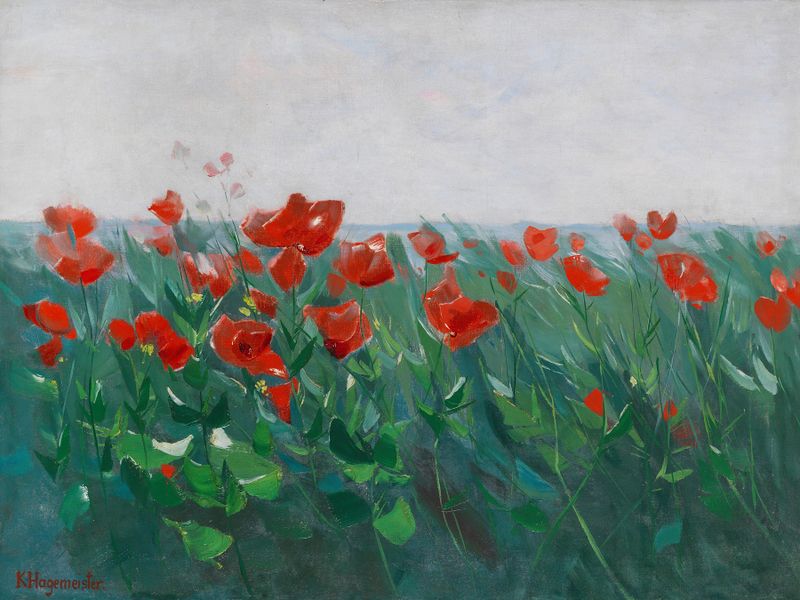
Roter Mohn am Seeufer
Karl Hagemeister

Bauernhaus bei Ferch
Karl Hagemeister
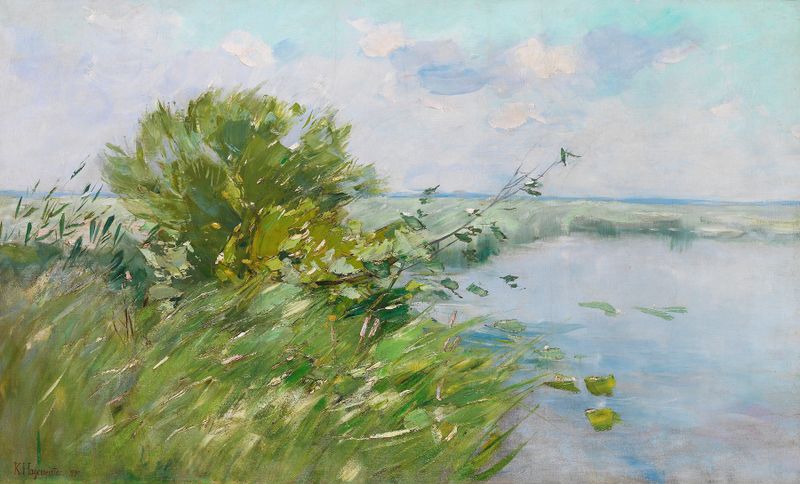
Märkische Seenlandschaft
Karl Hagemeister

Seeufer bei Ferch
Karl Hagemeister
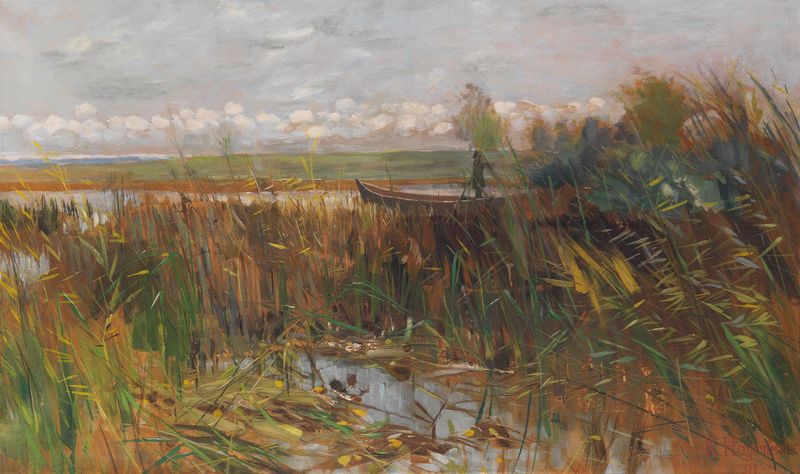
Märkische Seenlandschaft mit Entenjäger im Kahn stehend
Karl Hagemeister
Der Schwielowsee bei Kaputh – Frühling
Karl Hagemeister

Waldlandschaft mit Bachlauf (Golmer Luch)
Karl Hagemeister

Sanddornstrauch an der Meeresküste
Karl Hagemeister

Teichlandschaft mit Seerosen
Karl Hagemeister





