
Wasserfall bei Ohlstadt — History & Facts
Did the painter know this moment would outlive them? In Wasserfall bei Ohlstadt, a cascade of vibrant colors captures a fleeting essence of nature’s beauty, frozen in time yet alive with energy. Look to the center, where the waterfall tumbles down with a dynamic rush, its whites and blues contrasting sharply against the earthy greens and browns of the surrounding landscape. The sunlight spills over the scene, illuminating the spray of water and creating a shimmering effect that invites viewers to feel the cool mist on their skin. Notice how the brushstrokes vary in texture—bold and sweeping where movement is felt, softer and blended in the foliage, suggesting the harmony between chaos and tranquility. Beneath the surface, the painting embodies a profound emotional contrast.
The relentless flow of water symbolizes the passage of time, while the surrounding stillness hints at the quiet moments lost in nature's grandeur. The choice of colors—deep emeralds and bright ceruleans—evokes serenity, yet the rushing waterfall serves as a reminder of nature's untamed power. Each brushstroke is a meditation on the duality of life; beauty exists alongside the inevitable march of time. In the early 1820s, Johann Georg von Dillis painted this masterpiece during a period of Romanticism, where nature was often seen as a source of inspiration and reflection.
Living in Bavaria, he was deeply influenced by the picturesque landscapes of his homeland, which were celebrated for their idyllic and dramatic qualities. This painting emerged as part of a broader movement that sought to capture the sublime, as artists turned away from classical ideals in favor of expressing emotion and the beauty of a world ever in flux.
More Artworks by Johann Georg von Dillis
Browse all →
A Farmhouse in the Bavarian Alps
Johann Georg von Dillis

Hügelige Baumlandschaft mit Hütte
Johann Georg von Dillis
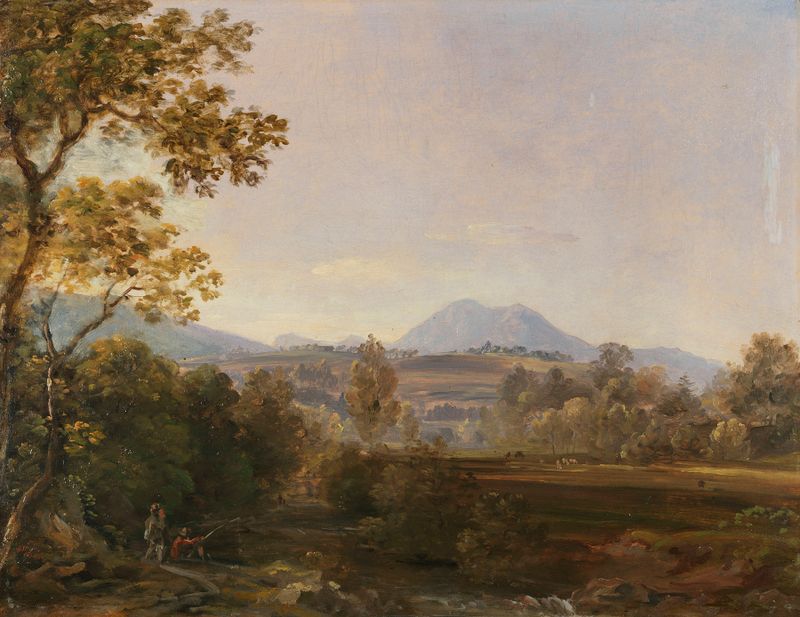
Süddeutsche Landschaft mit Wanderern
Johann Georg von Dillis

View of the Monastery in Tegernsee seen from the north-east
Johann Georg von Dillis

Blick von der Praterinsel über die Isar zum Siechenhaus auf dem Gasteig
Johann Georg von Dillis
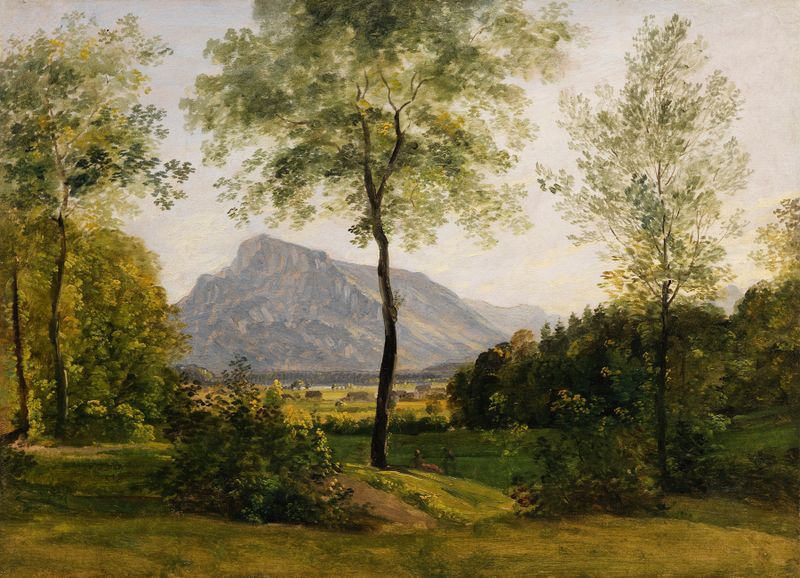
Landschaft mit dem Untersberg bei Salzburg
Johann Georg von Dillis
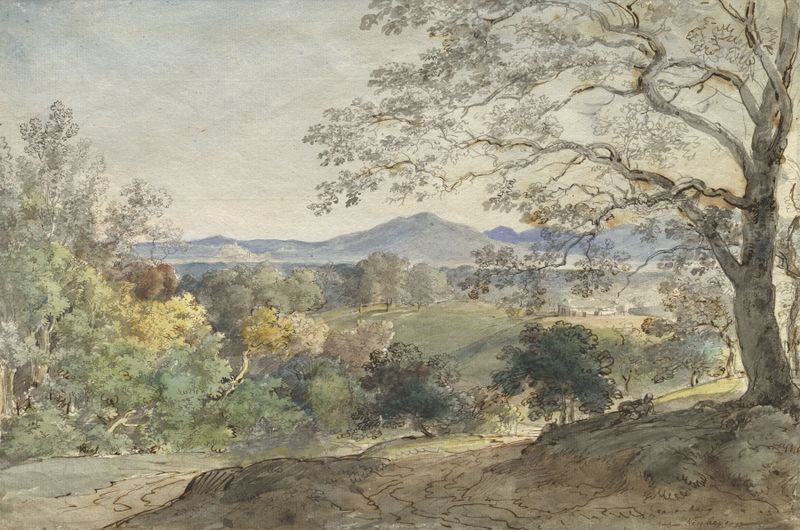
A View across the Inn Valley to the Alps and Neubeuern
Johann Georg von Dillis
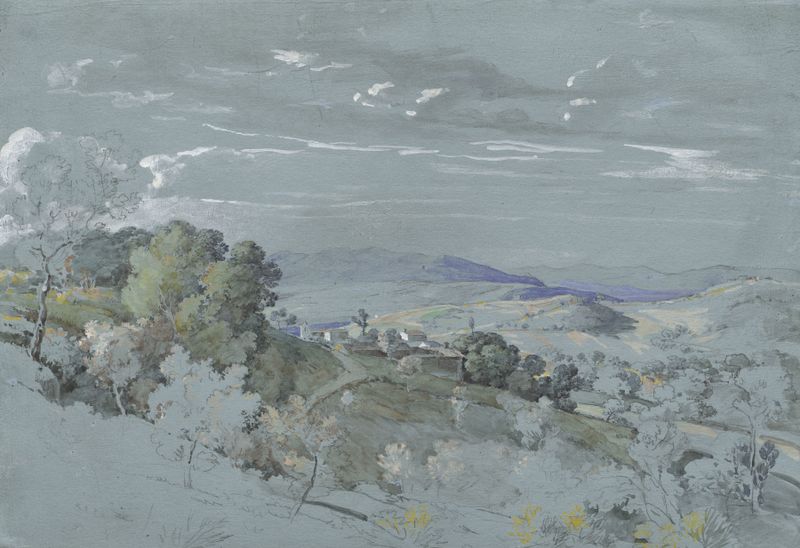
The Hills of Umbria near Perugia
Johann Georg von Dillis
Praterinsel in München
Johann Georg von Dillis
River Landscape
Johann Georg von Dillis





