Wasserfall im Gebirge, am Ufer und im Hintergrund Nadelhölzer — History & Facts
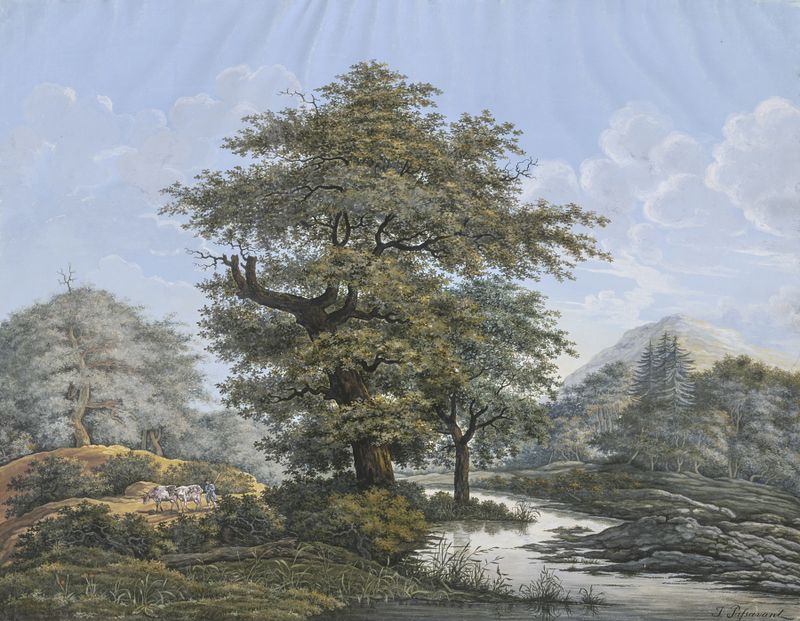
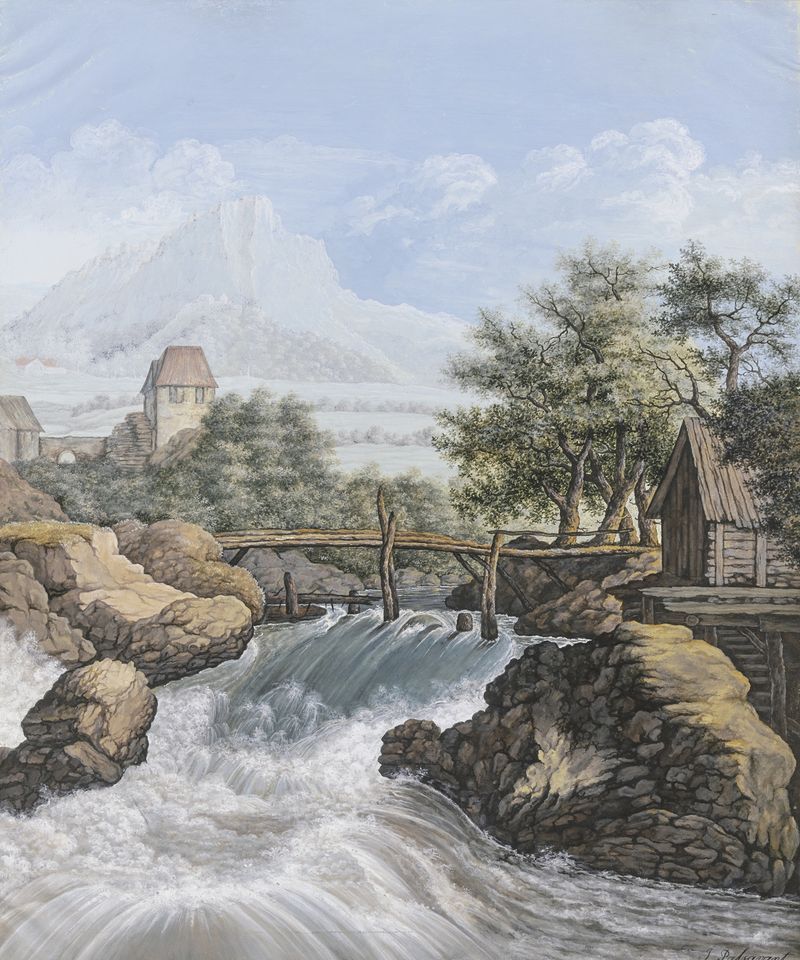
Is this a mirror — or a memory? The stillness of the water reflects not only the majestic mountains, but also the unspoken emotions that linger in the air, echoing the stories of those who have come before. Look to the left at the tranquil waterfall, its cascading waters captured in delicate brushstrokes that bring life to the scene. The vibrant greens of the pine trees draw your gaze upward, while the cool blues of the water create a serene contrast. Soft light dances across the landscape, illuminating the intricate textures of the rocks, inviting the viewer to explore the depth of the composition. Within this seemingly idyllic setting lies an undercurrent of grief and nostalgia.
The waterfall, both a source of beauty and a symbol of time’s passage, serves as a reminder that all things flow and eventually fade. The towering trees in the background stand like silent sentinels, their strength juxtaposed against the fragility of the water, reflecting the complexities of memory and loss. During this period, the artist was exploring themes of nature's grandeur and its emotional resonance, influenced by the Romantic movement's focus on introspection and the sublime. This work, created somewhere in the mid-19th century, captures the evolving artistic landscape, where nature was increasingly portrayed not just as a backdrop, but as a vessel for deeper human experiences and sentiments.