Waterfall in the Forest — History & Facts
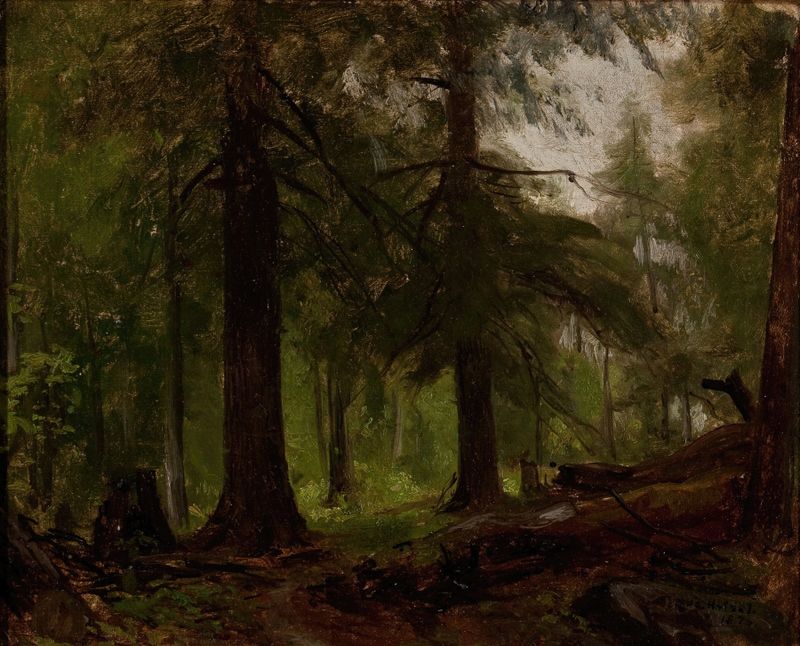
In Waterfall in the Forest, the stillness of the scene invites contemplation, where silence is not empty but filled with whispers of nature’s hidden depths. Look to the left where the cascading water tumbles over the rocks, its motion captured in a flurry of brushstrokes that lend a sense of vitality to the otherwise serene environment. The light filters through the trees, casting dappled patterns on the forest floor, illuminating the rich greens and browns of the foliage. Notice how the artist employs a contrasting palette of muted earth tones and vibrant highlights, drawing the viewer’s gaze naturally towards the waterfall, the shimmering focal point of the composition. Hidden within this tranquil setting lies an emotional tension — the juxtaposition of the gentle flow of water against the sturdy, unyielding bark of ancient trees.
The waterfall, a symbol of life and renewal, contrasts sharply with the darker, more oppressive presence of the forest, evoking a sense of both calm and unease. The silence envelops the scene, stirring thoughts of introspection, suggesting the delicate balance between beauty and the underlying struggles of existence. Creating Waterfall in the Forest in 1865, George Hetzel was immersed in the American landscape movement, inspired by the natural world around him. Residing in Pennsylvania, he experienced a period of artistic growth, reflecting the burgeoning interest in nature as both a subject and a source of inspiration.
This work captures not only the beauty of the American wilderness but also the emotional complexities that lie beneath its surface, aligning with the evolving perceptions of landscape painting during this era.