Watermill by a Wooded Outcrop — History & Facts
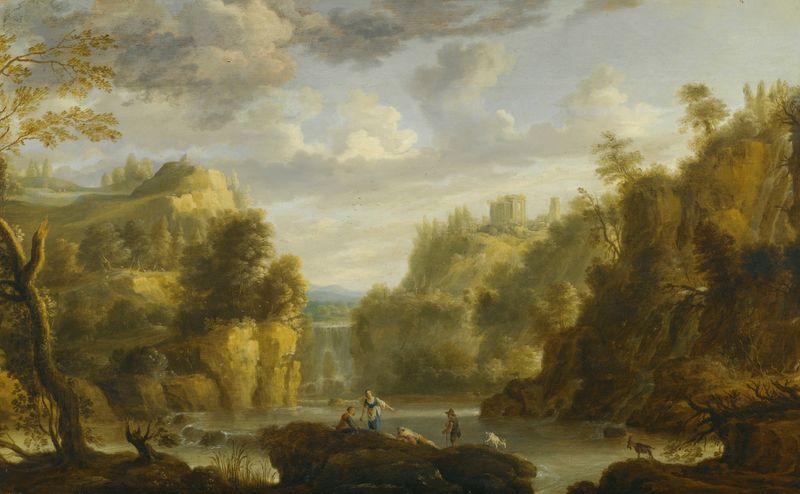
Could beauty survive in a century of chaos? In Watermill by a Wooded Outcrop, the tranquility of nature stands resilient against the tumult of its time, inviting contemplation on the passage of life. Look to the center of the composition, where the watermill spins lazily, its wheel a focal point of motion amidst stillness. The soft browns and greens evoke a sense of harmony, while the golden light filtering through the trees creates gentle contrasts, illuminating the landscape. Notice how the artist meticulously captures the play of shadow and light on the mill’s surface, imbuing it with a sense of life that breathes into the serene environment. The juxtaposition of the mill's industriousness with the undisturbed forest evokes a poignant tension between nature and human endeavor.
The surrounding foliage, dense and lush, suggests an eternal embrace of time, while the water’s mirror-like surface reflects fleeting moments, reminding us of the ephemeral quality of existence. Each brushstroke speaks of patience and the delicate balance between progress and preservation, urging viewers to contemplate their own relationship with the natural world. In 1633, Peeters painted this scene amidst the backdrop of the Dutch Golden Age, a period marked by flourishing art that often reflected both beauty and the tensions of life. As he explored landscapes and still lifes, the artist captured the essence of his surroundings, positioning himself as a pivotal figure in the evolution of genre painting.
This piece, rich in detail and mood, showcases his ability to transform simple scenes into profound meditations on time and existence.