
Waterside landscape — History & Facts
What if beauty was never meant to be finished? In Waterside landscape, the quietude of nature offers a glimpse into transformation, capturing a moment suspended in time. Look to the center and notice the shimmering water, expertly rendered in soft blues and greens, inviting your gaze to trace its gentle curves. The horizon is a delicate blend of earth and sky, where soft clouds float above a tranquil scene. The artist employs a subtle play of light, illuminating the foliage and casting soft shadows that bring depth and dimension to the landscape.
Each brushstroke feels deliberate, calculated, yet fluid, echoing the ebb and flow of nature itself. Tensions between freedom and constraint resonate throughout the piece. The wild growth of vegetation along the waterside, thriving and unconfined, contrasts sharply with the calm, reflective surface of the water, a metaphor for the inner struggles of existence. The light dapples through the trees, suggesting not only illumination but also change — moments of brightness punctuating shadows that hint at life’s profound complexity.
Each detail, from the rippling surface to the verdant banks, invites contemplation on the transient nature of beauty and the constant state of becoming. Jan Vermeer van Haarlem the Elder likely painted Waterside landscape in the late 16th century during a period when the Dutch were increasingly exploring themes of nature and the human experience. This era was marked by a burgeoning interest in realism and naturalism, as the artist sought to capture the sublime yet ephemeral qualities of the world around him. In this work, Vermeer reflects not just the landscape but also an intimate understanding of transformation inherent in both nature and life.
More Artworks by Jan Vermeer van Haarlem the Elder
Browse all →
Landscape with a Farm
Jan Vermeer van Haarlem the Elder

Landscape with Shepherds
Jan Vermeer van Haarlem the Elder
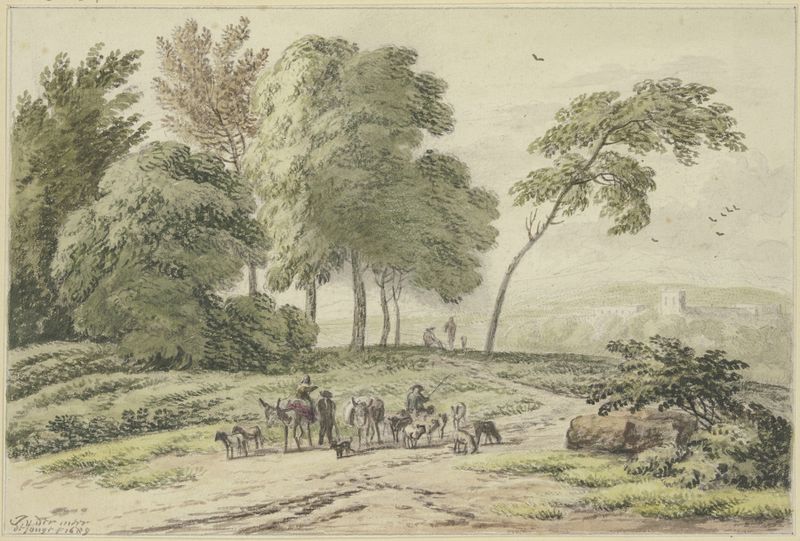
An einer Baumgruppe zwei Eselstreiber von hinten
Jan Vermeer van Haarlem the Elder

Mountain landscape with travellers
Jan Vermeer van Haarlem the Elder

Landscape with staffage
Jan Vermeer van Haarlem the Elder

Gebirgspfad mit Staffage
Jan Vermeer van Haarlem the Elder





