Weehawken from Turtle Grove — History & Facts
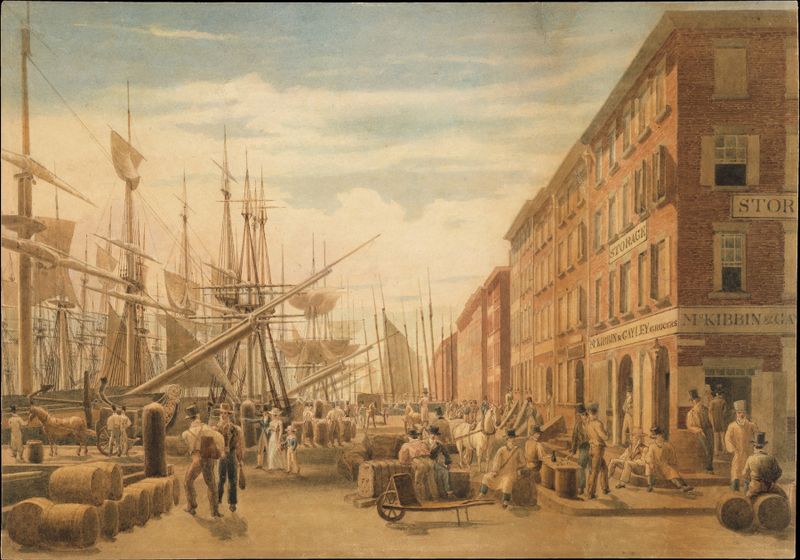
It is within that quiet sanctuary that balance finds its voice, whispering secrets of nature and humanity through brushstrokes and color. Look to the lower left of the canvas, where the gentle curve of the Hudson River invites the eye to glide along its surface. The water shimmers with dappled light, a mirror that reflects the vibrant hues of the sky above. Notice how the artist employs a soft palette of blues and greens, interspersed with warm earth tones, to evoke a sense of serene harmony.
The composition leads your gaze upward, where rolling hills cradle the horizon, presenting a world both expansive and intimate. Amidst the tranquil setting, hidden tensions emerge. The solitary figure on the riverbank reminds us of the solitude found in nature, while the distant cityscape looms, a reminder of civilization's presence. This juxtaposition of stillness and activity invites contemplation of the balance between nature and human encroachment.
The interplay of light and shadow not only enhances the depth of the landscape but also symbolizes the dichotomy of peace and progress. In 1830, the artist found himself immersed in a burgeoning art scene, deeply influenced by Romanticism’s focus on nature and the sublime. Painted in an era of rapid urbanization, this work reflects both his personal pursuit of beauty and the collective anxiety over the encroachment of industrialization. In this moment, he captured a slice of life that resonates with the eternal struggle for balance amidst an ever-changing world.