Westminster Bridge from the Lambeth Shore — History & Facts
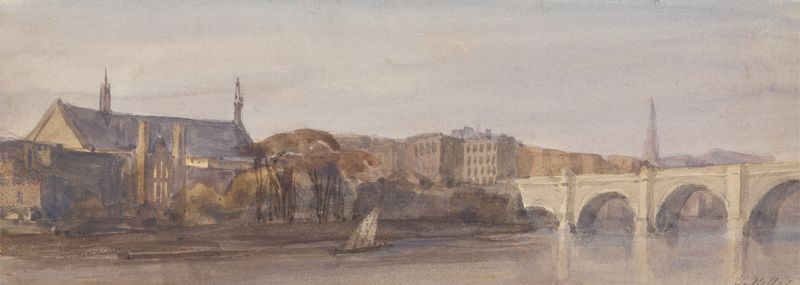
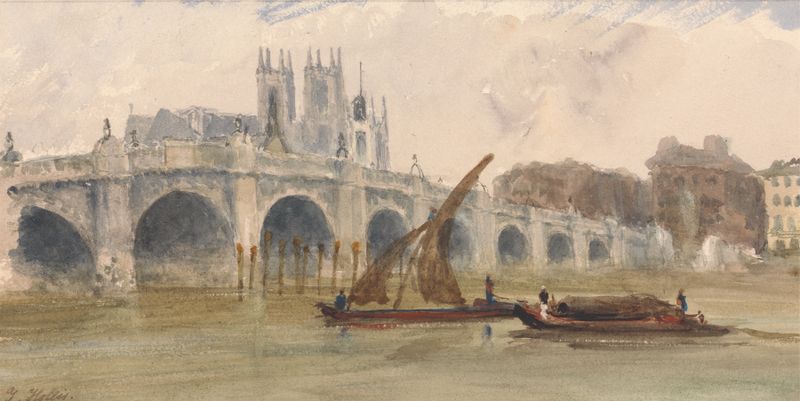
Could beauty survive in a century of chaos? The delicate interplay of light and structure in a cityscape suggests that divinity can indeed emerge from the tumult of human existence. Look to the left at the calm waters of the River Thames, where the soft ripples mirror the grandeur of Westminster Bridge. Notice how the sun’s warm glow bathes the scene in golden hues, casting gentle reflections that dance upon the surface. The artist employs a harmonious palette of blues and earthy tones, creating a tranquil ambiance that contrasts sharply with the bustling nature of the city.
The meticulous brushwork draws your eye to the intricate details of the bridge's arches, inviting admiration for both its engineering and its place within the landscape. Beneath the serene exterior lies a deeper commentary on the convergence of nature and urban life. The juxtaposition of the sturdy bridge against the fluidity of the river evokes a sense of stability amid relentless change. The figures dotting the shore, almost like whispers of life, embody the quiet resilience of humanity navigating the complexities of existence.
Each element in the composition speaks to a divine beauty that persists, even as the world transforms. In 1835, while creating this masterpiece, the artist was witnessing a period of rapid industrialization in London, a time that brought both innovation and upheaval. Hollis, influenced by the Romantic movement, sought to capture the sublime beauty of his city against the backdrop of this evolving landscape. His work reflects not only personal exploration but also a broader fascination within the art world, as artists grappled with the tensions between nature and the encroaching modernity.