
Wiener Staatsoper — History & Facts
Can paint confess what words never could? The canvas breathes a quiet beauty, reminiscent of an opera house’s elegance, echoing the unspoken emotions of its spectators. Look to the center of the composition, where soft, muted hues converge to depict an intricate facade. The architectural details, meticulously rendered, invite the viewer to trace their fingers along the delicate curves of the building's silhouette. Notice how the warm glow from the windows contrasts with the cool shadows, creating a harmonious balance that captures the essence of a bustling night at the opera.
The painter’s brushwork, layered yet fluid, employs a palette that celebrates both grandeur and subtlety, reflecting the dual nature of public performance—exhibition and intimacy. Beneath the surface lies a tension between the allure of spectacle and the solitude of the individual. The play of light and shadow hints at stories unfolding within, evoking a sense of longing and anticipation. The absence of figures, paradoxically, speaks volumes about the collective experience and emotional resonance of art.
The beauty of this architectural marvel transcends its physicality, suggesting a place where dreams are born and memories linger. Franz Brenner crafted this piece during a period where the arts flourished in Vienna, showcasing the city’s rich cultural heritage. Though the exact date remains elusive, it reflects an era when operas captivated audiences and architectural beauty was celebrated. In this vibrant milieu, he sought to encapsulate the spirit of an iconic venue, reinforcing its significance in the world of art and performance.
More Artworks by Franz Brenner
Browse all →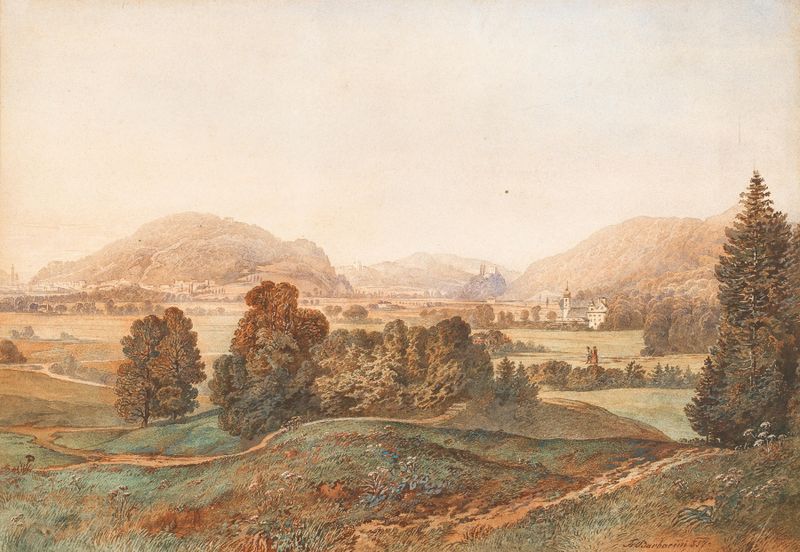
More Architecture Art
Browse all →
The statue of Liberty
Frédéric Auguste Bartholdi

View of Houses in Delft, Known as ‘The Little Street’
Johannes Vermeer

View of Houses in Delft, Known as ‘The Little Street’
Johannes Vermeer

The Cathedral in Rouen. The portal, Grey Weather
Claude Monet

The yellow house
Vincent van Gogh

The Church in Auvers-sur-Oise, View from the Chevet
Vincent van Gogh