Willows — History & Facts
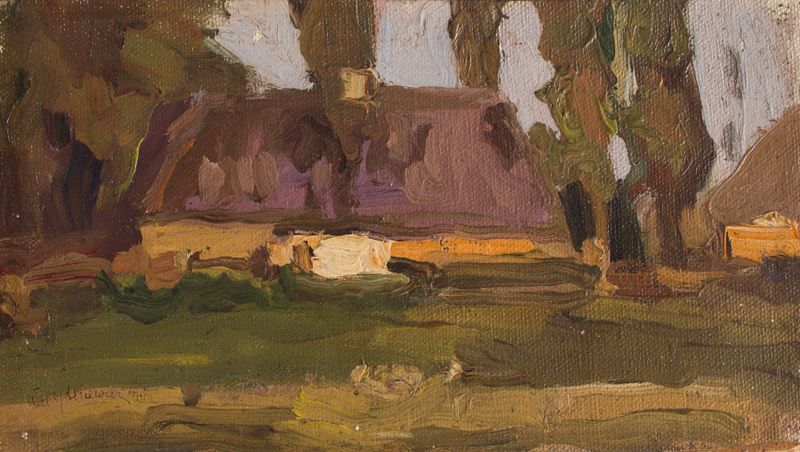
Could a single brushstroke hold eternity? In Willows, the essence of divinity is captured, inviting contemplation of the sacred and the transient. Look to the center of the canvas, where delicate willows sway gracefully against a backdrop of muted, ethereal colors. The gentle curves of the branches spiral upwards, their leaves dappled with light, creating a sense of movement and life. Notice how the artist employs a soft palette—pale greens and warm yellows—to evoke a feeling of calm, while the darker shades grounding the lower part of the painting draw the eye into a tranquil embrace of nature. Beneath the surface lies a tapestry of emotional undercurrents.
The willows, often symbols of mourning or lost love, whisper tales of resilience in their delicate dance. The juxtaposition of their frail beauty against the divine light that filters through the foliage suggests a deeper yearning for connection with the eternal. Each brushstroke encapsulates a moment, making the viewer ponder the fleeting nature of time and the sacredness of existence itself. Witold Wojtkiewicz created Willows in 1903 during a period of intense personal exploration and artistic evolution.
Living in Poland at the time, he was influenced by Symbolism and the burgeoning Art Nouveau movement, which sought to harmonize nature and art. This work reflects his quest for spiritual meaning through nature, resonating with the broader artistic currents of the early 20th century that grappled with themes of life's impermanence and the divine.