
Winter Landscape — History & Facts
In the stillness of winter, the landscape breathes a quiet melancholy that speaks to the fragility of existence. Look to the foreground, where a frozen river meanders through the canvas, its surface shimmering with hints of icy blues and whites. Notice how the brushstrokes convey both texture and temperature, the cool hues contrasting sharply with the warm browns of the distant trees. The gentle slope of the land guides the eye upward, revealing a sky weighted with soft, gray clouds, hinting at the snowfall that is yet to come. Beneath this serene surface, layers of meaning pulse through the work.
The starkness of the winter scene reflects the duality of life and death, an invitation to contemplate mortality even amidst beauty. The skeletal branches of the trees stand as silent witnesses to the passage of time, while the frozen river embodies both stillness and the flow of life that continues beneath its ice. Each element weaves together a narrative of resilience and introspection. Carl O'Lynch created this piece at a time when he sought to explore the interplay of light and nature in his surroundings, possibly during the late 19th century in his native Town.
This era was marked by a transition in the art world, where artists were beginning to delve deeper into personal expression and the emotional resonance of landscapes. The stillness and stark beauty of Winter Landscape may have reflected both his internal struggles and the evolving perspectives of contemporary art.
More Artworks by Carl O'Lynch of Town
Browse all →
Dolomitenlandschaft bei Cortina mit Tofana
Carl O'Lynch of Town

View of the Bay of Monaco
Carl O'Lynch of Town
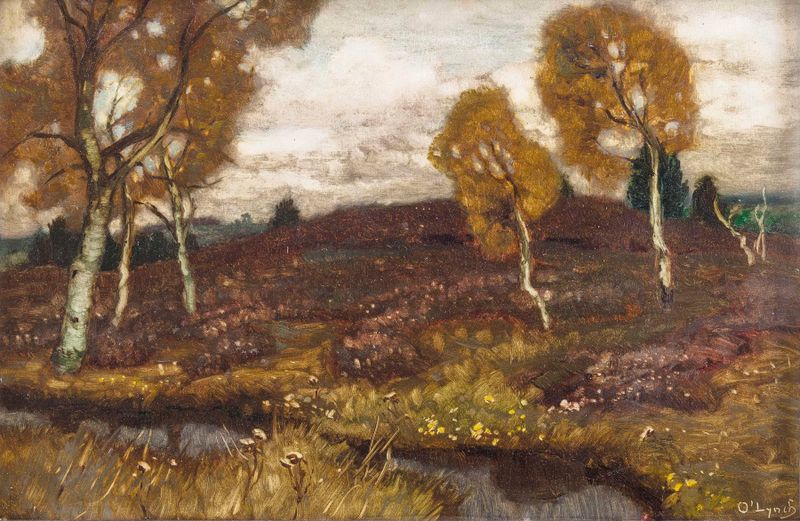
Mooslandschaft mit Birken
Carl O'Lynch of Town
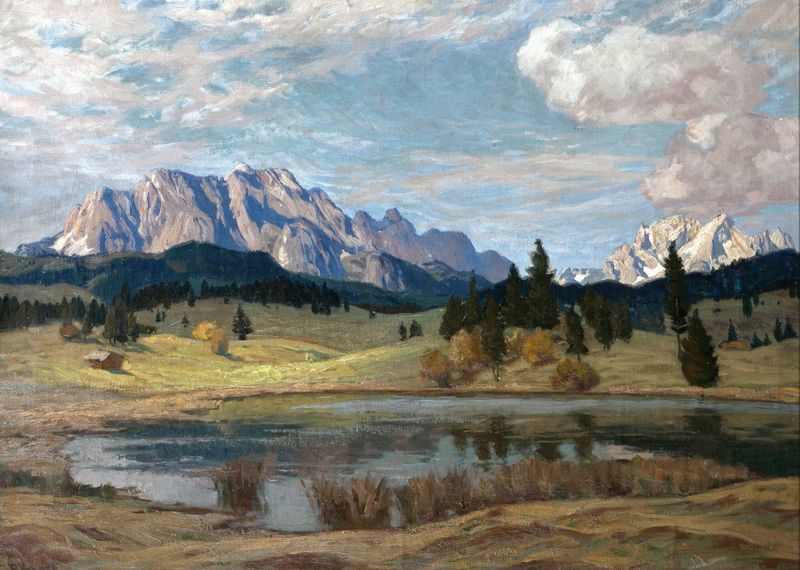
Near Mittenwald
Carl O'Lynch of Town

Meeresbrandung mit Kastell
Carl O'Lynch of Town
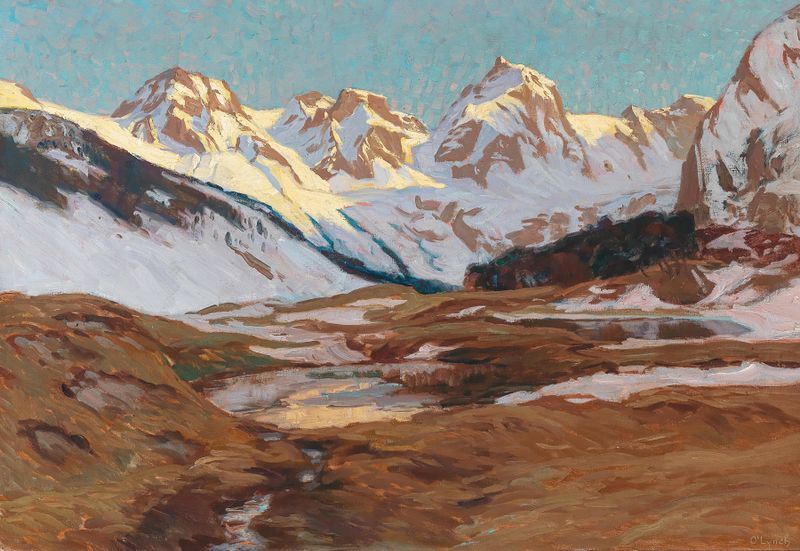
Vorfrühling im Walserthal
Carl O'Lynch of Town

Winterlandschaft mit Mühle
Carl O'Lynch of Town

An Inner Courtyard in the Summer
Carl O'Lynch of Town

Bergwinter
Carl O'Lynch of Town

Grauer Tag, Isere
Carl O'Lynch of Town





