Winter Landscape — History & Facts
Could beauty survive in a century of chaos? The question lingers in the crisp, white expanse of Winter Landscape, where tranquil memories are etched into the snow-laden ground. Look to the foreground, where delicate brushstrokes reveal a quiet path winding through the trees, inviting you to walk deeper into a world untouched. Notice how the muted palette of whites and blues conveys a serene chill, while the stark silhouettes of pines create a striking contrast against the gentle hues of dusk. The light casts long shadows that stretch across the snow, adding depth and a sense of stillness that envelops the scene. Hidden within this winter tableau are echoes of longing and nostalgia.
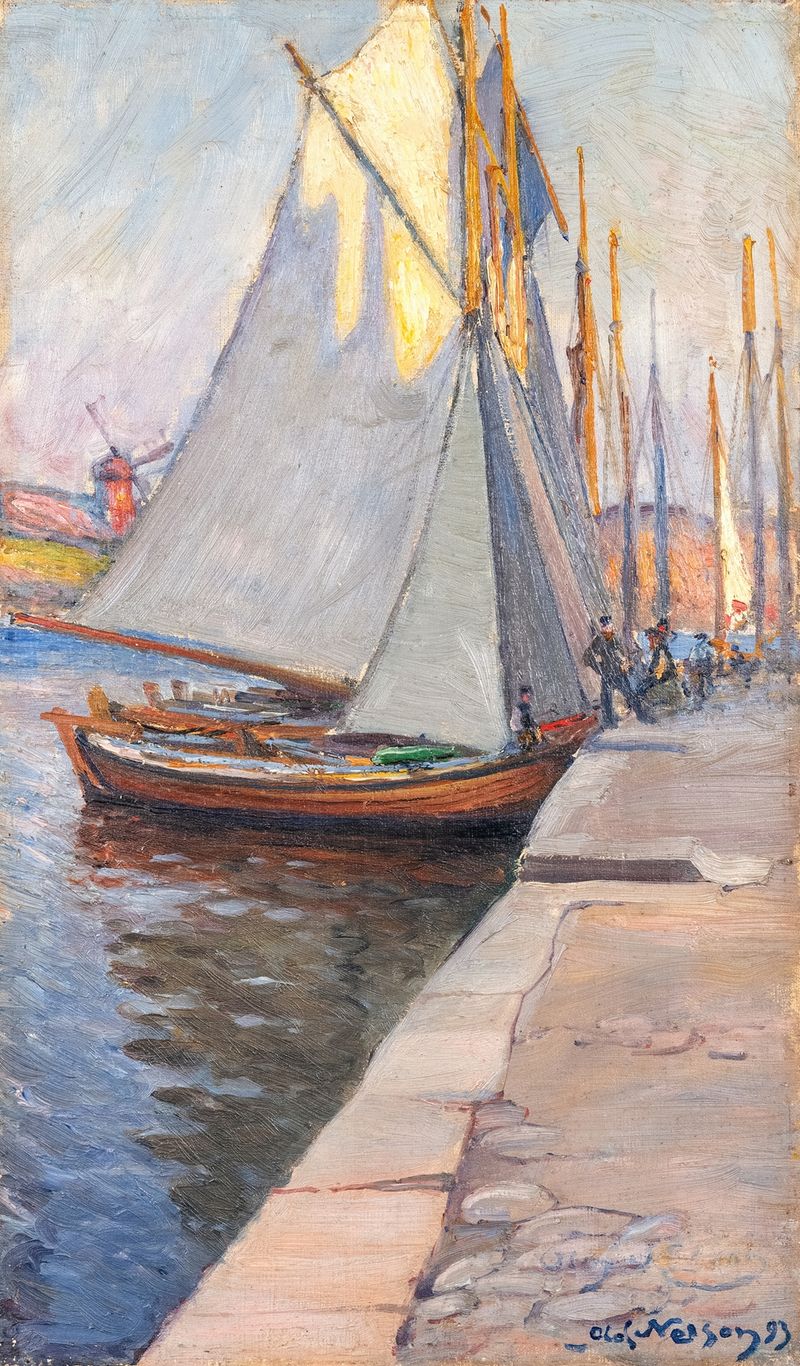
The soft undulations of the snow cradle the promise of a fleeting moment, while the barren trees stand as sentinels of time, witnessing both beauty and desolation. Each gentle curve of the landscape evokes a bittersweet memory, hinting at the fragility of peace amidst the chaos of the world. This duality between tranquility and the underlying tension of the season encapsulates the emotional weight of the painting. In 1893, Olof Sager-Nelson worked in a Sweden that was quietly grappling with the transformation brought by the industrial age.
As he painted this winter scene, his brush sought to capture the serene beauty of nature, possibly as a response to the frenetic changes surrounding him. It was a time when artists were increasingly drawn to the romanticism of landscapes, expressing both a yearning for simplicity and a recognition of the passing of time.