
Winter Landscape — History & Facts
When did color learn to lie? In the depths of Schweickhardt’s Winter Landscape, hues of blue and white dance, cloaking the truth beneath a serene facade. Look to the foreground, where delicate brushstrokes weave a shimmering blanket of snow across the ground. The intricate play of light reveals a depth of texture, each ripple suggesting the cool air that fills the scene. Notice how the gentle gradient of blues and whites transitions to deeper shadows in the trees, guiding your gaze toward the horizon where the stark outline of a distant hill emerges, drawing a line between reality and the illusion crafted by the artist. Yet, beneath this tranquil winter scene lies a tension between stillness and the unyielding passage of time.
The shadows cast by the trees hint at the lurking uncertainties of the season—the stark contrast between the purity of the snow and the encroaching darkness. This duality reflects the emotional essence of winter itself: a season of beauty that masks the harshness of survival, where hope flickers like the faintest light against the cold. Created in an unspecified year in the Netherlands, the artist was immersed in a period rich with emerging Romanticism, characterized by an exploration of nature's sublime beauty and its emotional resonance. During this time, Schweickhardt’s work echoed the shifting landscape of art, where realism began to intertwine with personal feeling, capturing not just the physical world but the deeper, often hidden truths that lay beneath its surface.
More Artworks by Hendrik Willem Schweickhardt
Browse all →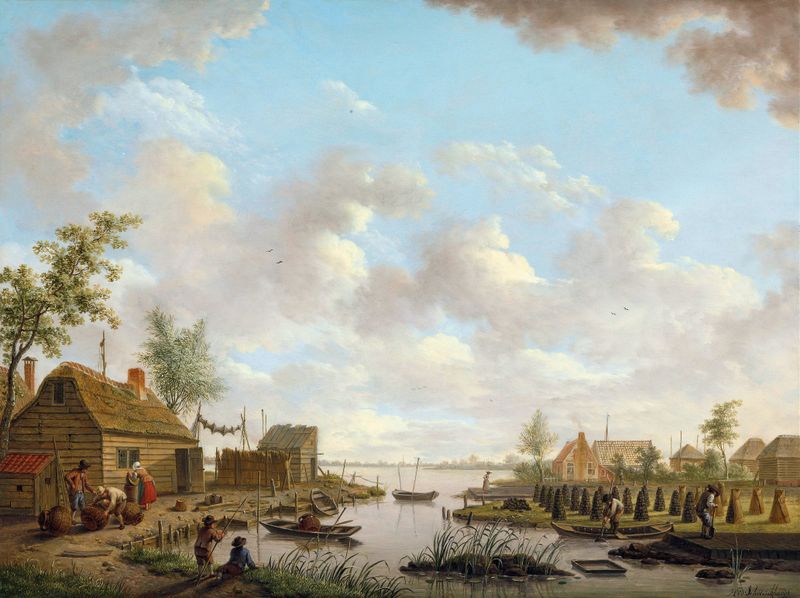
Landscape with Fishermen and Farmers Extracting Peat in a Marsh
Hendrik Willem Schweickhardt
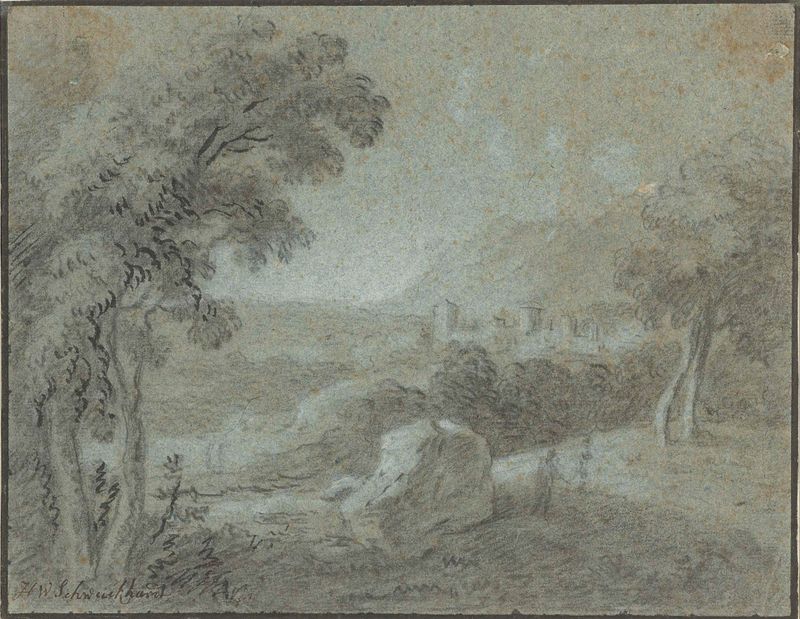
Zuidelijk heuvellandschap met een stad in het verschiet
Hendrik Willem Schweickhardt
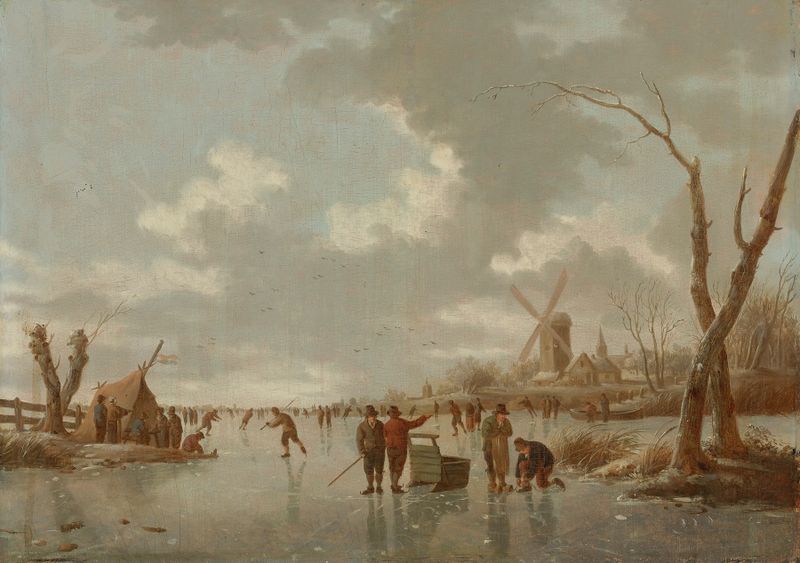
Winter Scene With Skaters On A Frozen River
Hendrik Willem Schweickhardt
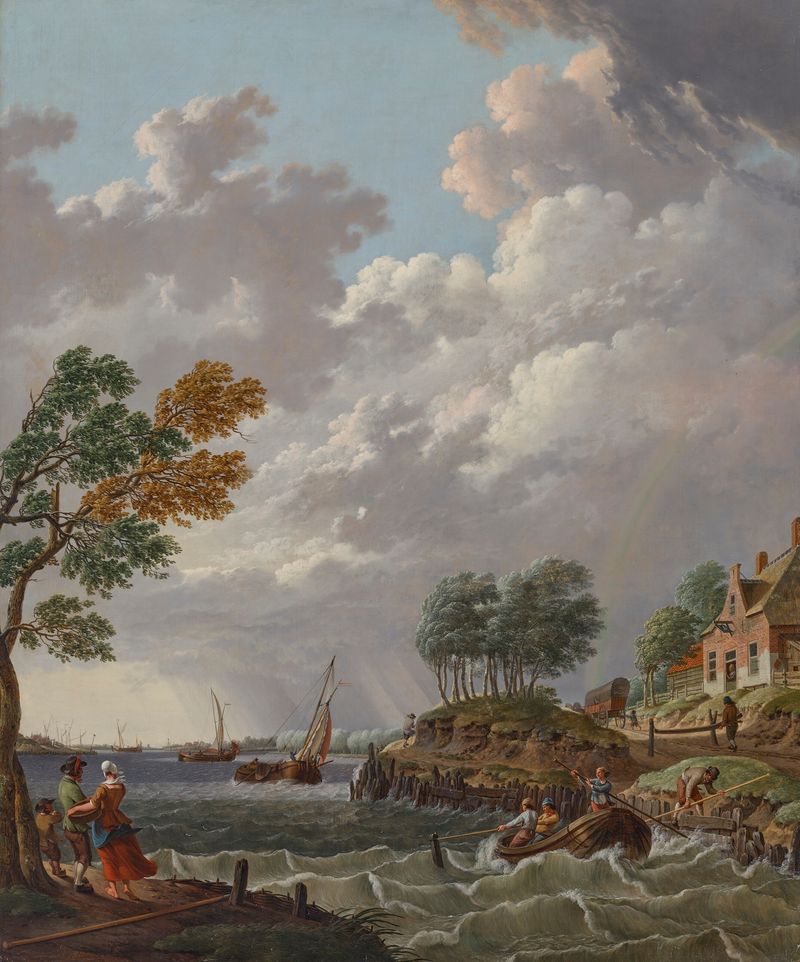
A river landscape in a storm, with sailing vessels and a rowing boat in choppy waters, a rainbow in the distance
Hendrik Willem Schweickhardt
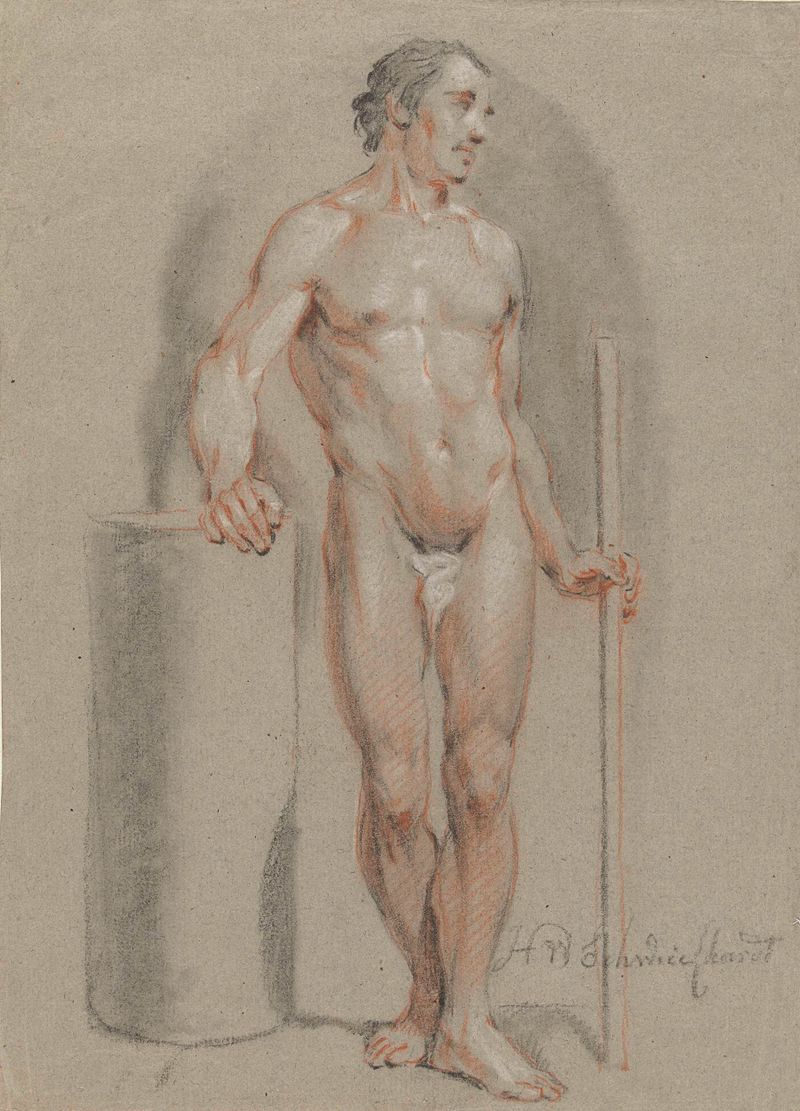
Staand mannelijk naakt, met een stok in de hand, steunend op een ateliercylinder
Hendrik Willem Schweickhardt





