Winter Landscape From Bordesholm — History & Facts
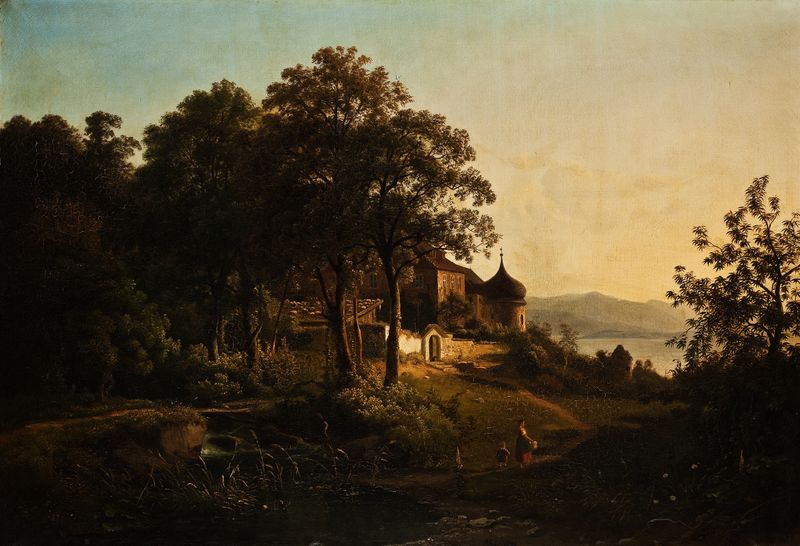
Could beauty survive in a century of chaos? In Johann Mohr's Winter Landscape From Bordesholm, the answer resonates with the silence of freshly fallen snow. Look to the foreground, where a delicate layer of white blankets the land, rendering every blade of grass and stoic tree into a soft whisper. The cool blues and grays of the sky hang over the scene, contrasting sharply with the warm, earthy tones of the distant horizon. Notice how the light dances across the snow, creating a kaleidoscope of soft reflections that beckon the viewer deeper into the landscape.
The composition unfolds with a clarity that invites quiet contemplation, a serene escape from the tumult of life. Delve deeper into the painting's nuances, and you will find a dialogue between stillness and the harshness of nature. The figures, small and humble against the vastness of the landscape, evoke a sense of isolation yet profound connection to their environment. A small cabin, nestled at the edge, stands not just as a refuge but as a testament to human resilience amid the encroaching cold.
The stark contrasts in color and texture underline a tension between warmth and chill, life and solitude. In 1840, Mohr painted this work during a time of burgeoning Romanticism in Germany, where artists sought to express deep emotional experiences through the natural world. Living in a country grappling with political turmoil and rapid industrialization, Mohr turned his lens toward the unyielding beauty of winter landscapes, perhaps as a refuge from the chaos surrounding him. This work encapsulates not just a fleeting moment but a broader reflection on temporality and endurance in both art and life.