Winter Morning — History & Facts
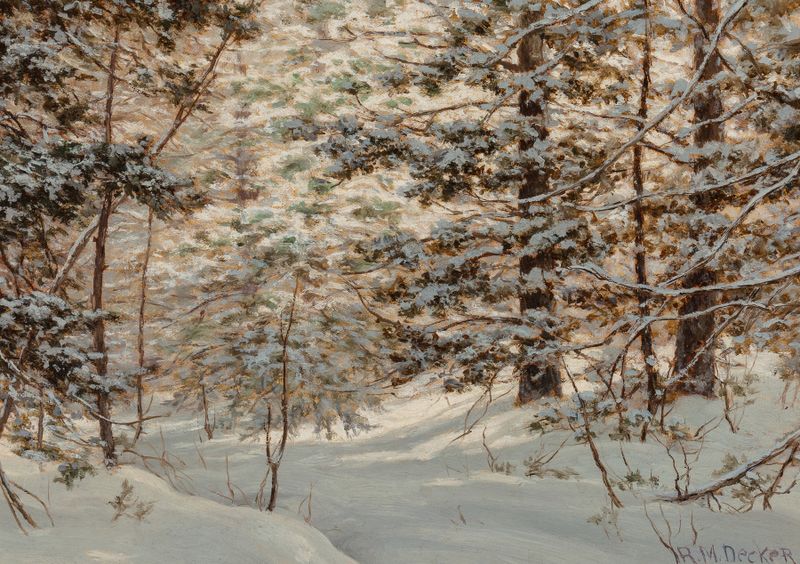
In the silence of dawn, a revelation unfolds, where the starkness of winter invites us to reflect on our own depths. Look to the left at the sloping hills, their muted whites and blues whispering of the chill that hangs in the air. Notice how the artist captures the fragile light of early morning, as it spills gently across the landscape, illuminating the frosted branches that seem to shiver under the weight of snow. The quiet composition draws you in, with subtle brush strokes blending the cool colors; a masterful interplay of tone and texture invites contemplation of nature's beauty and its inherent harshness. Yet, amidst this serene landscape lies a tension—a contrast between the stillness of the snow and the potential for life under its frozen surface.
The sparse trees stand as sentinels, their dark forms stark against the pale backdrop, reminding us of resilience amidst desolation. The soft glow peeking through the clouds suggests hope, but it also hints at the inevitable cycle of hardship that accompanies renewal, inviting a deeper emotional connection to the fleeting nature of beauty and life itself. In 1879, while creating this piece, the artist found himself in an era marked by an interest in realism and a longing for connection to the natural world. Living and working in the United States, he was part of a growing movement that sought to capture the essence of their surroundings, reflecting both the beauty and challenges of everyday life.
This painting serves as a testament to his mastery in blending landscape with profound emotion, resonating with the viewer long after the frame is closed.