
Winter Pleasures — History & Facts
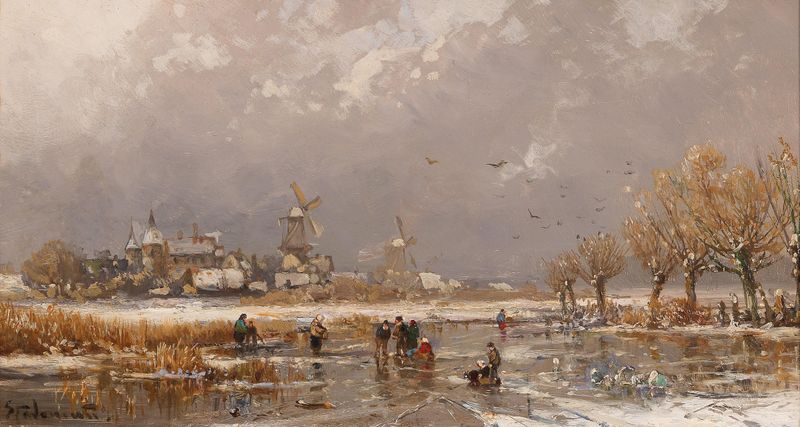
In the stillness of winter, a quiet beauty unfolds, revealing more than mere visuals; it exposes the essence of existence beneath a blanket of snow. Focus first on the serene hues of white and blue that dominate the canvas, laying an ethereal foundation. Notice how the artist masterfully employs soft brushstrokes to create a gentle flow of snowflakes gliding through the air, inviting you to breathe in the crisp chill. The subtle contrast between the stark landscape and the delicate shadows adds depth, urging the viewer to explore the quiet drama of a wintry day. As you delve deeper, the interplay of light and shadow becomes a metaphor for the highs and lows of the human experience.
The lone figure, seemingly dwarfed by the vastness of the snow-covered terrain, evokes feelings of isolation yet also an intimate connection to nature's beauty. Each glimmer of sunlight that emerges from behind the clouds serves as a reminder of the fleeting moments of joy amid life's colder realities. Adolf Stademann created this piece in an undetermined timeframe, yet its essence resonates with the emotional currents of his era. Known for his landscape paintings, Stademann captured the tranquility and solitude of winter scenes during a period when romanticism and realism fused in art.
His work reflects a profound understanding of nature's cycles, mirroring both personal introspection and the broader human experience.
More Artworks by Adolf Stademann
Browse all →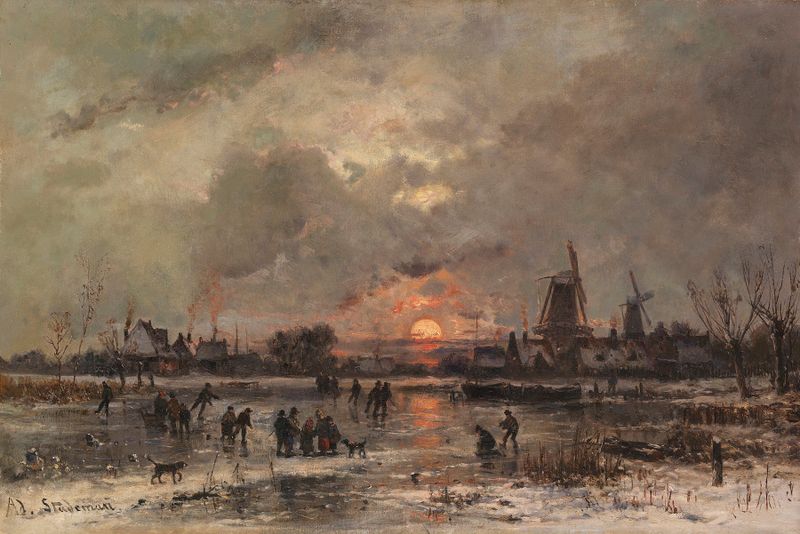
Wintervergnügen am zugefrorenen Fluß
Adolf Stademann
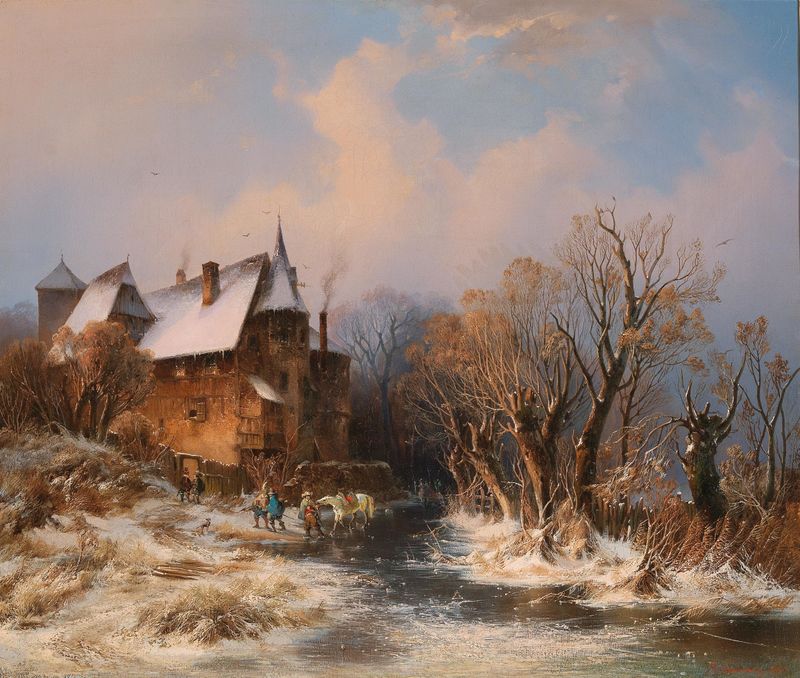
River Landscape In Winter With House And Decorative Figures
Adolf Stademann
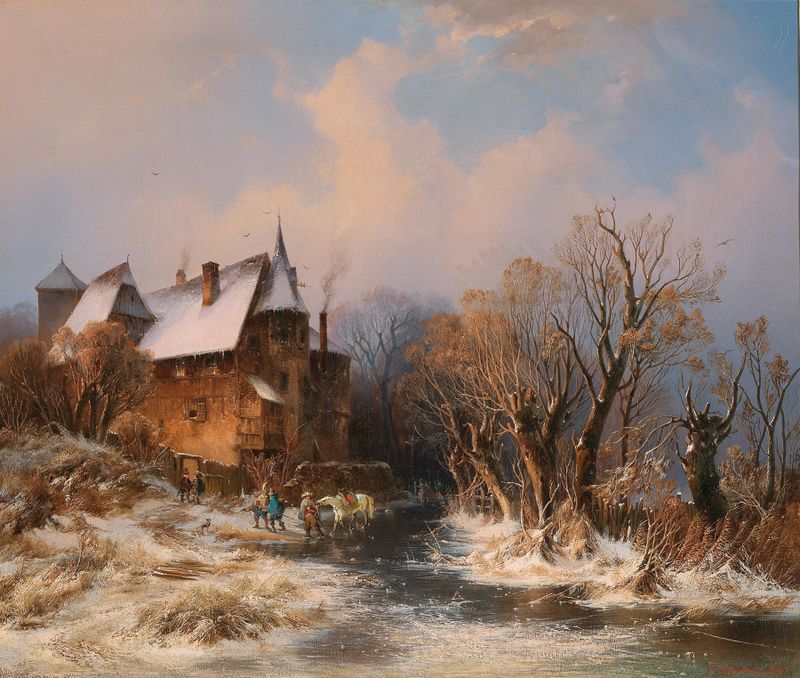
River Landscape in Winter with House and decorative figures
Adolf Stademann

Skating Pleasures at Dusk
Adolf Stademann
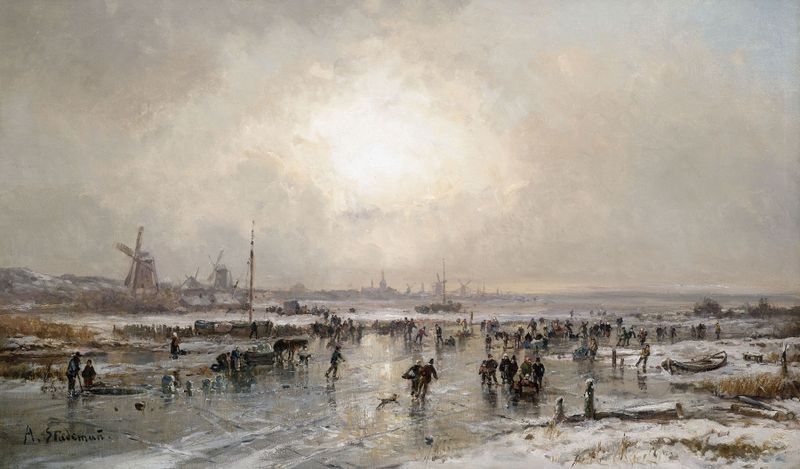
Winterliches Eisvergnügen auf einem zugefrorenen Kanal vor holländischer Stadtsilhouette
Adolf Stademann
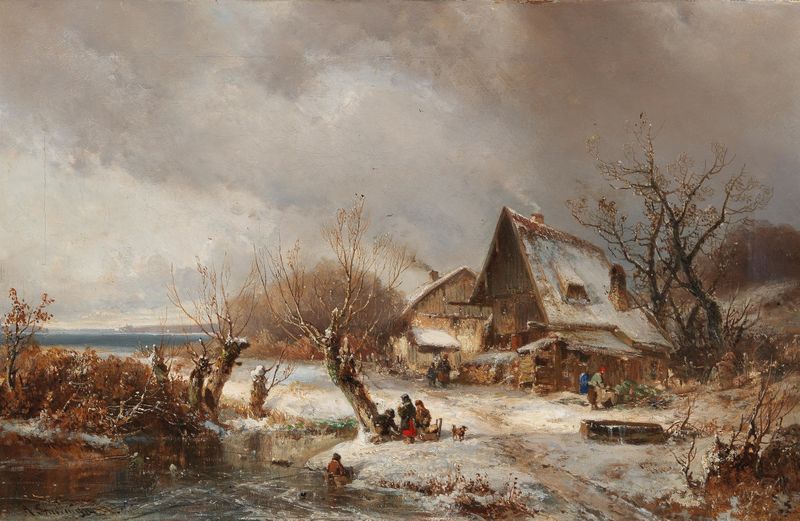
Winter Landscape With Farmstead
Adolf Stademann
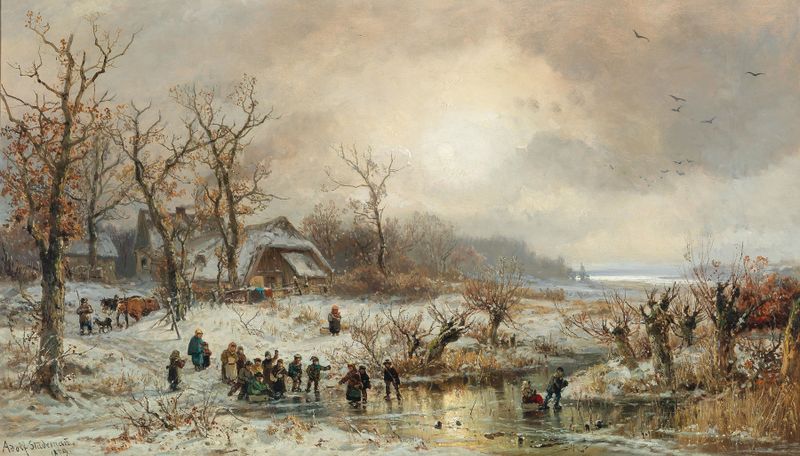
Winter Amusements in the Setting Sun
Adolf Stademann
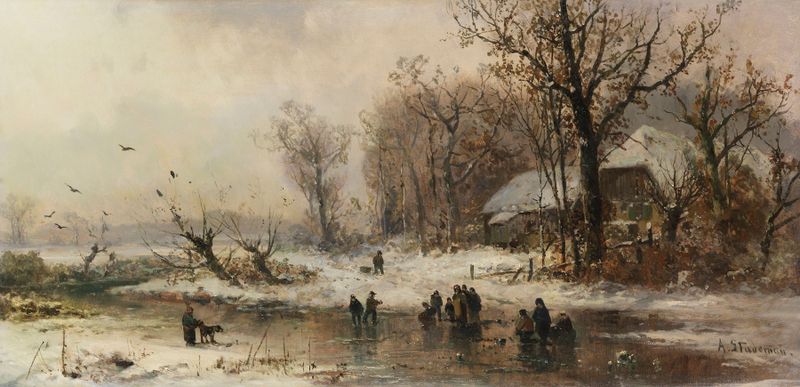
Eisvergnügen
Adolf Stademann
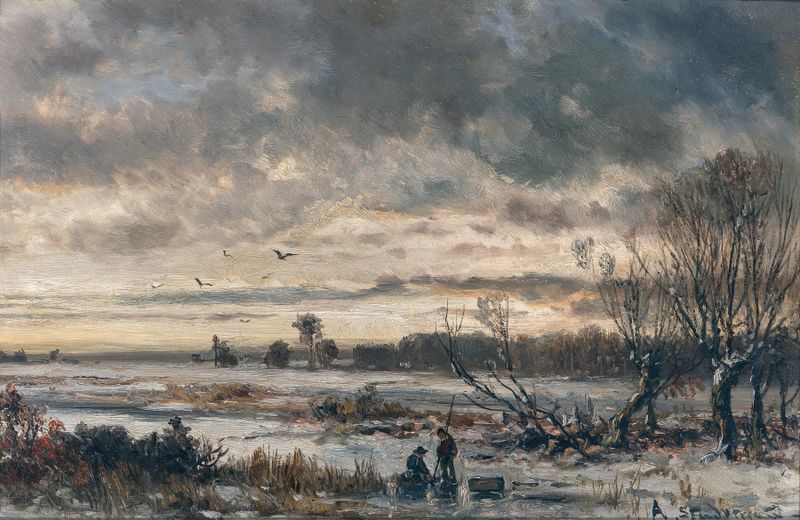
Fishing on the Ice
Adolf Stademann
Winter Pleasures On The Ice
Adolf Stademann





