Winter Scene in Ghent — History & Facts
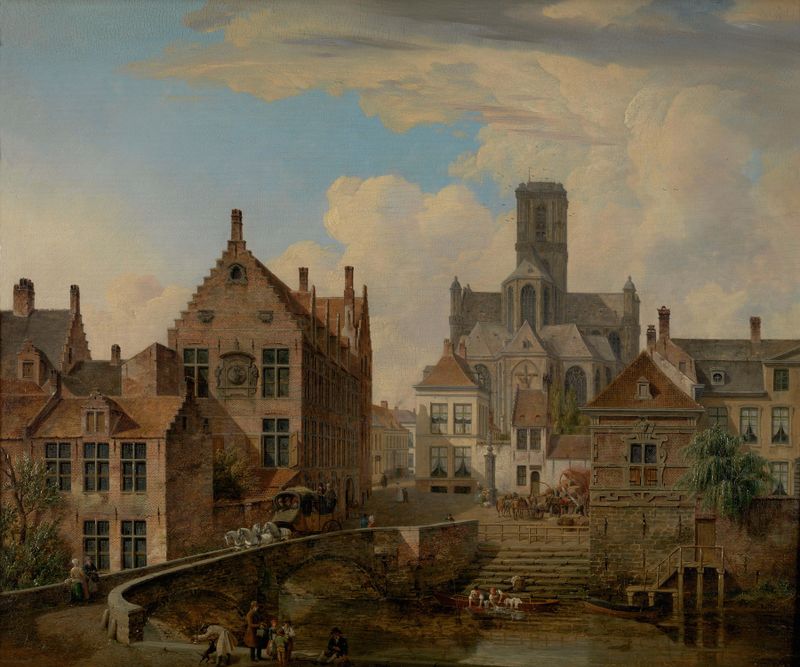
What if beauty was never meant to be finished? In the soft embrace of winter, we find a fleeting moment captured between the chill of the air and the warmth within human connection. Look to the left at the delicate interplay of whites and grays, where snow blankets the rooftops and the ground beneath. The artist employs a muted palette, with ethereal blues hidden among the shadows of the architecture, drawing your eyes to the crisp outlines of the buildings. Notice how the soft light glimmers on the surface of the snow, illuminating the tenderness of this winter’s day while the figures, garbed in heavy cloaks, traverse the scene with purpose, their movements painting a narrative of daily life. Yet, beneath the tranquil beauty lies an emotional tension—an interplay between isolation and community.
The solitary figures, walking with purpose yet surrounded by the expansive stillness, evoke a sense of introspection in the viewer. Each brushstroke whispers stories of resilience, as the bare trees in the background stand sentinel, their starkness a reminder of nature's quiet strength amid the hustle of life. Created in 1838 in Ghent, this piece emerged during a period when the artist was seeking to refine his portrayal of landscapes and everyday moments. As industrialization began to reshape the cities of Europe, De Noter's focus on the serene and intimate within his winter scenes reflected a longing for connection amidst the changing world, showcasing a mastery in color and emotional depth that distinguished his work in the 19th-century art landscape.