Winter thaw — History & Facts
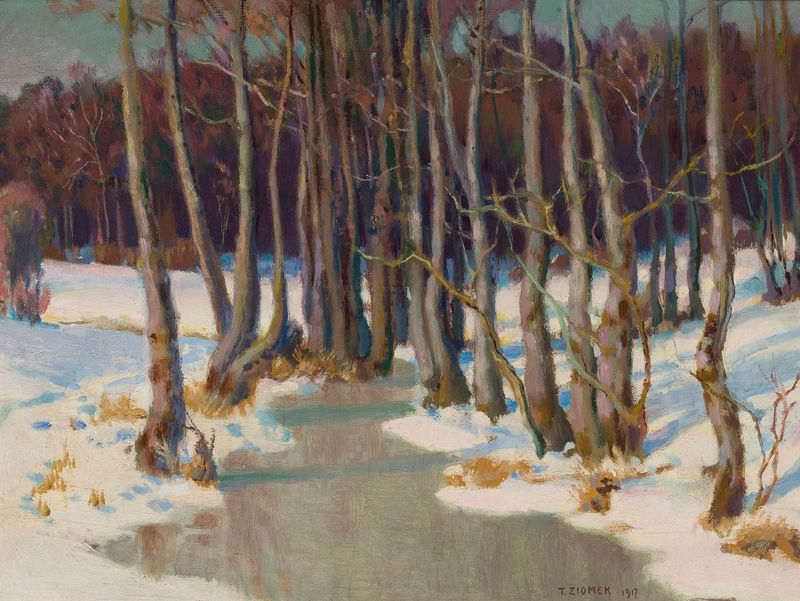
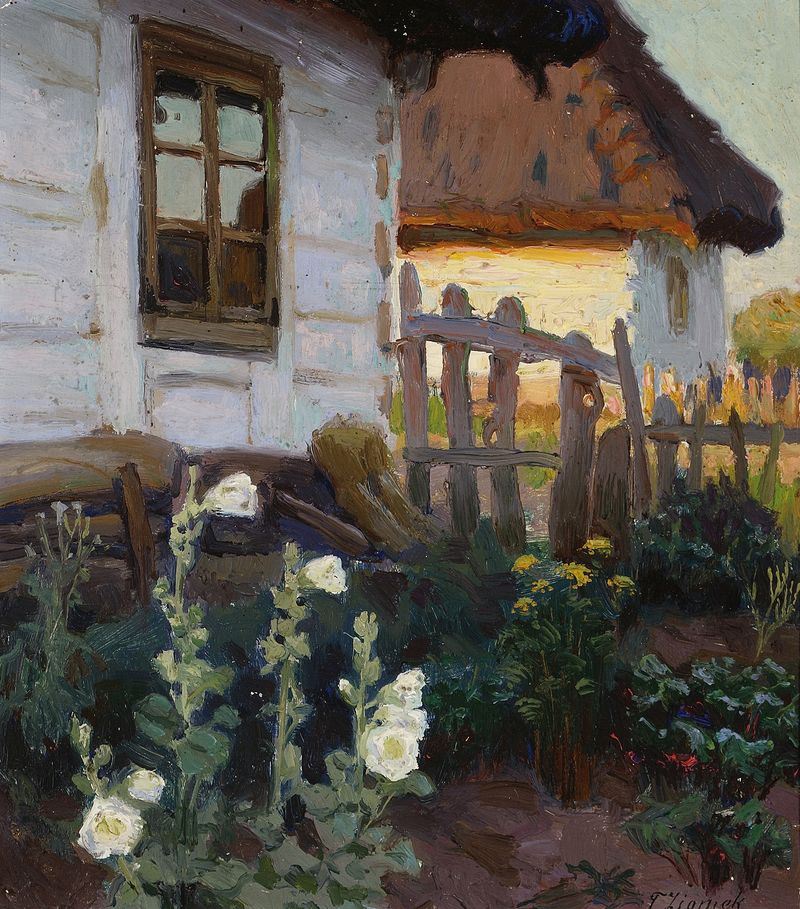
In the delicate interplay of winter's retreat, one is reminded that decay often cloaked in shimmer invites us to look deeper. Focus on the foreground, where soft strokes capture the intricate dance of melting ice, pooling like tears on the earth. Notice how the muted palette of browns and grays contrasts with the faint whispers of sunlight breaking through the clouds, illuminating the scene with a fragile warmth. Each brushstroke reveals not just the thaw of winter but also the subtle decay of the season itself, hinting at both the grief of what is lost and the promise of renewal. Amidst this visual thaw, hidden tensions emerge between the starkness of winter's remnants and the tender emergence of life below.
The sparse trees, stripped of their leaves, stand as silent witnesses to nature’s cycle of death and rebirth. Each droplet of melting ice carries a poignant weight, symbolizing the passage of time and the bittersweet beauty that accompanies change. In 1905, Teodor Ziomek created this piece during a period marked by profound artistic experimentation in Poland. With the rise of Impressionism, artists sought to capture fleeting moments of nature, reflecting the emotional undercurrents of their environment.
Amidst the challenges of a changing world, Ziomek’s work harmonized these influences, embedding a rich narrative within the seemingly simple transition of seasons.