Winterlandschaft, auf einem gefrorenem Fluss bei einem Städtchen Schhlittschuhläufer — History & Facts
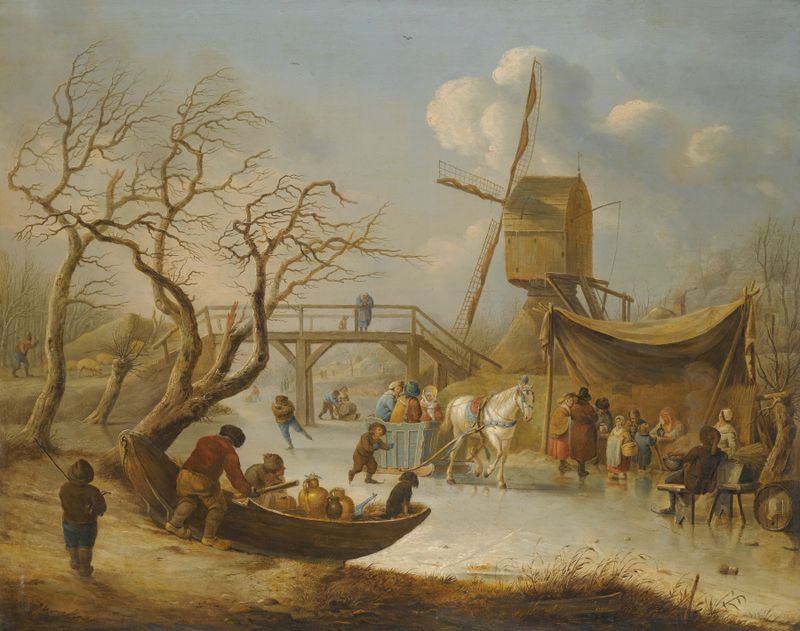
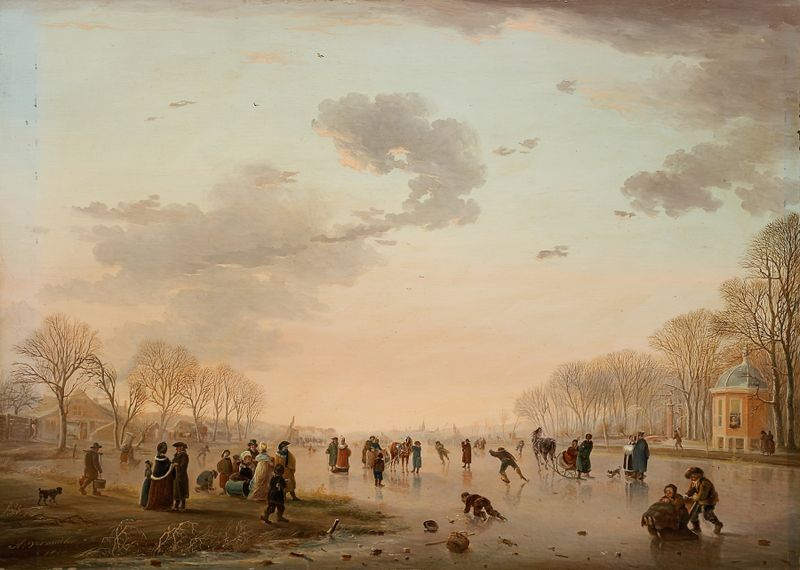
What secret hides in the quiet of the canvas? In the stillness of a frozen river, beneath the serene surface of winter’s embrace, lies a tension that beckons to be unraveled. Look to the left at the skaters gliding effortlessly across the ice, their figures etched in delicate whites and muted grays that intertwine with the soft blues of the sky. Notice the subtle interplay of shadow and light, as the sun casts a gentle glow over the landscape, illuminating the crisp frost that clings to the trees lining the riverbanks. The strokes are fluid yet structured, reflecting both the joy of leisure and the chilling grasp of nature, evoking a sense of fragile harmony amidst the bitter cold. Yet, beneath this picturesque scene, echoes of violence resonate.
The jagged shards of ice, sharp and menacing, remind us of nature's duality—beauty intertwined with danger. Each skater, lost in their motion, seems unaware of the precariousness of their environment, symbolizing the vulnerability of life against the backdrop of a seemingly tranquil world. This juxtaposition of euphoria and foreboding invites the viewer to reflect on the hidden struggles that lie just beneath the surface. Andries Vermeulen painted this piece during a time when artistic expression was evolving, likely in the late 19th century, as the influences of Realism began to surface.
His choice to depict such a scene may have been influenced by the growing interest in capturing everyday life and its complexities, blending the beauty of winter leisure with the underlying tensions inherent in nature and existence.