
Winterlandschaft mit Reisigsammlern — History & Facts
Can paint confess what words never could? In Winterlandschaft mit Reisigsammlern, the frozen landscape speaks of resilience, hinting at the quiet promise of rebirth beneath layers of white snow. Look to the foreground, where two figures, bundled against the chill, gather kindling. Their movement contrasts with the stillness of the expansive winter landscape, highlighting the urgency of survival in a world seemingly dormant. Notice how the soft light filters through a canopy of bare branches, casting delicate shadows that dance upon the snow, while muted blues and whites envelop the scene, creating a sense of serenity despite the stark conditions. Here, the coldness of winter embodies both death and the potential for new beginnings.
The figures, wrapped in heavy clothing, symbolize humanity's persistence in the face of nature's harshness. The distant trees stand like silent sentinels, reinforcing a sense of solitude, yet they also represent hope—nature’s own cycle of renewal. Each brushstroke seems to carry whispers of life waiting beneath the snow, a poignant reminder that winter, while harsh, is not devoid of possibility. Désiré Thomassin painted this work in 1890 while living in France, a time when the Impressionist movement was gaining momentum.
Amidst this cultural shift, he sought to capture the tranquil beauty of rural landscapes, focusing on the interplay between light and shadow. This piece reflects not only his personal journey but also the broader artistic exploration of nature during a period rich with change and innovation.
More Artworks by Désiré Thomassin
Browse all →
Fishermen On The Beach
Désiré Thomassin
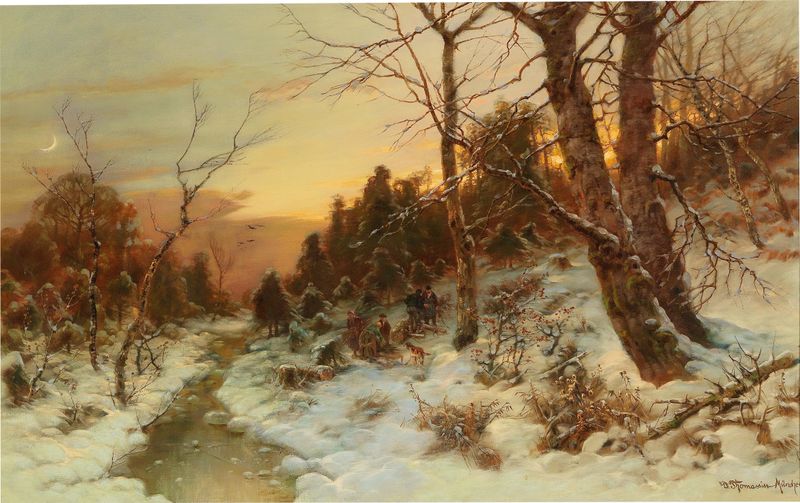
Woodworkers In A Winter Woodland
Désiré Thomassin
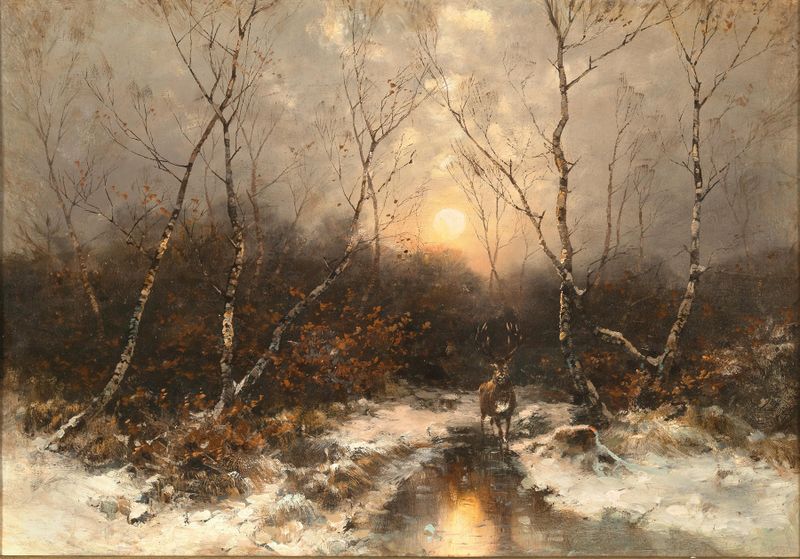
A Deer in a Forest by Moonlight
Désiré Thomassin
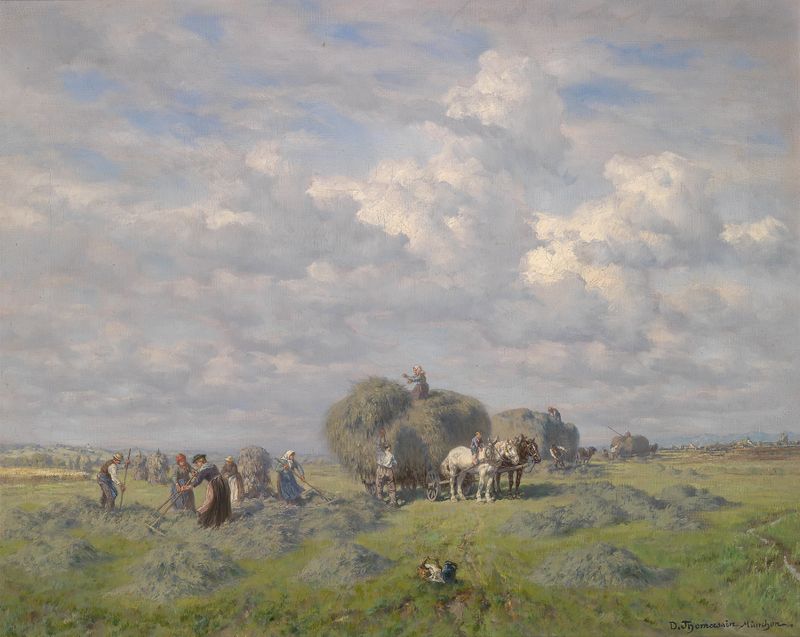
Heuernte an einem Sommertag
Désiré Thomassin

Rehe in Winterlandschaft
Désiré Thomassin
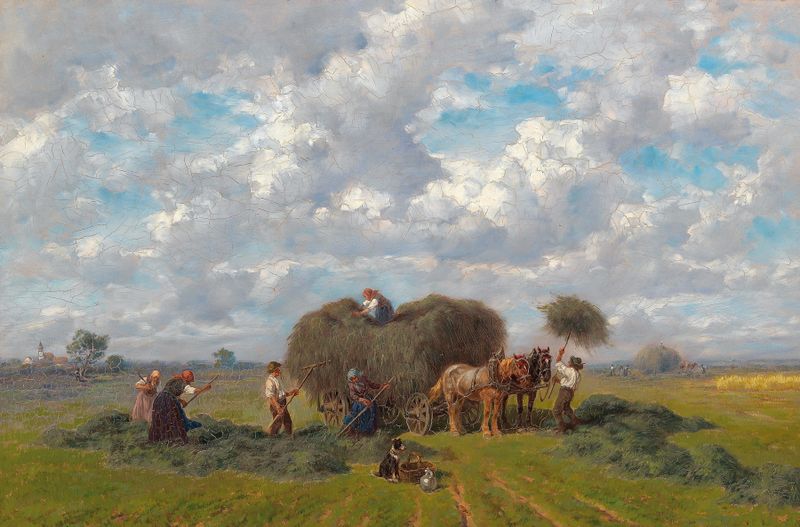
Harvesting
Désiré Thomassin
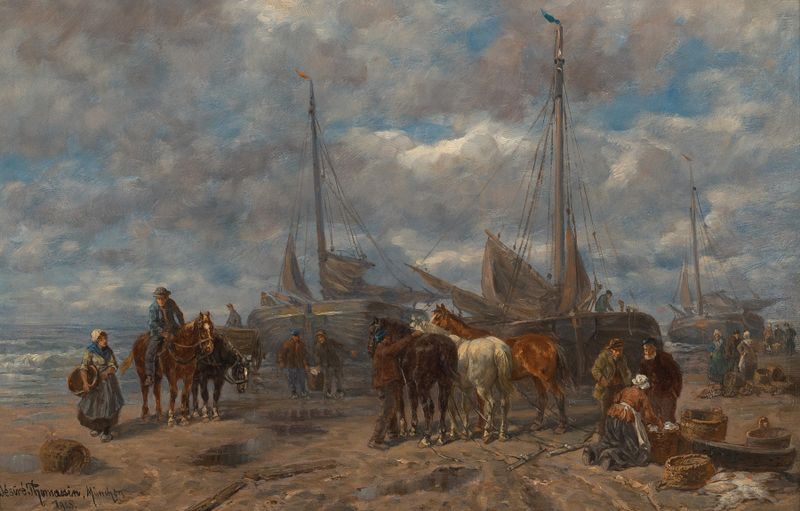
The Homecoming of the Fishermen, Market on the Beach
Désiré Thomassin
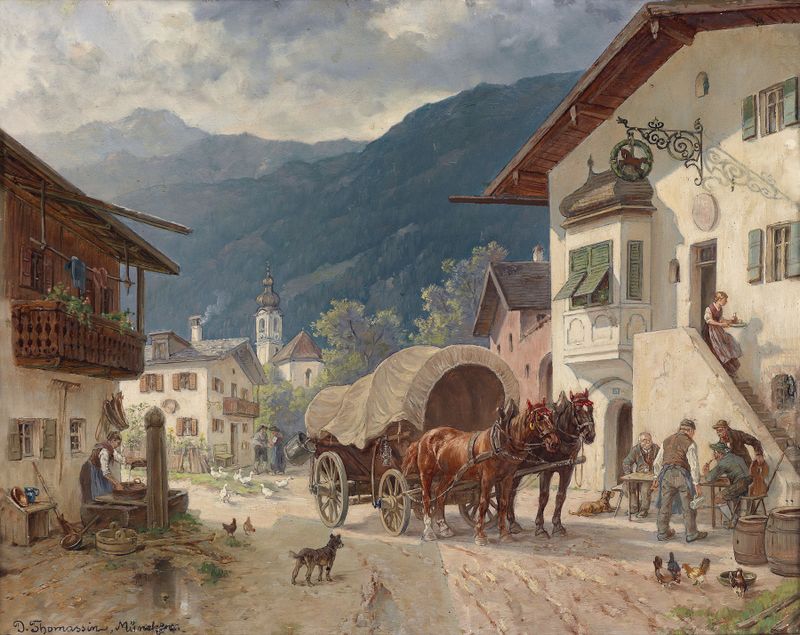
Rast vor dem Wirtshaus
Désiré Thomassin

Returning Home From The Hunt At Sunset
Désiré Thomassin

Returning Home At Sunset
Désiré Thomassin





