Winterlandschap — History & Facts
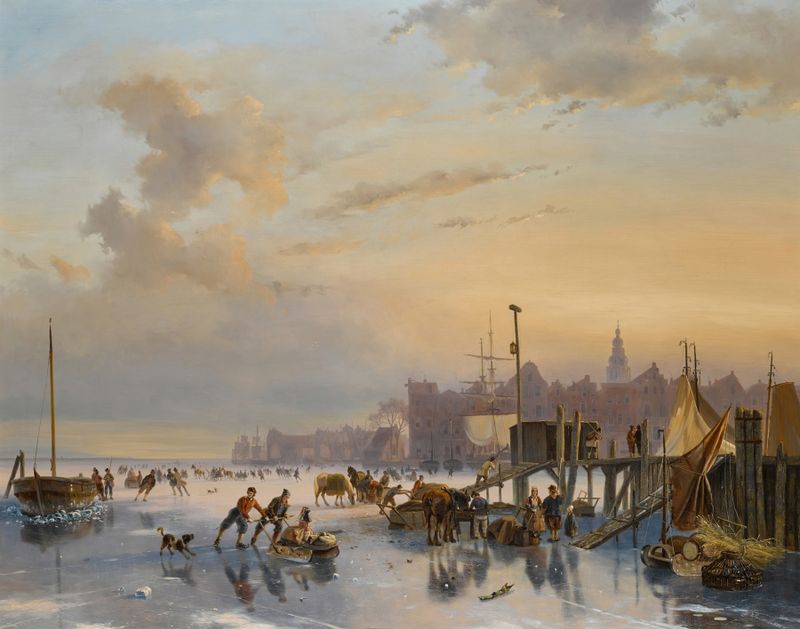
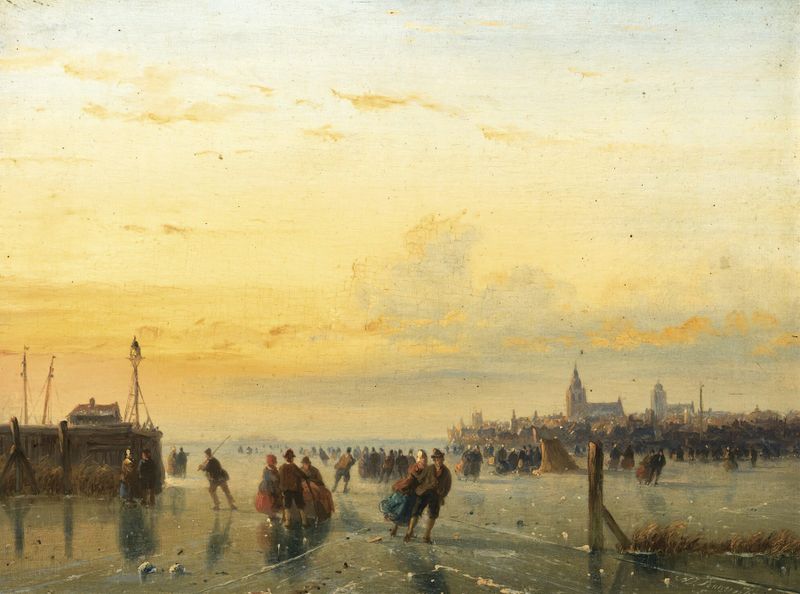
Could beauty survive in a century of chaos? In a world trembling under the weight of turmoil, the delicate landscapes of Roosenboom offer a poignant sanctuary for the soul. Look closely at the serene expanse of Winterlandschap, where the eye is drawn first to the expansive, snow-laden field stretching across the canvas. Notice how the light plays softly on the untouched snow, casting gentle shadows that whisper of fleeting moments. The muted blues and grays interlace with hints of warm earth tones, creating a contrast that evokes both tranquility and quiet desolation.
The composition's balance, with the distant horizon framing a vast, open sky, invites reflection on the simplicity of nature amidst chaos. In those small details lies the emotional depth of the painting—watch for the faint trails etched in the snow, hinting at life that has come and gone, a subtle reminder of resilience. The stillness of the scene encapsulates an underlying tension, suggesting a world both peaceful and laden with the weight of unspoken stories. Each brushstroke resonates with the viewer, urging them to ponder the transient beauty of existence and the inevitable march of time. This work emerged from the heart of 19th-century Netherlands, during a period when Roosenboom was establishing his reputation amidst a growing interest in landscapes.
Although the exact date remains unknown, the artist crafted his vision during an era marked by industrial change, capturing the poignant beauty of nature even as the world outside was rapidly transforming. His ability to evoke emotion through reflection on the natural world remains a hallmark of his legacy.