Winterlandschap — History & Facts
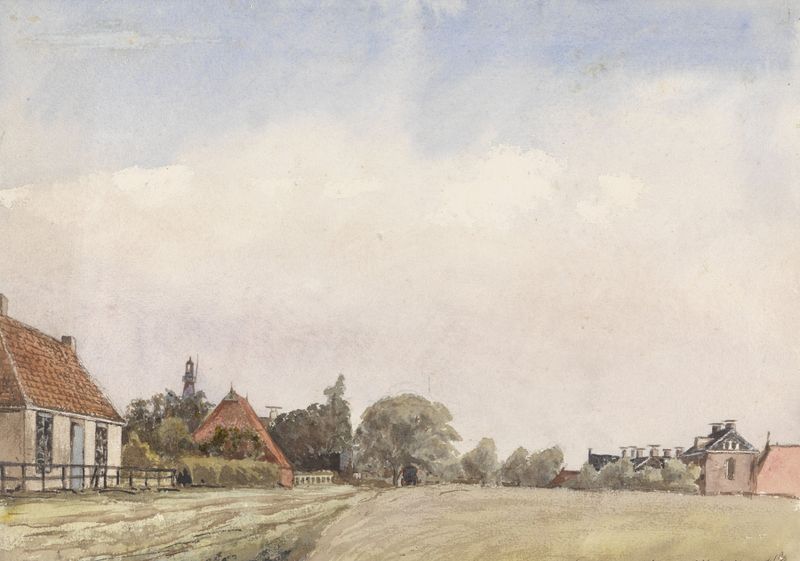
Did the painter know this moment would outlive them? The stillness of a winter landscape, captured in a fleeting brushstroke, invites us to ponder the ephemeral nature of existence against the enduring beauty of art. Look to the left at the serene expanse of snow, where delicate crystals glisten under a soft, pale light. The horizon stretches wide, and the stark trees, bare and resolute, rise like silent sentinels against the cool blue sky. Notice how the light subtly grazes the undulating surface of the snow, its luminance beckoning the viewer deeper into the landscape, creating a gentle contrast between the warm tones in the foreground and the cooler hues in the distance. Beneath the tranquil surface, the painting resonates with themes of isolation and resilience.
The fragile beauty of the snow invites awe, yet evokes a sense of solitude, reminiscent of life's quiet moments. The lone figure, barely discernible, adds a layer of human connection, suggesting the universal struggle against nature's vastness, a contrast between the individual and the sublime world surrounding them. In 1888, the artist created this masterpiece during a period marked by a burgeoning interest in naturalism and landscape painting in Europe. Living in the Netherlands, he aimed to capture the raw beauty of winter, a time when nature is stripped bare, revealing its stark but exquisite form.
This work reflects a pivotal moment in the evolution of landscape artistry, bridging romantic ideals with the emerging realism of the era.