
Winterliche Dorfansicht — History & Facts
In the stillness of winter, where silence blankets the landscape, one can sense the dormant madness beneath the surface—an unspoken tension masked by serene beauty. Look to the left of the canvas, where a cluster of quaint wooden houses emerges from the snow, their roofs heavy with frost. Notice how the chill of winter seeps into the palette; cool blues blend with muted whites and grays, creating a tranquil yet somber atmosphere. This juxtaposition of warmth from the small, inviting windows against the stark, cold backdrop evokes a sense of isolation, drawing the viewer deeper into the scene. Delve into the delicate interplay of light and shadow, with soft rays peeking through the clouds, casting a fleeting glow on the unyielding snow.
The figures skimming across the foreground—hunched and bundled in their winter garb—suggest a daily life interrupted, hinting at the latent struggles and unseen madness that exists in this quiet village. One can almost sense the yearning for warmth, connection, or perhaps escape from the world beyond this tranquil yet oppressive landscape. During the period from 1860 to 1880, Anton Doll captured Winterliche Dorfansicht while navigating a shifting art scene influenced by Romanticism's embrace of nature and emotion. Living in Germany, Doll was influenced by the surrounding tumult of social change, which often permeated the art of the time, reflecting both the peace found in rural life and the deeper madness of a world in flux.
More Artworks by Anton Doll
Browse all →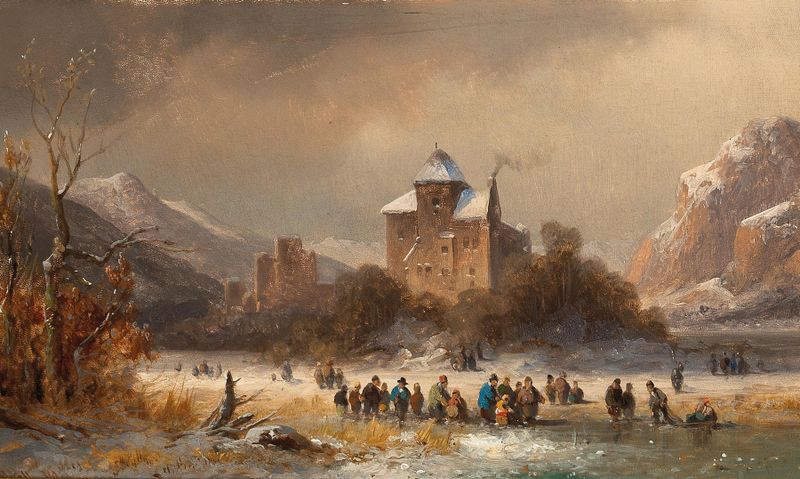
Ruine Kropfsberg und Schloß Lichtwert
Anton Doll
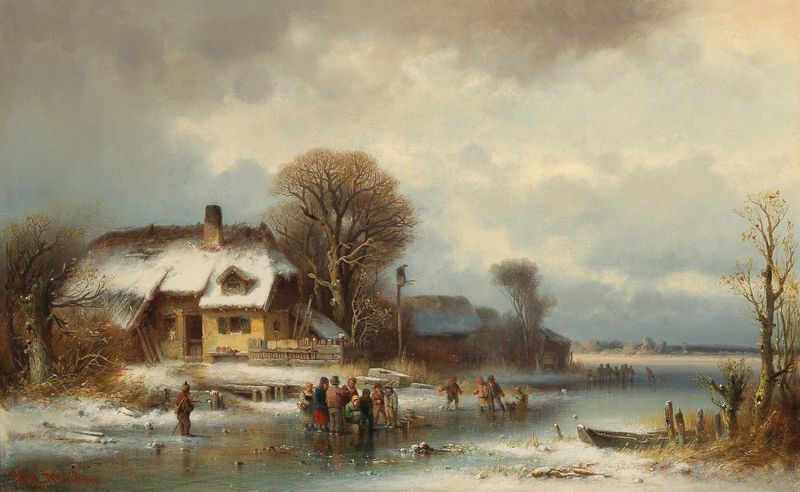
Winter Landscape With Ice Skaters
Anton Doll

Winter Amusements With A Town In The Background
Anton Doll
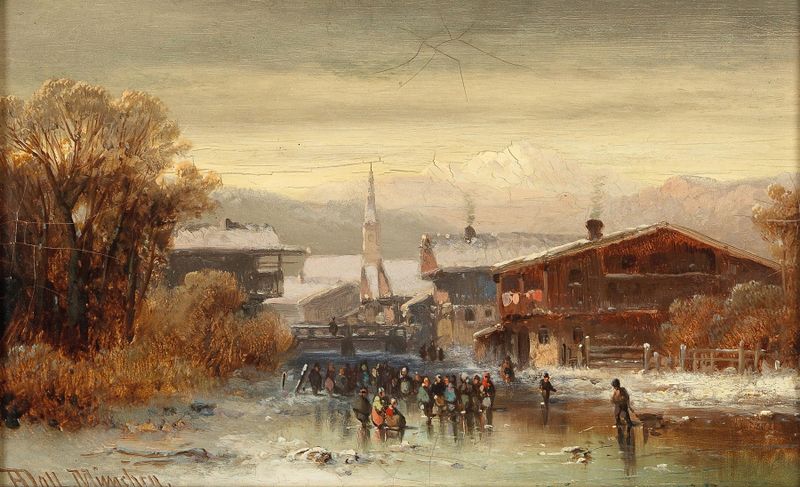
View Of Hardt On Lake Constance
Anton Doll
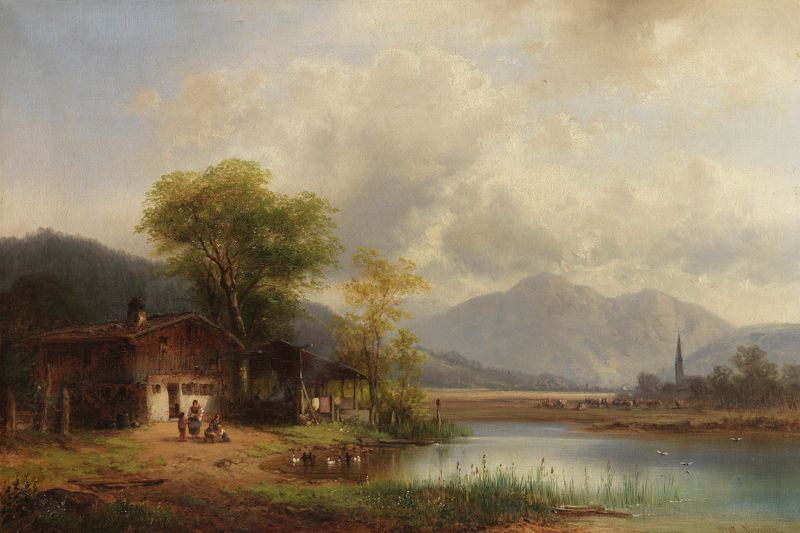
Oberbayerische Landschaft mit Waschhaus am See
Anton Doll
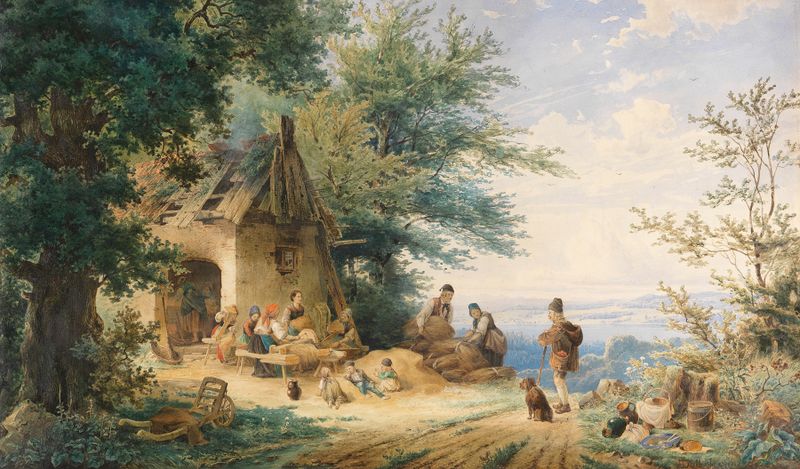
Sommerliche Landschaft mit Bauern bei der Flachsverarbeitung
Anton Doll

Wintervergnügen
Anton Doll
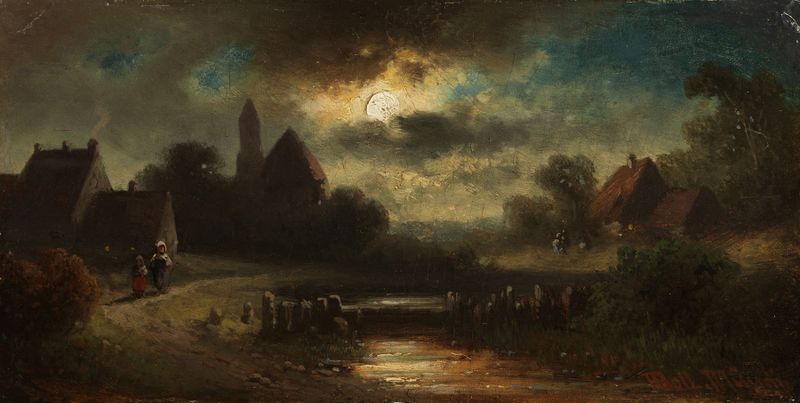
Dorfansicht in der Abenddämmerung
Anton Doll

Winterliche Flusslandschaft mit figürlicher Staffage
Anton Doll
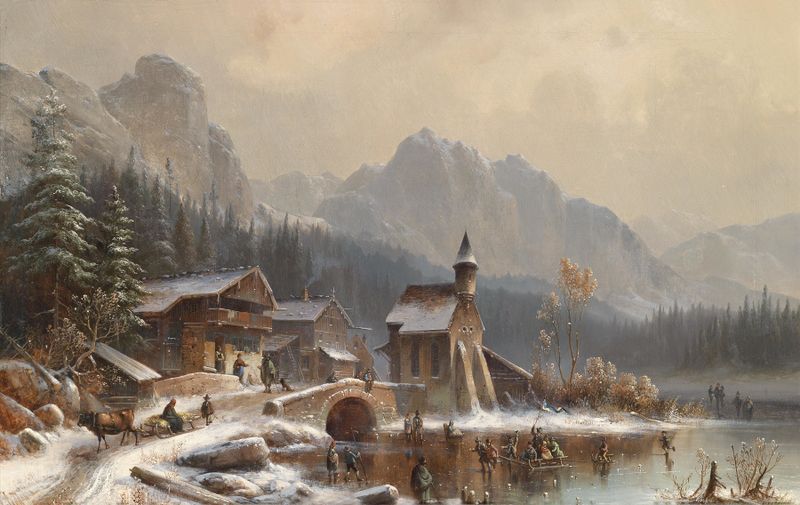
Wintervergnügen
Anton Doll





