Wit linnen pellen servet — History & Facts
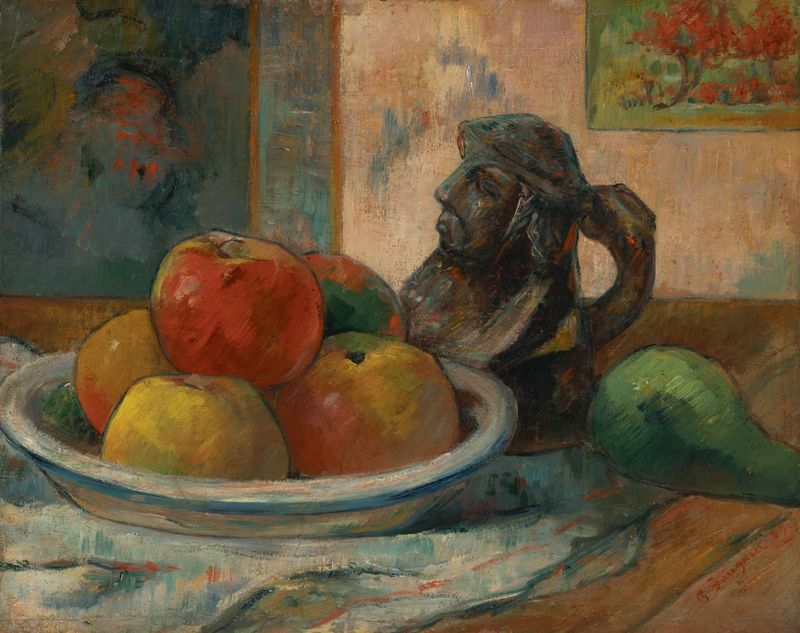
In a world that often turns its back on history, the act of creation becomes an intimate act of rebirth, a reclamation of what has been lost. Look closely at the delicate interplay of muted whites and gritty textures in the composition. Focus on the meticulously detailed linen being peeled away, revealing layers of meaning beneath. The artist’s choice of soft, subtle tones invites a contemplative gaze, while the skillful brushwork conveys a sense of effort and ritual.
Every fold and crease of the fabric captures light in a way that highlights the labor of transformation, offering a glimpse into a moment suspended in time. As you observe, consider the relationship between the cloth and what lies beneath. The act of peeling away the linen signifies the unveiling of new beginnings; it hints at the shedding of the old self to reveal a renewed essence. There is a tension between vulnerability and strength, as the fabric clings to the surface, resisting release while simultaneously hinting at what is to come.
This duality resonates deeply, speaking to the universal human experience of change and rebirth. Created between 1680 and 1720, this work stands as a testament to the anonymous artist’s intimate engagement with the fabric of everyday life. During this period, Europe was undergoing profound shifts—socially, politically, and artistically. The rise of still-life painting reflected a growing interest in domesticity and the passage of time, where objects were more than mere representations; they were carriers of deeper meanings, encapsulating the delicate balance between existence and transience.