Wooded Landscape with Hunters and Fortune Teller — History & Facts
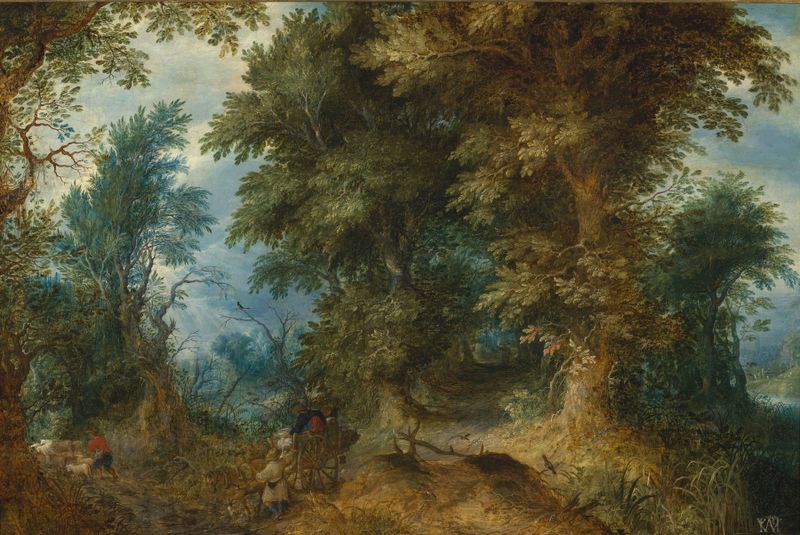
In the quiet of a wooded landscape, the secrets of ambition and desire intertwine, revealing the obsession that lies beneath the surface of everyday life. Look to the center of Wooded Landscape with Hunters and Fortune Teller, where a group of hunters, poised with anticipation, draws your gaze. The light plays delicately through the leaves, illuminating the fortune teller, her presence both enigmatic and commanding. Her vibrant garments contrast sharply with the earthy hues surrounding her, creating a focal point that invites intrigue and contemplation amidst the shadows of the dense forest. As you observe, notice the hunters’ expressions—caught between skepticism and belief—each gesture revealing their inner turmoil.
The juxtaposition of their determined stances against the fortune teller’s calm aura heightens the tension of expectation, accentuating the obsession with fate and desire that permeates the scene. The lush green of the foliage symbolizes both abundance and the wild, untamed nature of human longing, while the soft browns ground the viewer in reality, reminding us of the weight of consequence. Abraham Govaerts painted this work in 1612, a time when both the Baroque movement and an interest in genre scenes flourished in Northern Europe. Living and working in Antwerp, Govaerts was influenced by the burgeoning interest in capturing moments of everyday life with rich detail and a sense of narrative.
The painting reflects not only his mastery of landscape but also the cultural zeitgeist of an era fascinated by the intersections of fortune and fate.