Zimná krajina — History & Facts
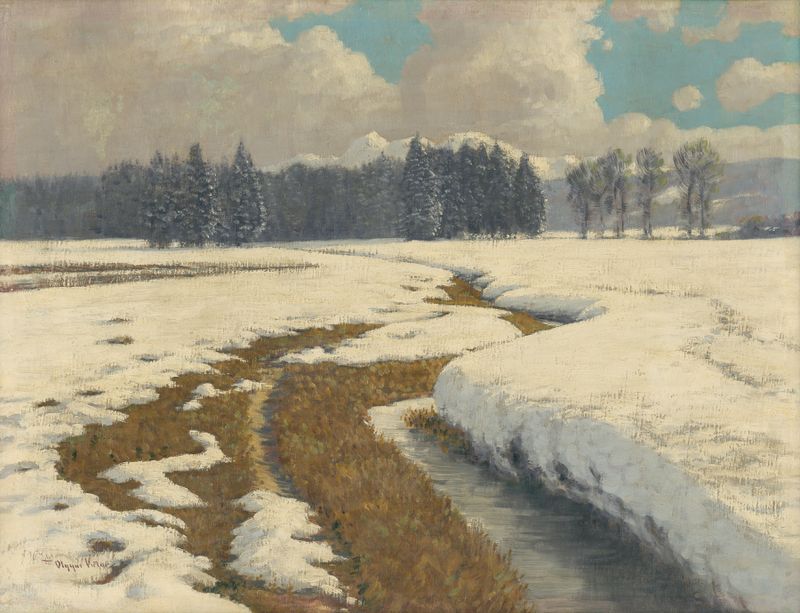
In the vast expanse of emptiness, the viewer is drawn into a solemn winter landscape, where isolation becomes a canvas for introspection. The quiet stillness evokes a sense of longing, as if the very snowflakes hold memories of lives once lived. Look to the foreground, where soft, muted whites and grays stretch endlessly, creating a serene yet haunting atmosphere. Notice how the delicate brushwork contrasts with the solid, shadowy trees that loom in the distance, their dark silhouettes acting as sentinels in a quiet world.
The gentle gradation of colors captures the coldness of winter, while subtle highlights suggest the faint glow of a hidden sun, illuminating the scene with a ghostly touch. Delve deeper into the composition, where hidden meanings emerge. The emptiness of the landscape reflects feelings of solitude and contemplation, inviting the viewer to recognize their own place within the boundless void. The interplay between light and shadow not only highlights the beauty of the winter scene but also hints at the duality of existence, suggesting both desolation and tranquility.
Each element serves as a reminder of the fragility of life in the face of nature’s enduring vastness. Created in 1920, this work came during a time of upheaval in Europe, following the end of World War I. Viktor Olgyai, working in Hungary, was influenced by the shifting art movements of the era, including Impressionism and early Modernism. This painting reflects the artist's response to the stark realities of a changing world, capturing both the haunting beauty and profound silence of winter's grasp.