
Zürich, von Norden — History & Facts
Did the painter know this moment would outlive them? An ordinary cityscape, yet it pulses with the weight of unspoken grief. Look to the left at the delicate contours of distant mountains, their peaks softly cradled in the embrace of drifting clouds. Notice the gentle curves of the buildings below, their earthy tones contrasting with the cool blues and grays of the sky. Biedermann orchestrates light with precision, allowing it to cascade down, drawing the eye towards the shimmering surface of the water, where reflections ripple gently, evoking both tranquility and an unsettling sense of longing. The scene teems with emotional tension; the serene water symbolizes both life and loss.
The sprawling city, though alive, seems almost isolated against its natural backdrop, as if the buildings stand as silent witnesses to the passage of time. A solitary figure could be imagined wandering through the streets, each step echoing with the weight of history and individual stories that remain untold. This subtle juxtaposition of nature's grandeur and human fragility invites contemplation on the endurance of memory amidst inevitable change. Biedermann created this work during a period when the Romantic movement was blossoming, and as an artist in 19th-century Switzerland, he was influenced by the evolving relationship between humanity and nature.
The artistic community was exploring feelings of nostalgia and the sublime, grappling with the complexities of modern existence against the backdrop of a transforming world. In this context, the artist's landscape serves not merely as a picturesque view but as a poignant reflection of the human condition.
More Artworks by Johann Jakob Biedermann
Browse all →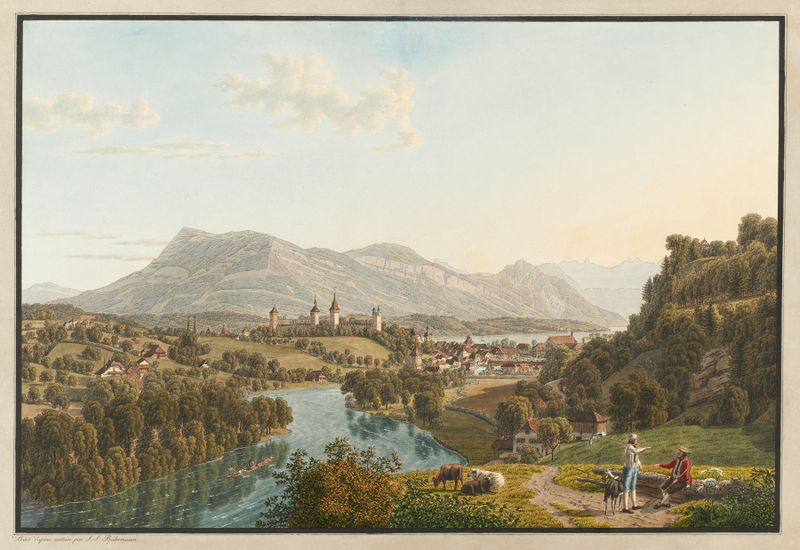
Luzern, von Nordwesten
Johann Jakob Biedermann

Sankt Gallen, von Norden
Johann Jakob Biedermann

Le Glacier nommé Rosenlaui, à côté du Wetterhorn
Johann Jakob Biedermann

Gottstatt, Kloster, von Nordwesten
Johann Jakob Biedermann
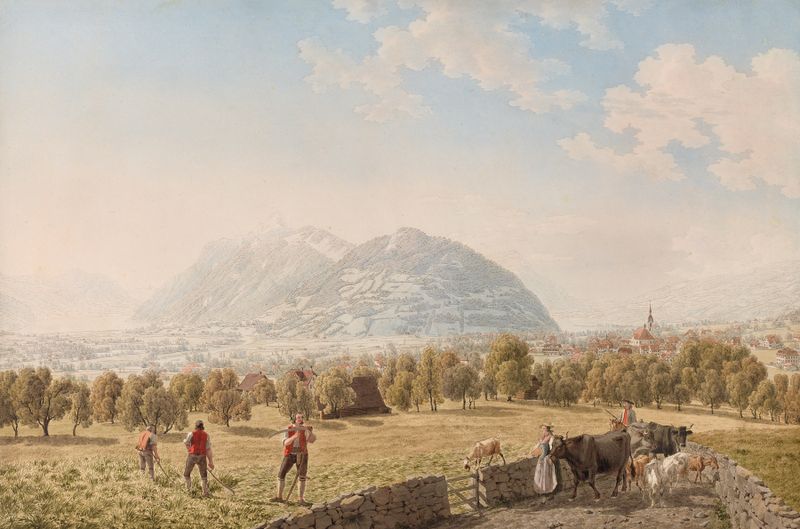
Schwyz, von Osten
Johann Jakob Biedermann

Twann und Bielersee von Nordosten
Johann Jakob Biedermann

Luzern, von Nordwesten
Johann Jakob Biedermann

Luzern, von Südwesten
Johann Jakob Biedermann
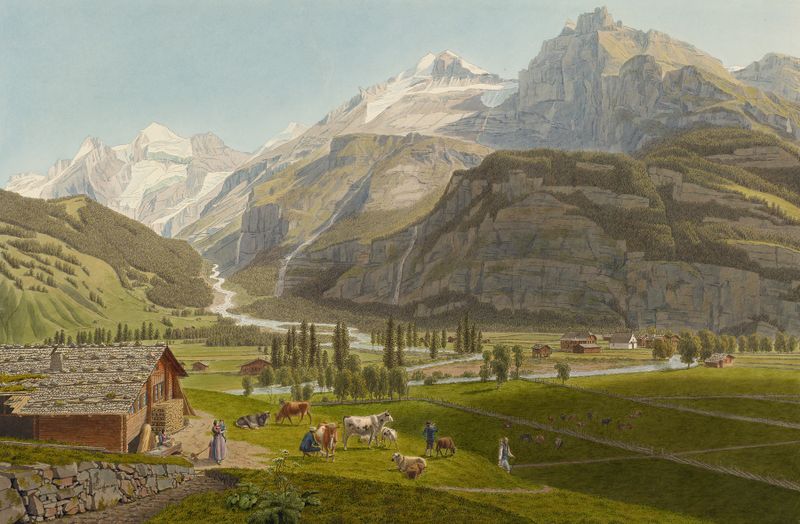
Kandersteg und das Kandertal, von Norden
Johann Jakob Biedermann

Schaffhausen, von Westen
Johann Jakob Biedermann





