
Zwei Reiter, die ihren Weg über eine Tierweide nehmen — History & Facts
When did color learn to lie? Beneath the surface of innocence lies the complexity of human experience, a paradox waiting to be unraveled. Look to the left at the two riders, silhouetted against the gentle curve of a verdant landscape, a serene pastoral scene that invites tranquility. Observe how Biedermann employs a soft palette of greens and pale blues, blending effortlessly to create a harmonious backdrop, while the figures emerge with more defined outlines. The light subtly catches the edges of their forms, suggesting movement and purpose on their journey across the meadow, conveying not just their physical passage, but a deeper exploration of freedom and aspiration. Yet, amidst this idyllic setting, there is an undercurrent of tension.
The riders’ faces, although framed with innocence, hint at the burdens they carry—perhaps the weight of societal expectations or personal desires. The soft breeze captured in the swaying grass juxtaposes the stillness of their expressions, as if the landscape breathes with secrets of its own. This duality suggests that innocence is often intertwined with unspoken challenges, a theme as timeless as nature itself. In 1783, while living in Germany, Johann Jakob Biedermann crafted this piece during a period of artistic transition, where the Rococo’s whimsy was giving way to the more austere Neoclassical ideals.
In the wake of Enlightenment thinking, artists were questioning the romanticization of rural life, and Biedermann’s work reflects this introspection, bridging the gap between tenderness and reality. His exploration of landscape art invites viewers to reflect not just on beauty, but on the complexities of human existence within it.
More Artworks by Johann Jakob Biedermann
Browse all →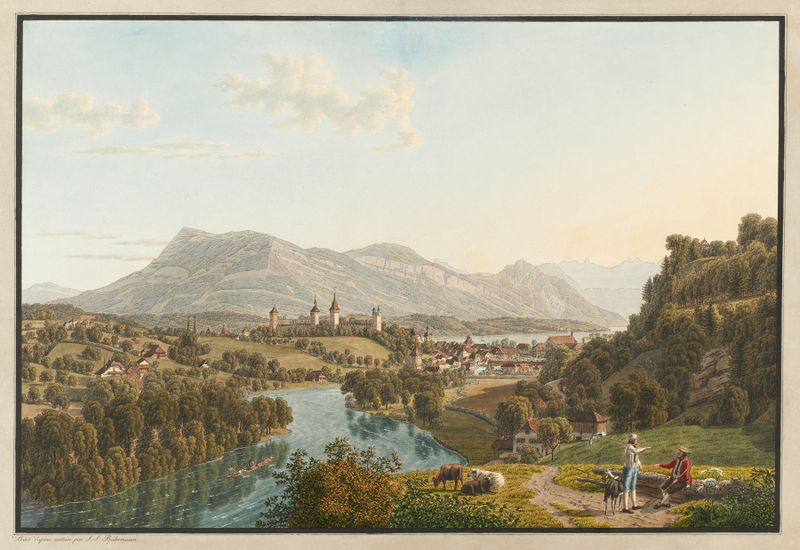
Luzern, von Nordwesten
Johann Jakob Biedermann

Sankt Gallen, von Norden
Johann Jakob Biedermann

Le Glacier nommé Rosenlaui, à côté du Wetterhorn
Johann Jakob Biedermann

Gottstatt, Kloster, von Nordwesten
Johann Jakob Biedermann
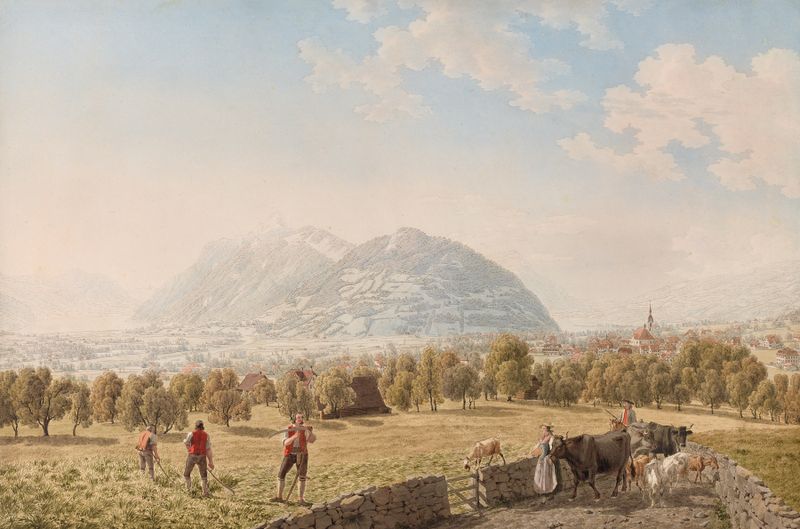
Schwyz, von Osten
Johann Jakob Biedermann

Twann und Bielersee von Nordosten
Johann Jakob Biedermann

Luzern, von Nordwesten
Johann Jakob Biedermann

Luzern, von Südwesten
Johann Jakob Biedermann
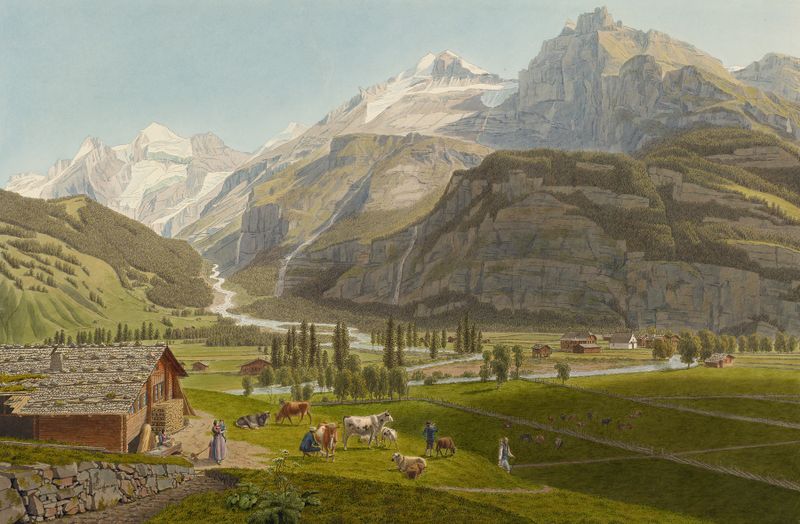
Kandersteg und das Kandertal, von Norden
Johann Jakob Biedermann

Schaffhausen, von Westen
Johann Jakob Biedermann





