
Van Gogh Sunflowers Series: 9 Remarkable Paintings Explored
The van Gogh sunflowers series is one of the most celebrated collections in art history. Vincent van Gogh created these paintings between 1886 and 1890, capturing the vibrant beauty and complex symbolism of sunflowers. This series reflects Van Gogh's evolving style and his deep fascination with the cycle of life and death. Each painting offers a unique perspective on the sunflower motif, revealing Van Gogh's mastery of color and emotion.
Sunflowers, 1887
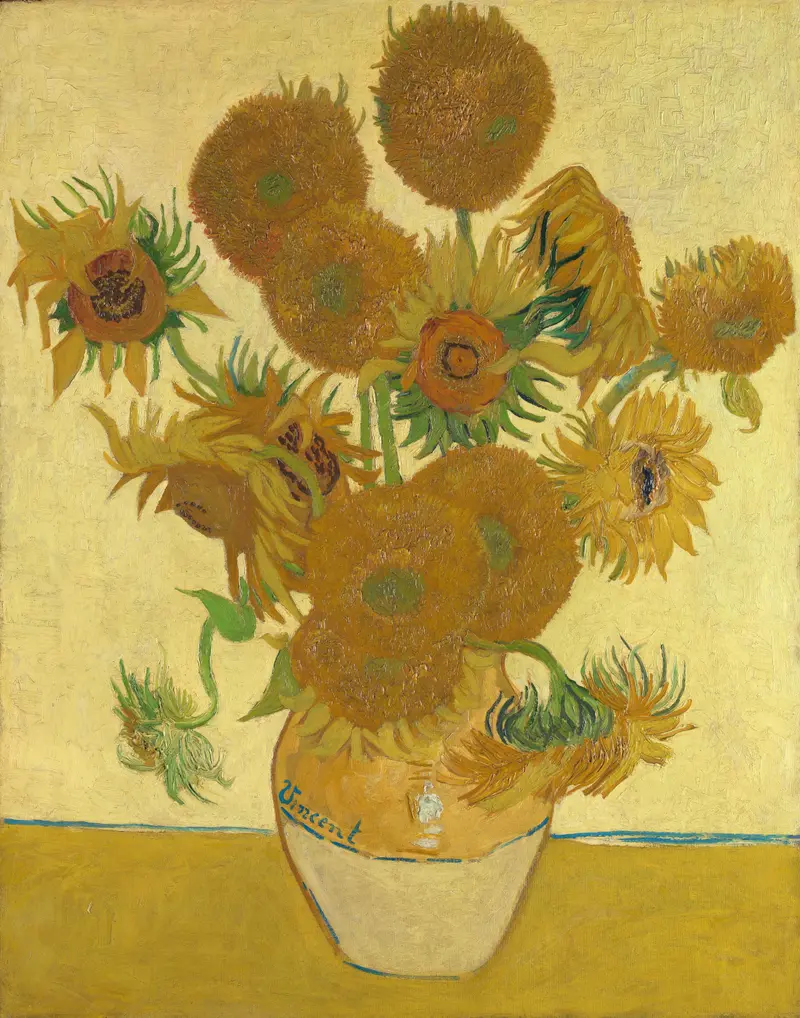
This painting, housed at the Metropolitan Museum of Art, showcases Van Gogh's early exploration of the sunflower motif. The composition features vibrant yellow flowers in a vase, with each bloom depicted at various stages of life. The rich yellows, greens, and browns create a warm atmosphere, while the expressive brushwork adds depth to the flowers. This work exemplifies Van Gogh's ability to infuse emotion into his botanical subjects.
Three Sunflowers in a Vase, 1888
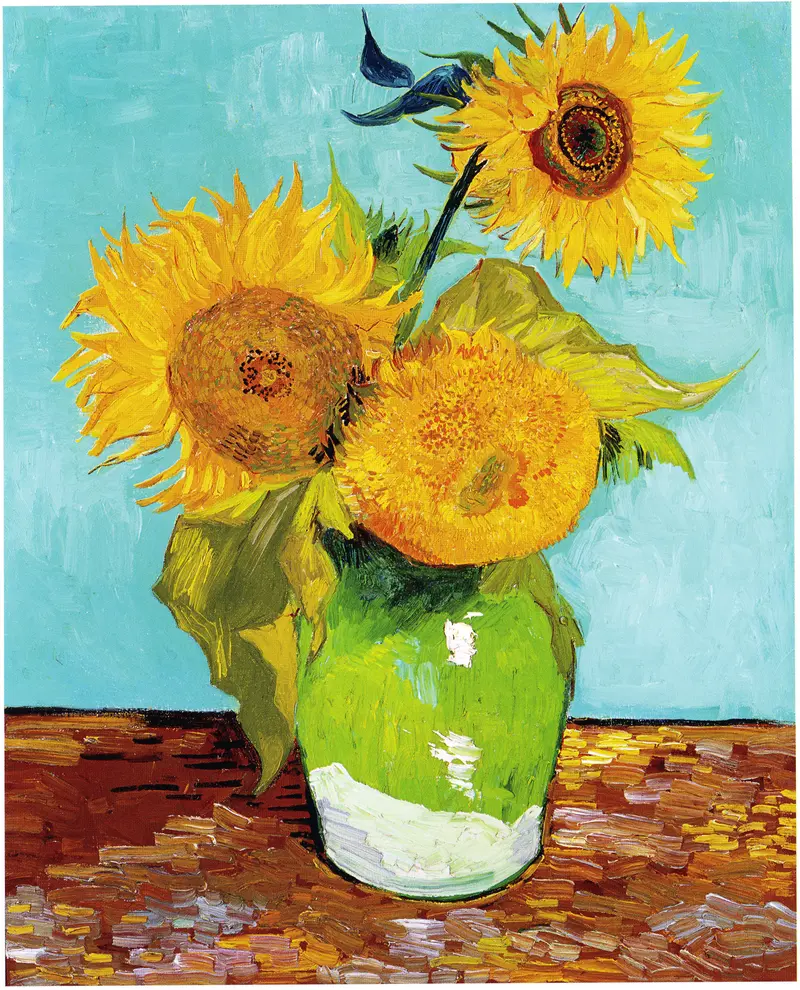
Painted during Van Gogh's time in Arles, this piece is part of a series intended to decorate his 'Yellow House.' The painting captures three sunflowers arranged in a vase, emphasizing a 'symphony in blue and yellow.' Van Gogh envisioned these works as symbols of friendship and artistic collaboration, particularly with Paul Gauguin. This artwork reflects his ambition to create a welcoming space filled with vibrant energy.
Sunflowers, 1889
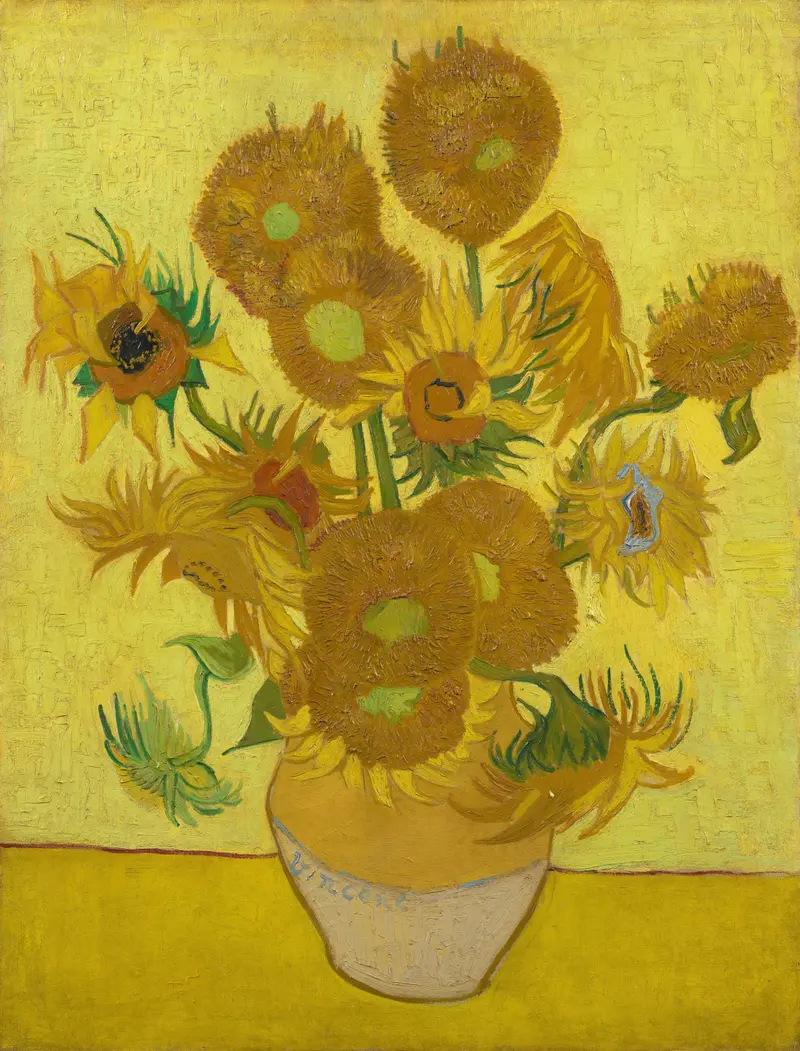
In this painting, twelve sunflowers are arranged in an earthenware vase against a yellow background. The flowers are depicted with thick, swirling brushstrokes, capturing their vitality and decay. Created in 1889, this work represents Van Gogh's continued fascination with the life cycle of flowers. The painting's dynamic composition and bold color palette highlight Van Gogh's post-impressionist style.
Bowl with Sunflowers, Roses and Other Flowers, 1886
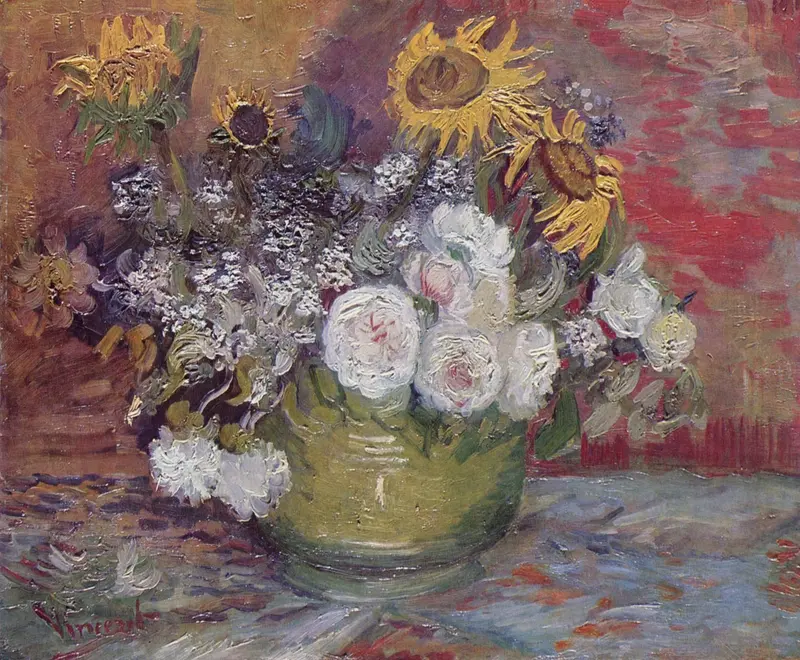
This still life marks Van Gogh's initial foray into floral subjects during his time in Paris. Painted in 1886, it predates the famous Arles series and showcases his early experiments with color and composition. The painting includes sunflowers alongside roses and other flowers, offering a glimpse into Van Gogh's evolving artistic vision. This work reflects his transition into the vibrant floral still lifes for which he would become renowned.
Four Withered Sunflowers, 1887
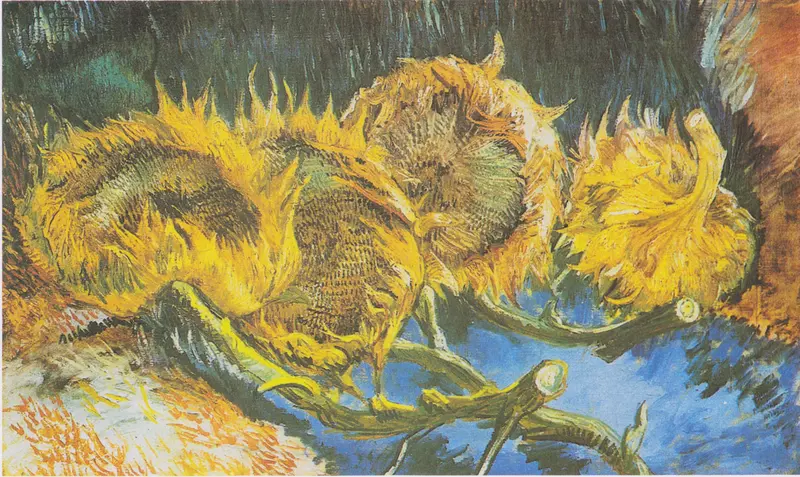
This painting stands out in the series for its focus on decay rather than bloom. Created in Paris in 1887, it features four drooping sunflowers, their petals curled inward. This work marks a turning point in Van Gogh's exploration of the sunflower motif, emphasizing the life cycle and the passage of time. The somber mood and unusual subject matter add depth to Van Gogh's botanical studies.
Sunflowers Gone to Seed, 1887
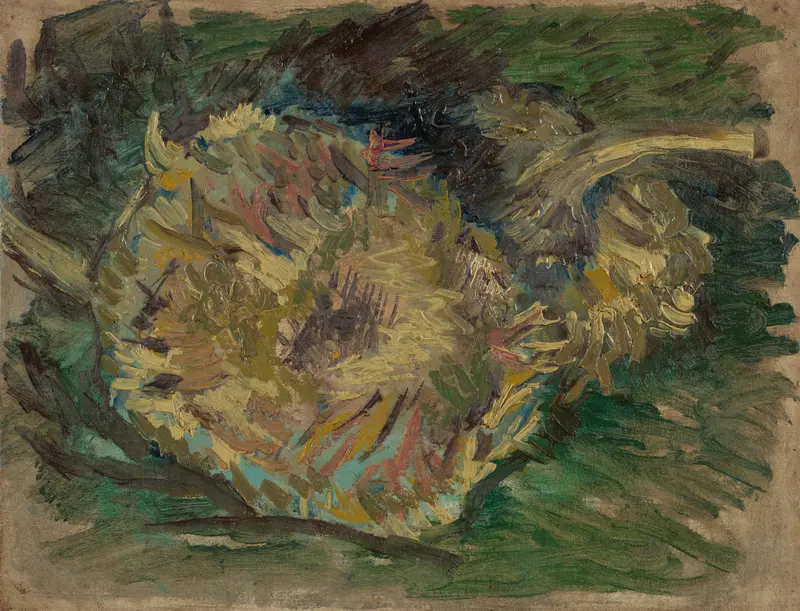
Unlike Van Gogh's more famous sunflower paintings, this work depicts the flowers at the end of their cycle. Painted in 1887, it features heavy, drooping heads with seeds spilling out, symbolizing mortality and renewal. The composition lacks the typical vase arrangement, offering a raw and unfiltered view of nature's processes. This painting is a meditation on the transient beauty of life.
Two Cut Sunflowers, 1887
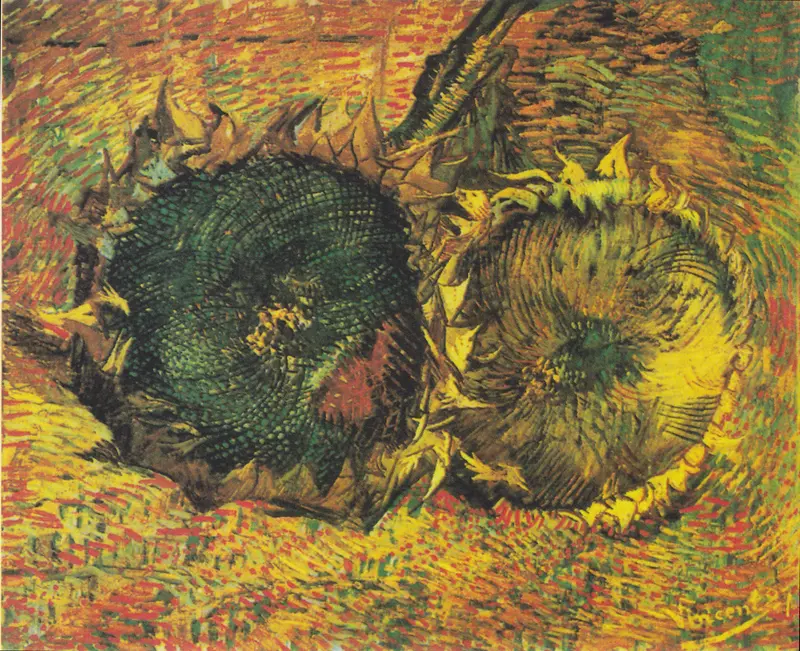
Created in Paris in 1887, this work is one of Van Gogh's early explorations of the sunflower theme. The painting features two sunflowers, highlighting the artist's interest in form and color. Van Gogh's use of bold, unmixed colors and expressive brushwork is evident, reflecting his growing fascination with the flower as a symbol of gratitude and friendship. This piece predates the more well-known Arles series.
House with Sunflowers, 1890
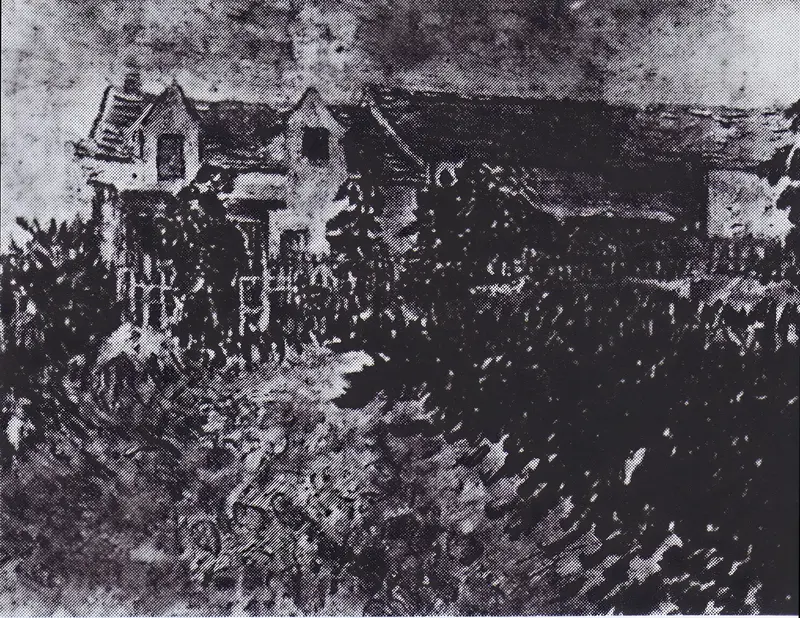
Painted in Auvers-sur-Oise in 1890, this artwork combines two of Van Gogh's favorite motifs: the rural house and sunflowers. The flowers bloom in a real garden, integrating Van Gogh's imagined and observed worlds. Created shortly before his death, the painting radiates a quiet optimism, reflecting his enduring hope and resilience. Unlike his still lifes, the sunflowers here are rooted in the earth, symbolizing stability and growth.
Still Life: Vase with Five Sunflowers, 1888
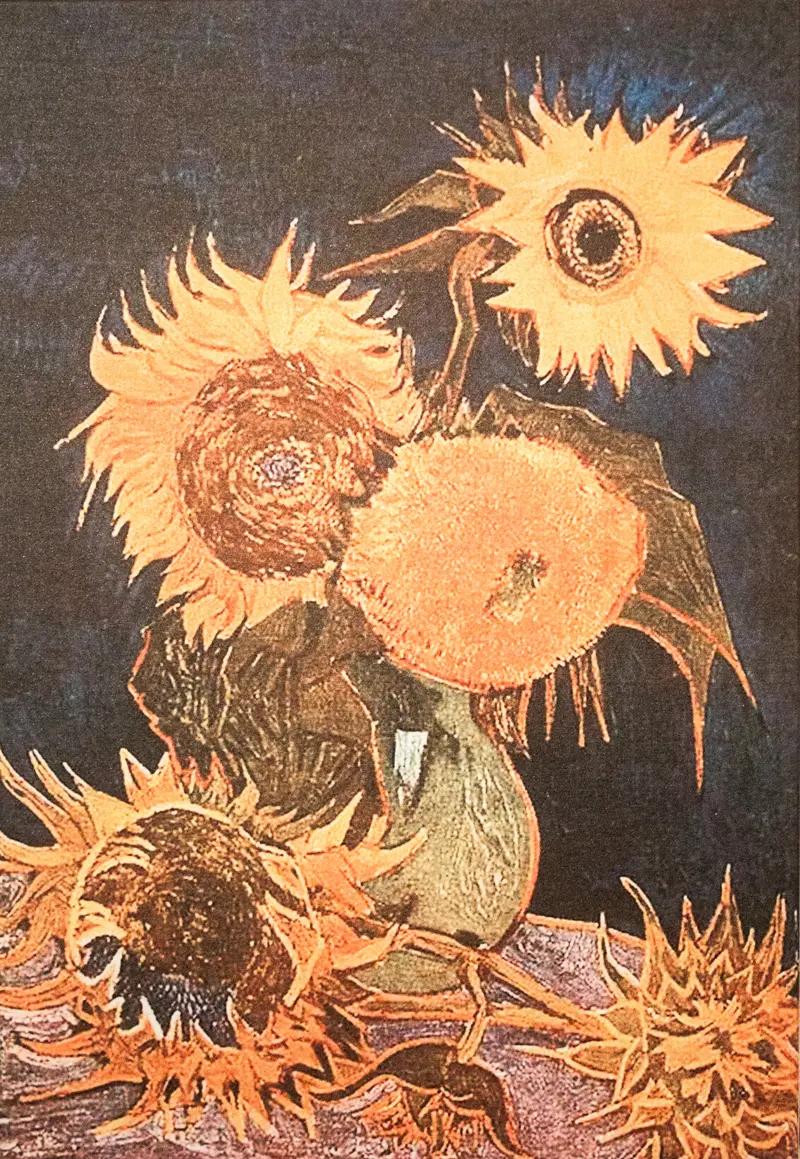
This lost painting was part of Van Gogh's Arles series, last seen in 1920. Known only through photographs and descriptions, it featured a simple vase with five sunflowers. Created during Van Gogh's preparations for Paul Gauguin's visit, the work was intended to contribute to an artists' community in the south of France. Its disappearance leaves a gap in the series, yet it remains a significant part of Van Gogh's legacy.
The van Gogh sunflowers series offers a compelling look into the artist's evolving style and deep connection to nature. Each painting captures a unique aspect of the sunflower motif, reflecting Van Gogh's mastery of color and emotion. Explore and download these remarkable works in high resolution for free on FineArtFree.