
À falaises (Pastoral Landscape). — History & Facts
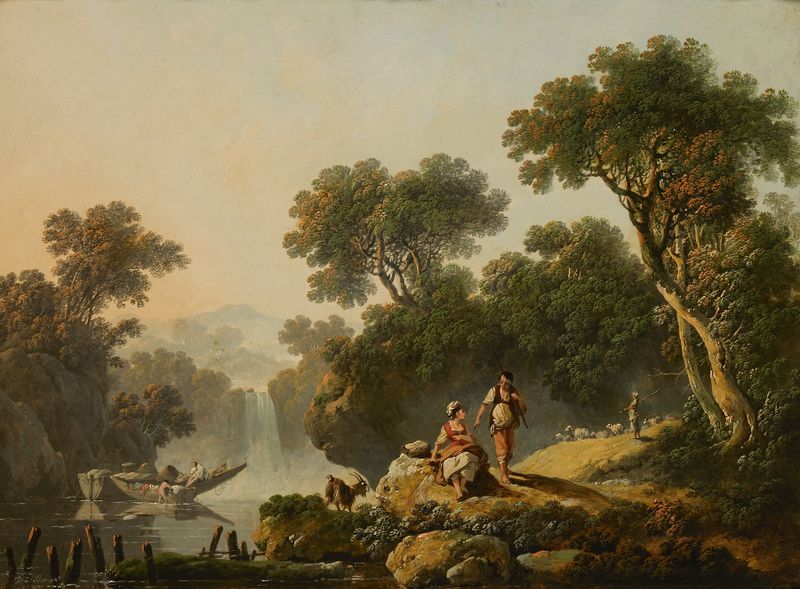
When did color learn to lie? In the realm of art, hues can both illuminate and deceive, drawing viewers into a world that teeters between reality and imagination. This painting invites us to ponder the obsessions that color can inspire, as well as the tensions that lie beneath the vibrant surface. Look to the foreground, where verdant greens and soft blues dance together, creating a harmonious landscape that beckons the eye. Notice how the gentle curves of the hills guide you toward the horizon, their colors transitioning seamlessly, hinting at an idyllic yet artificial paradise.
This delicate interplay of light and shadow reveals Pillement's masterful technique, employing soft brushstrokes that evoke a sense of tranquility, yet leave an underlying question about the authenticity of such a pastoral scene. As you delve deeper, observe the contrasting elements; the idyllic setting is punctuated by isolated figures, small and almost lost against the overwhelming beauty of nature. These human forms appear to be mere spectators in a grand tableau, raising questions about their role and significance. The juxtaposition of man and landscape speaks to a tension between the individual and their environment, inviting contemplation on the obsessive nature of seeking solace in the picturesque while possibly overlooking the complexities of existence. Jean-Baptiste Pillement painted this work during the 18th century, a time when the Rococo style was flourishing, emphasizing elegance and charm.
Active in both France and England, Pillement was known for his landscapes that combined reality and fantasy, reflecting the era's fascination with a pastoral ideal. His works often catered to a society enamored with beauty and leisure, standing as a testament to the artistic innovations and cultural shifts that defined his life and times.
More Artworks by Jean-Baptiste Pillement
Browse all →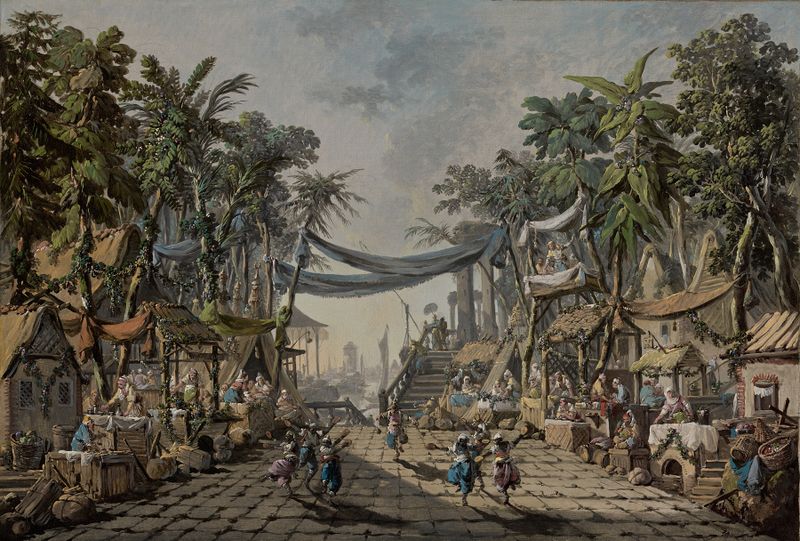
Market Scene in an Imaginary Oriental Port
Jean-Baptiste Pillement
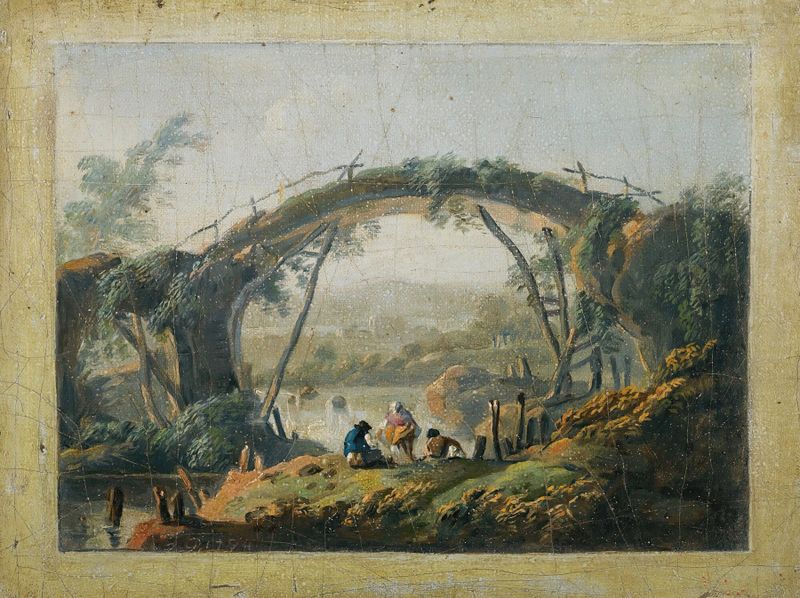
A Pair Of River Landscapes With Figures Approaching A Bridge
Jean-Baptiste Pillement
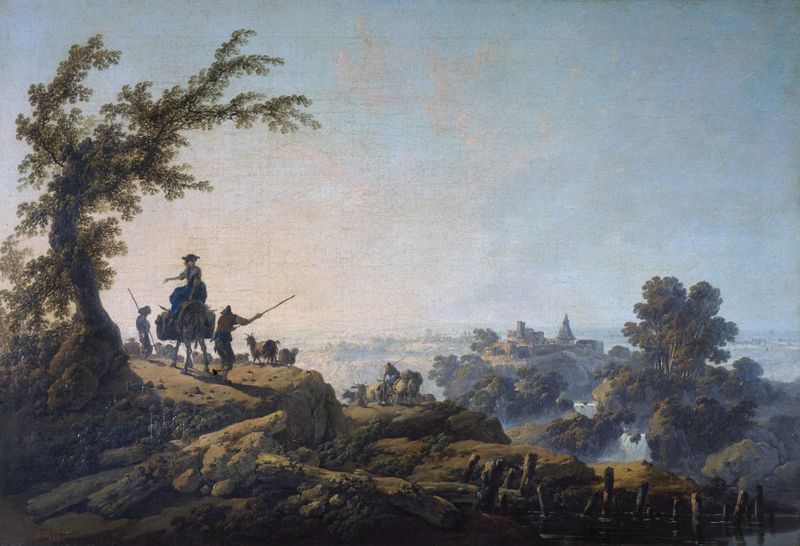
Paysage animé
Jean-Baptiste Pillement
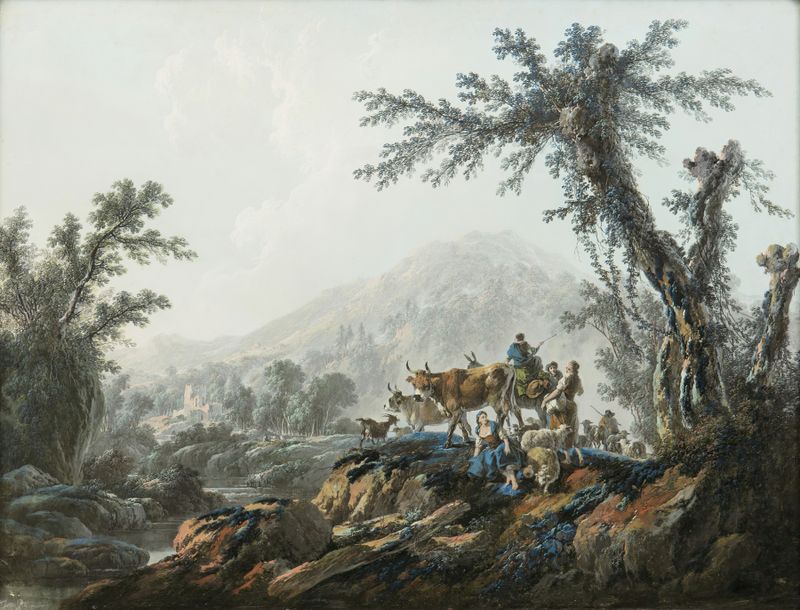
Pastoral Landscape
Jean-Baptiste Pillement
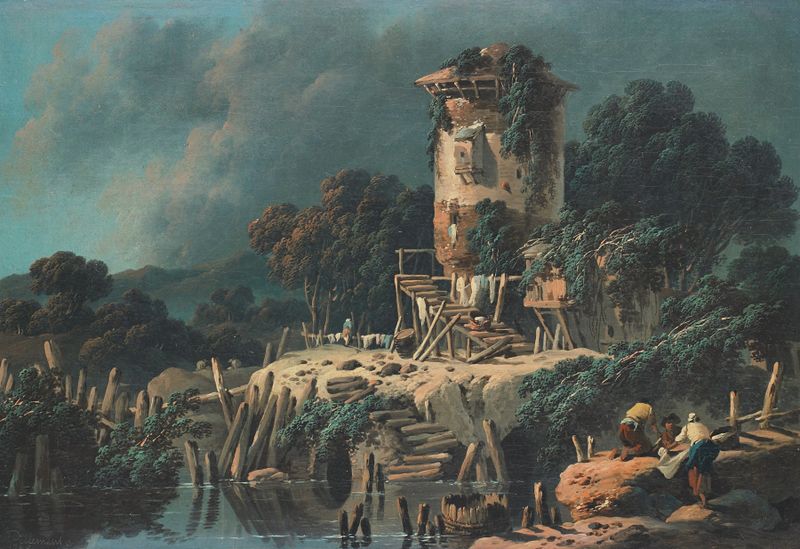
La Vielle Tour (Pastoral Landscape)
Jean-Baptiste Pillement
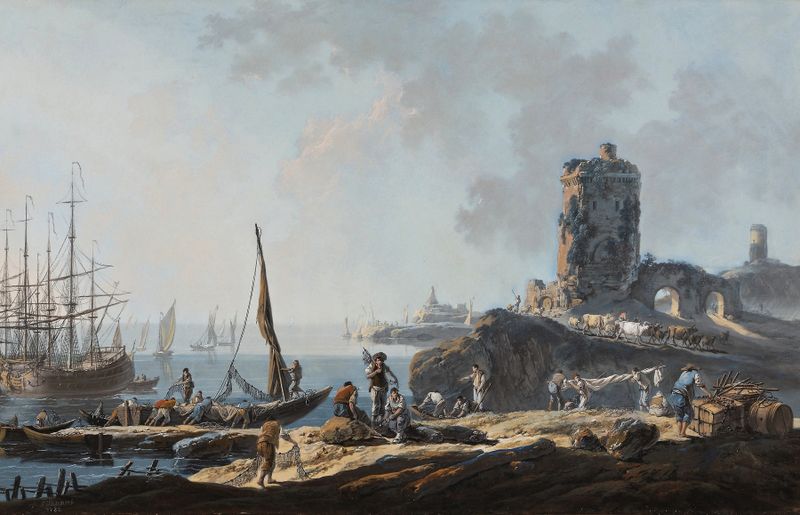
Port Scene in Calm Weather
Jean-Baptiste Pillement
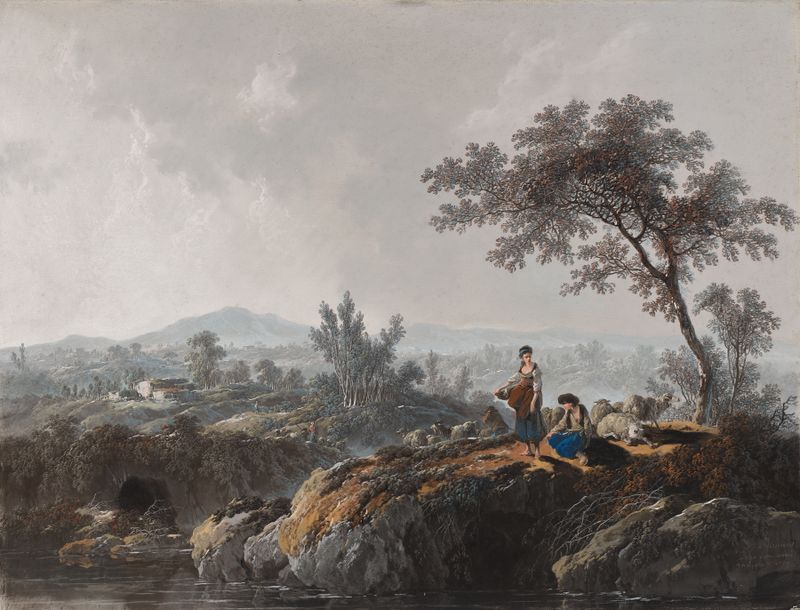
Shepherds in a Landscape
Jean-Baptiste Pillement
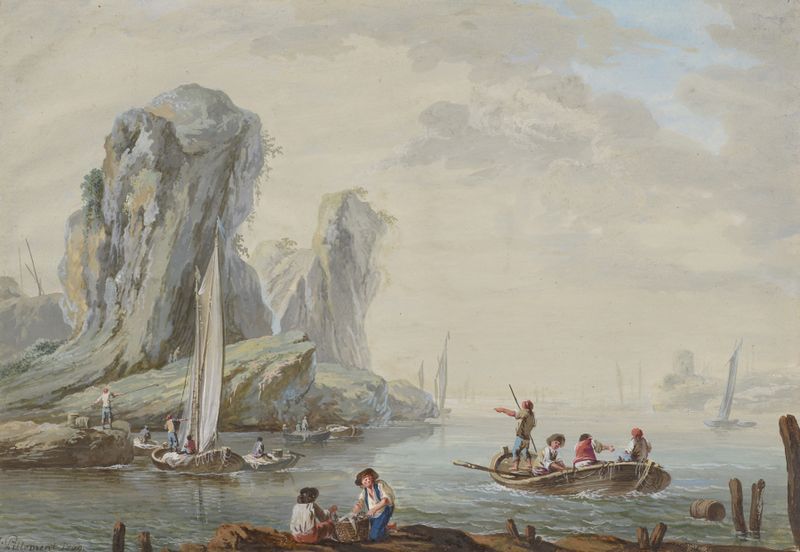
Meeresbucht mit großen Felsen links und Fischern
Jean-Baptiste Pillement
Landschap
Jean-Baptiste Pillement
A shipwreck on a rocky coast during a storm
Jean-Baptiste Pillement





