
Meeresbucht mit großen Felsen links und Fischern — History & Facts
When did color learn to lie? In the realm of artistry, it is both a creator's tool and a deceiver's guise, whispering secrets of the heart through the language of hues. Look to the rich blues and greens that dominate the canvas. The waves of the sea beckon your gaze, their vibrant palette transitioning seamlessly from deep azure to the shimmering cerulean that reflects the sky. Notice how the rocky outcrop on the left anchors the composition, its textured surface catching the light, while the fishermen, small yet significant, navigate their vessels against the grand backdrop.
The interplay of color and shadow here is not merely aesthetic; it draws the viewer into a tranquil yet dynamic maritime world. Beyond its serene beauty, this work encapsulates a dialogue between tranquility and toil. The fishermen, with their humble boats, symbolize the struggle against nature, while the boulders stand as ancient sentinels, unaffected by time or human endeavor. The contrast between the gentle lapping of the waves and the ruggedness of the rocks speaks to the resilience of both man and nature.
Each brushstroke tells a story of harmony, yet hints at the ever-present tension of existence. Created in 1769, this piece emerged from Pillement’s prolific period in France, a time when the Rococo style was giving way to Neoclassicism. As he traveled through Europe, the artist infused his works with a sense of movement and light, reflecting the burgeoning interest in naturalism. Pillement’s insights into the human condition, coupled with his adeptness at color, solidified his reputation as a master of scenic landscapes during an era marked by artistic transition.
More Artworks by Jean-Baptiste Pillement
Browse all →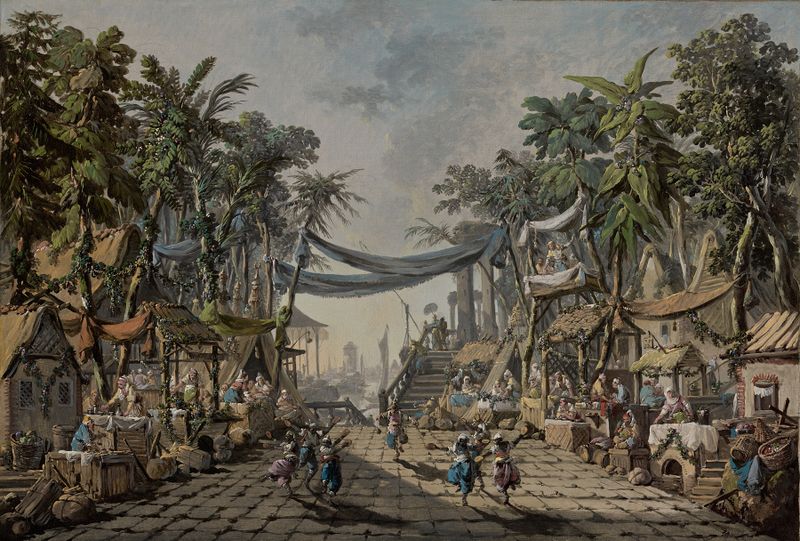
Market Scene in an Imaginary Oriental Port
Jean-Baptiste Pillement
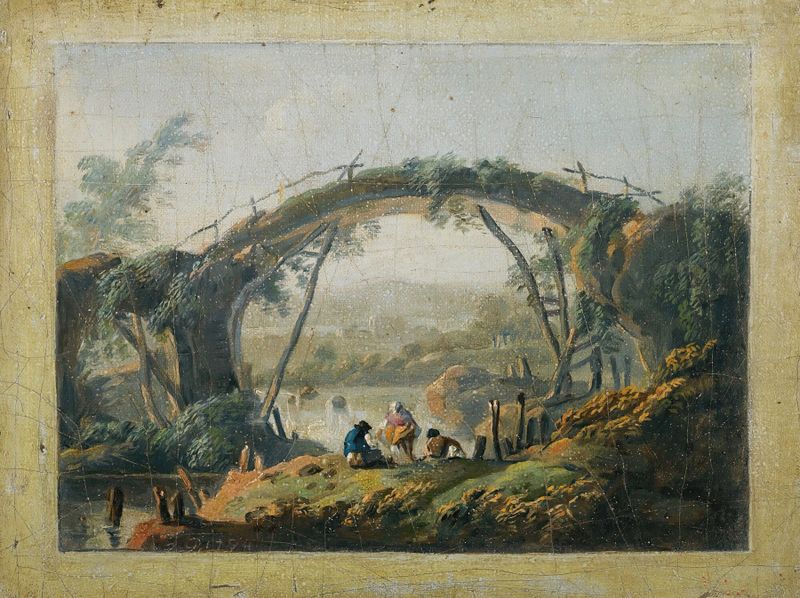
A Pair Of River Landscapes With Figures Approaching A Bridge
Jean-Baptiste Pillement
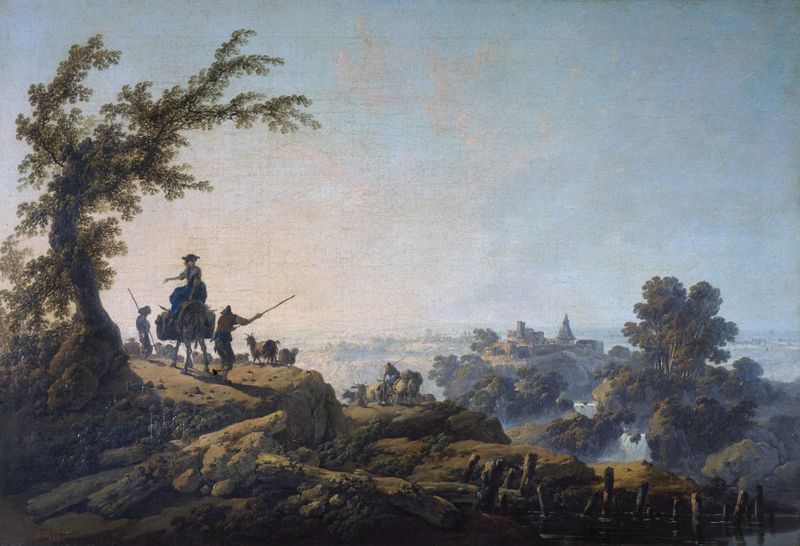
Paysage animé
Jean-Baptiste Pillement
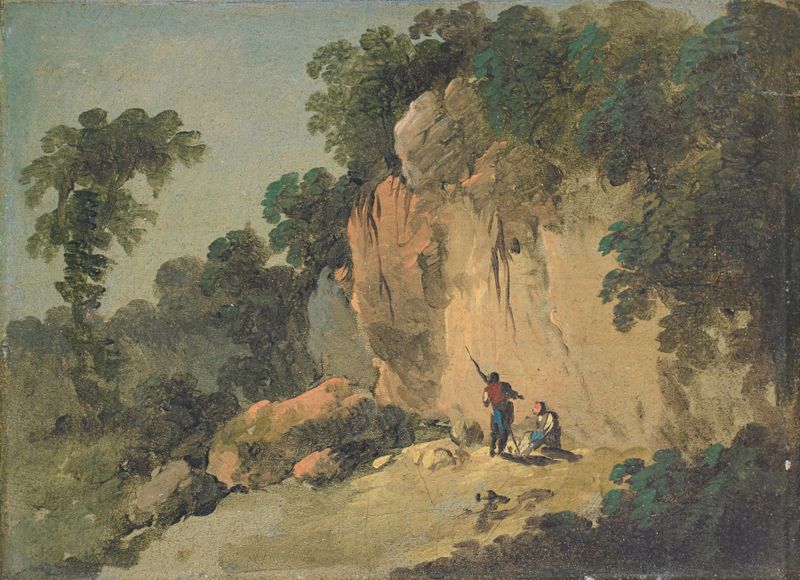
À falaises (Pastoral Landscape).
Jean-Baptiste Pillement
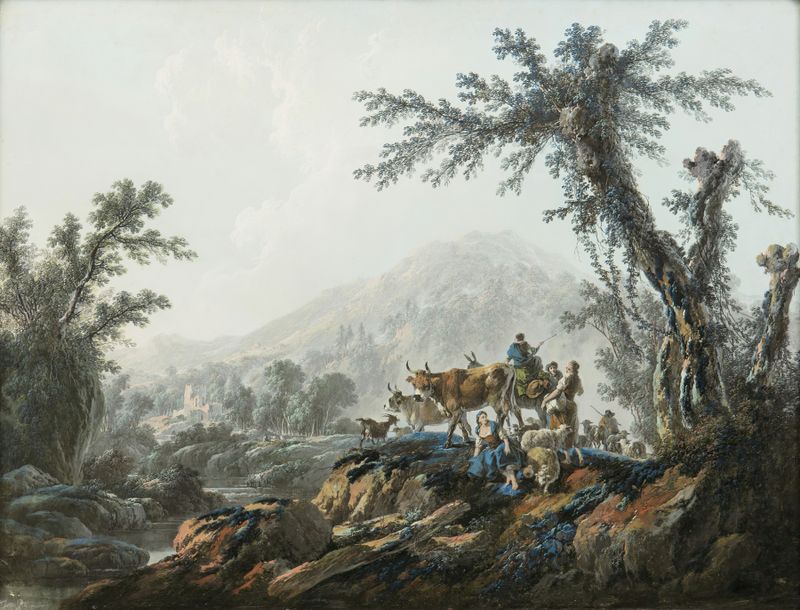
Pastoral Landscape
Jean-Baptiste Pillement
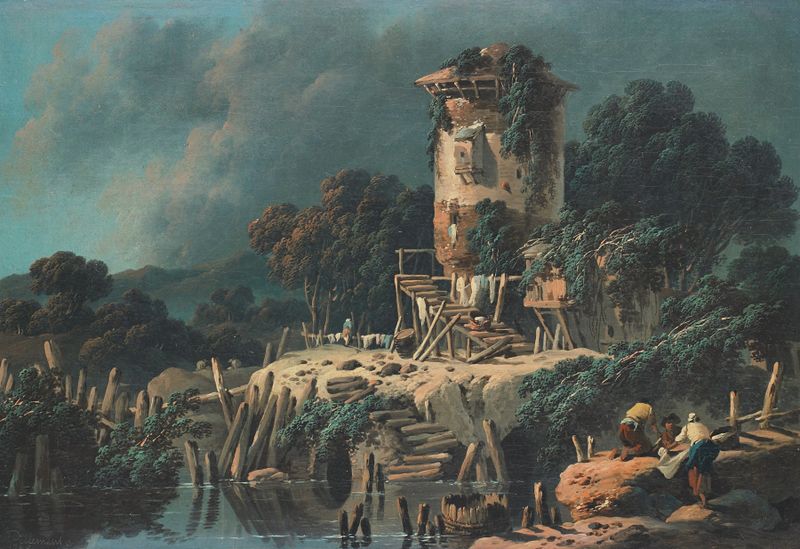
La Vielle Tour (Pastoral Landscape)
Jean-Baptiste Pillement
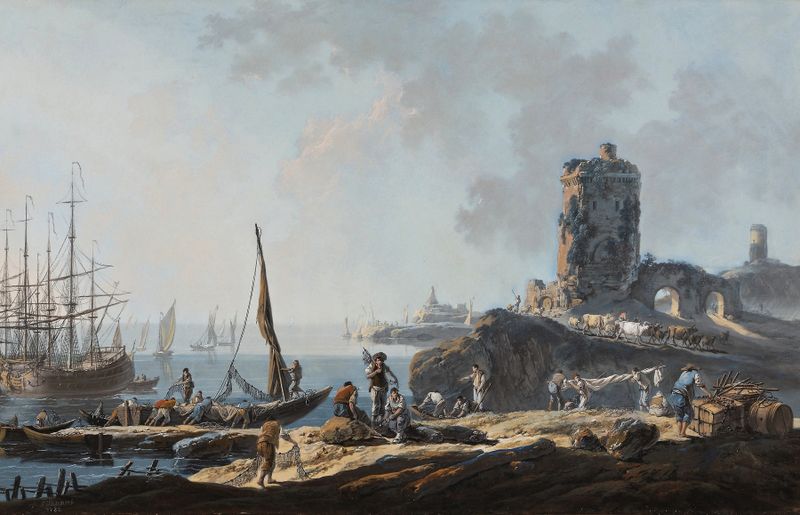
Port Scene in Calm Weather
Jean-Baptiste Pillement
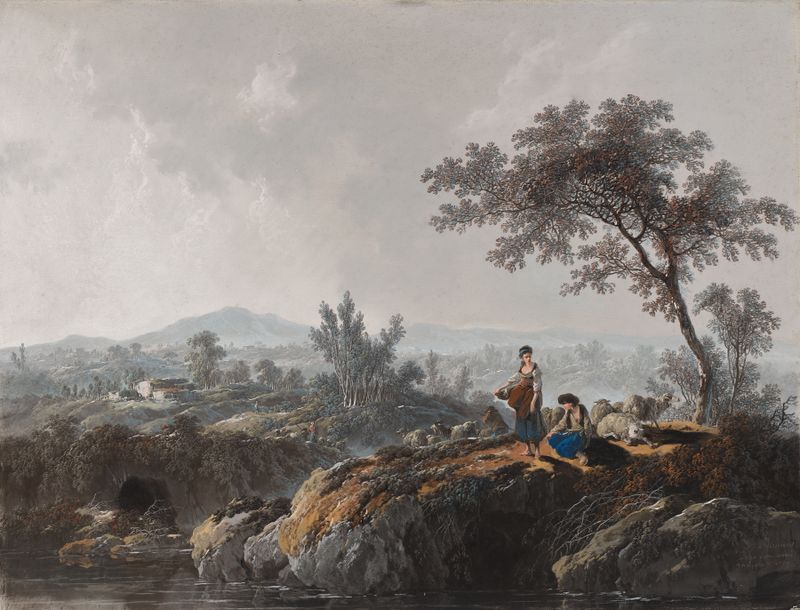
Shepherds in a Landscape
Jean-Baptiste Pillement
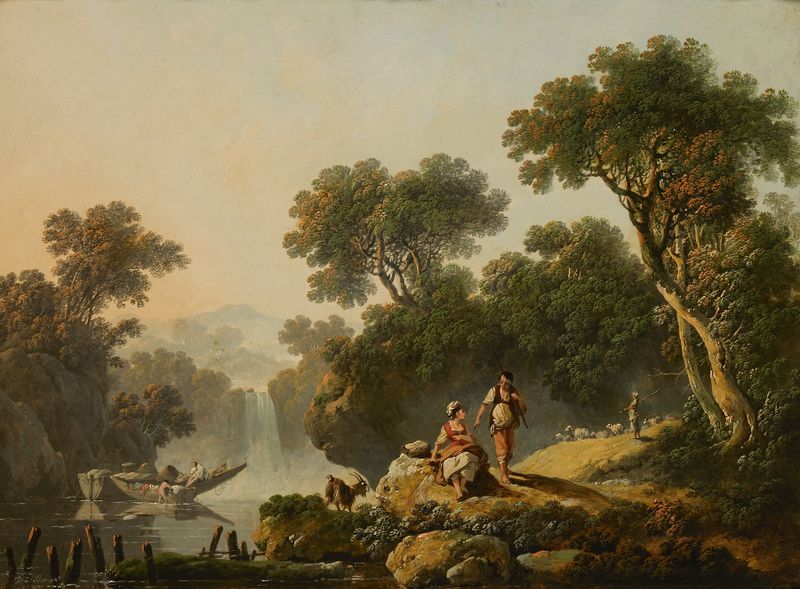
Landschap
Jean-Baptiste Pillement
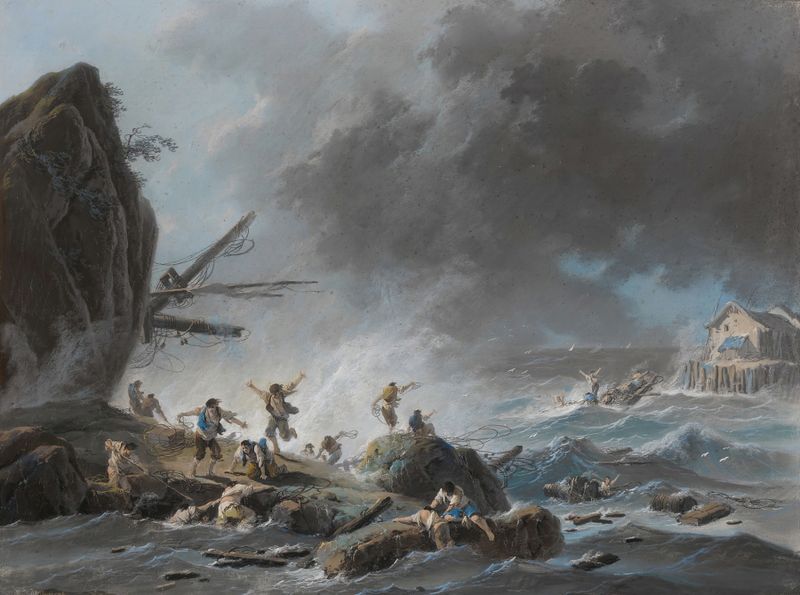
A shipwreck on a rocky coast during a storm
Jean-Baptiste Pillement





