A Bacchante — History & Facts
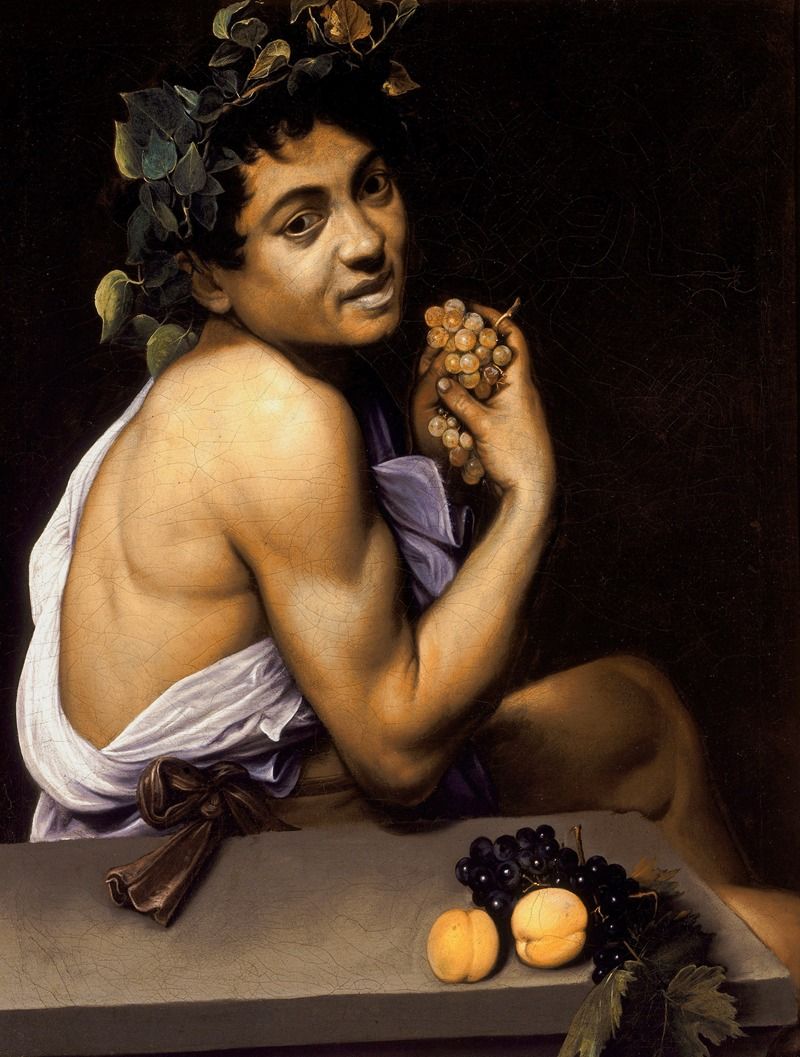
In the hands of Sir Hubert von Herkomer, this sentiment resonates deeply, illuminating the interplay between joy and sorrow. Focus on the figure at the center, a Bacchante draped in flowing, emerald fabric that seems to ripple with a life of its own. Notice how the soft light caresses her bare shoulders, highlighting the delicate curve of her neck and the gentle tilt of her head. Her expression is a blend of ecstasy and melancholy, drawing you into her world while simultaneously hinting at a lingering grief.
The vibrant colors contrast sharply with the subtle shadows, suggesting a duality of revelry and loss that flows through the painting like an unseen current. As you explore the details, consider the way her outstretched arm reaches toward the vine-laden sky, perhaps in search of something forever lost. The foliage around her is lush and abundant, symbolizing vitality and pleasure, yet the fleeting nature of the moment evokes an underlying sense of transience. The Bacchante's smile, radiant yet tinged with sadness, invites viewers to reflect on the ephemeral nature of joy and the heavy weight of grief that often accompanies it. In 1897, while creating this work, the artist was immersed in a period marked by personal challenges and a broader artistic shift towards the emotional and the expressive.
The late 19th century was a time when artists began to explore deeper psychological themes, moving away from mere representation. Herkomer, influenced by the prevailing Symbolist movement, sought to convey complex human experiences, capturing the essence of his subjects in a manner that resonated with the turmoil and beauty of life itself.