
A Bedouin Camp At Dusk — History & Facts
When did color learn to lie? Shadows stretch across the landscape, weaving tales of light and dark that whisper secrets of distant lives. The hues of dusk dance delicately, blurring the lines between reality and illusion, inviting us to explore a world caught in time. Focus on the glow of the campfire, nestled in the foreground, illuminating the figures of the Bedouins with a warm, flickering light. Notice how the soft oranges and blues contrast against the deepening twilight sky, each brushstroke revealing layers of texture that vibrate with life.
The tents, rendered in muted earth tones, blend harmoniously with the surrounding landscape, yet their shadows loom large, suggesting stories of resilience and solitude. As the eye wanders, pay attention to the subtle interplay of movement and stillness. The figures, caught in their evening rituals, embody a sense of timelessness, while the shadows behind them hint at unseen specters of the past. This delicate balance evokes a feeling of transience; the moment may linger, but it is inevitably slipping away, much like the fading light of day itself. Created during a time of personal exploration and artistic growth, the artist captured this scene at an undefined moment, likely influenced by the Romantic movement's fascination with nature and the human experience.
The painting reflects a period when artists sought to bridge the gap between reality and emotion, and the evocative shadows tell a story that transcends the mere representation of a Bedouin camp.
More Artworks by Hermann David Salomon Corrodi
Browse all →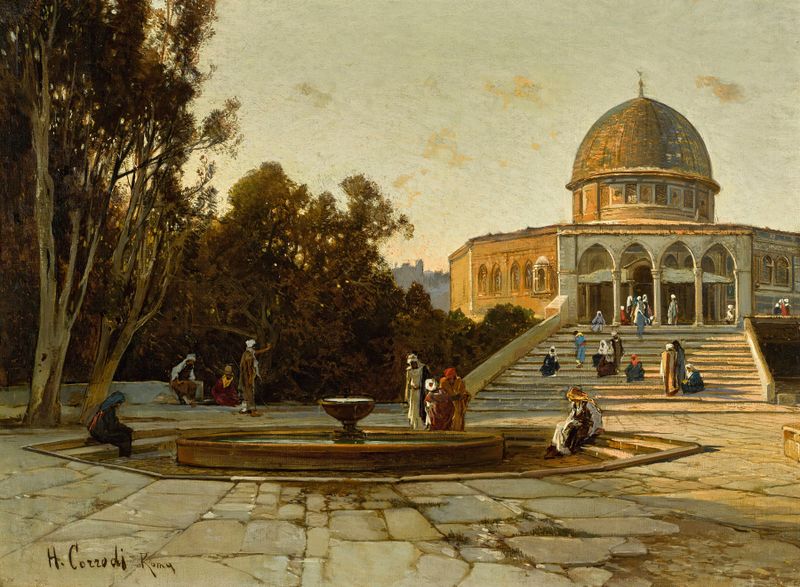
The Dome Of The Rock, Jerusalem
Hermann David Salomon Corrodi

The Galata Bridge, Constantinople
Hermann David Salomon Corrodi
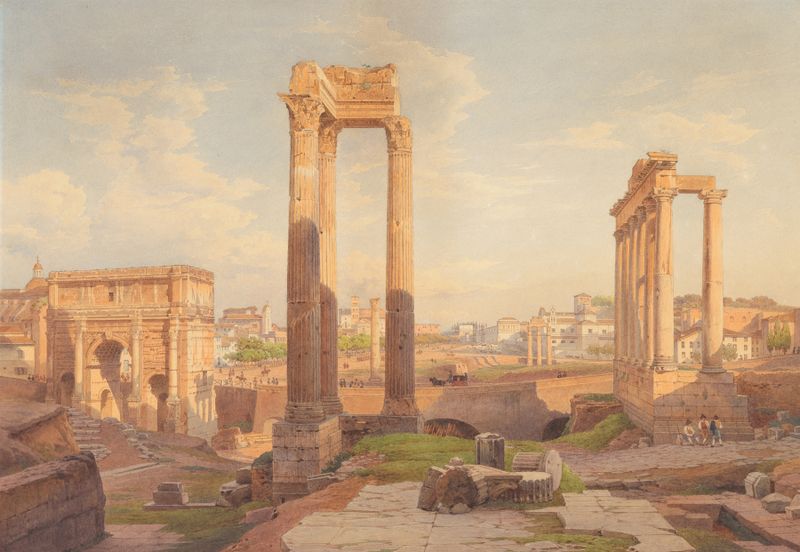
Forum Romanum
Hermann David Salomon Corrodi
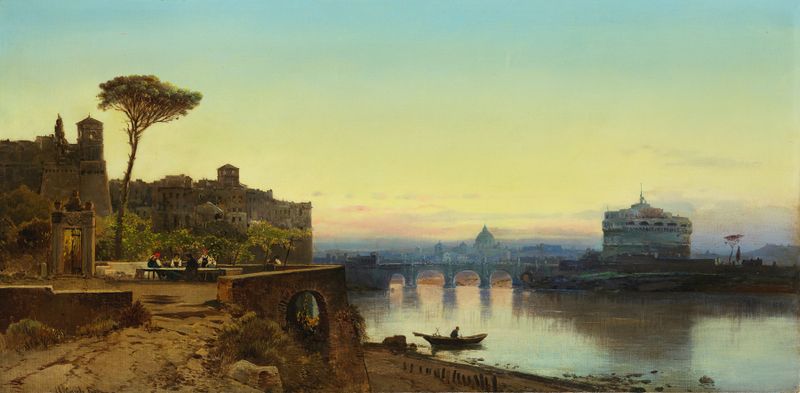
Blick über den Tiber auf die Engelsburg
Hermann David Salomon Corrodi

Prayer Before Jerusalem
Hermann David Salomon Corrodi
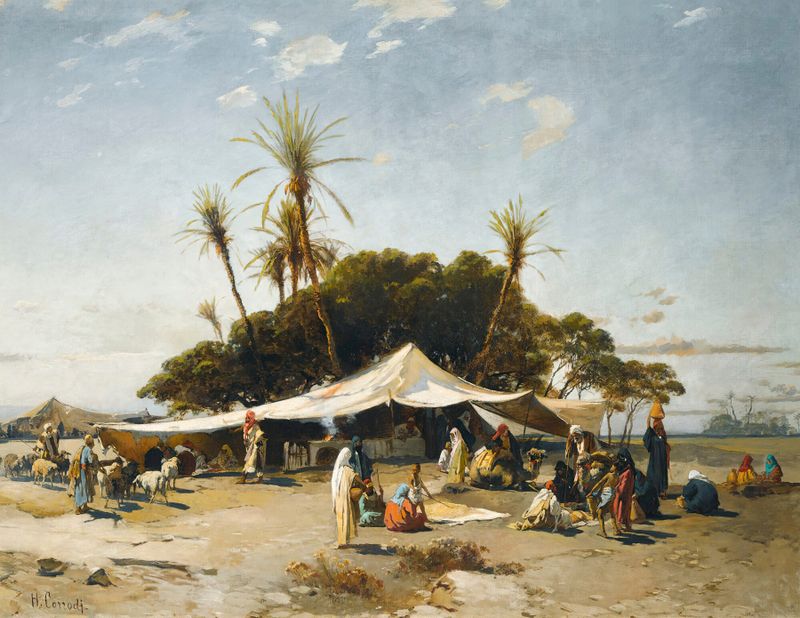
A camp in the desert
Hermann David Salomon Corrodi
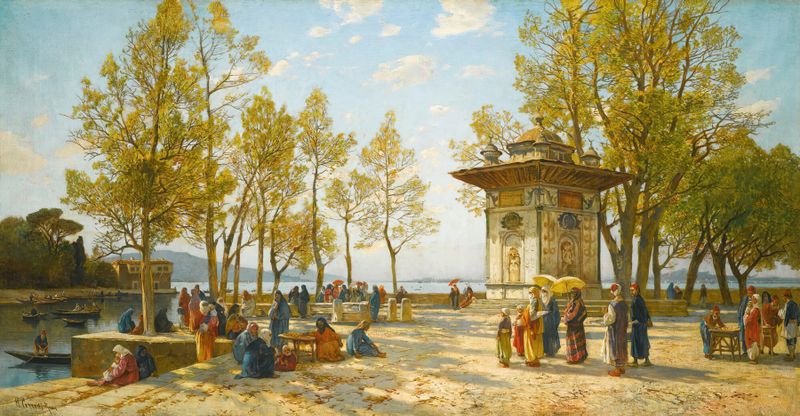
The Fountain Of The Sweet Waters Of Asia, On The Bosphorus
Hermann David Salomon Corrodi
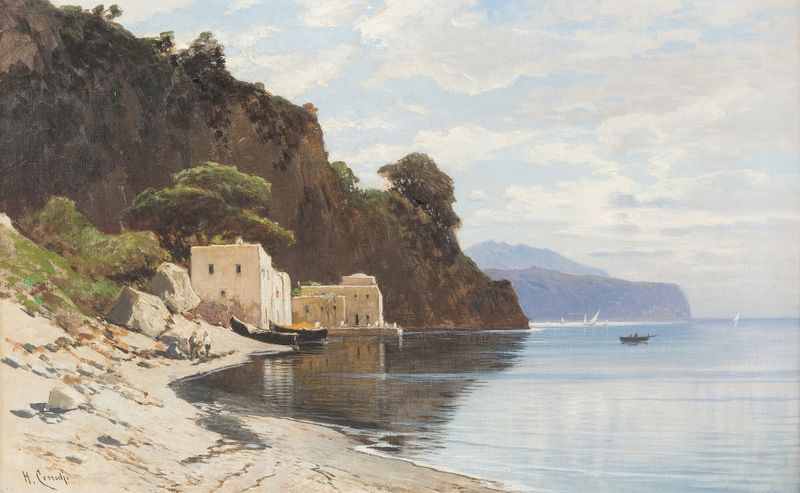
At the Amalfi coast
Hermann David Salomon Corrodi

An oasis encampment
Hermann David Salomon Corrodi

On The Banks Of The Nile
Hermann David Salomon Corrodi





