A billabong of the Goulburn, Victoria — History & Facts
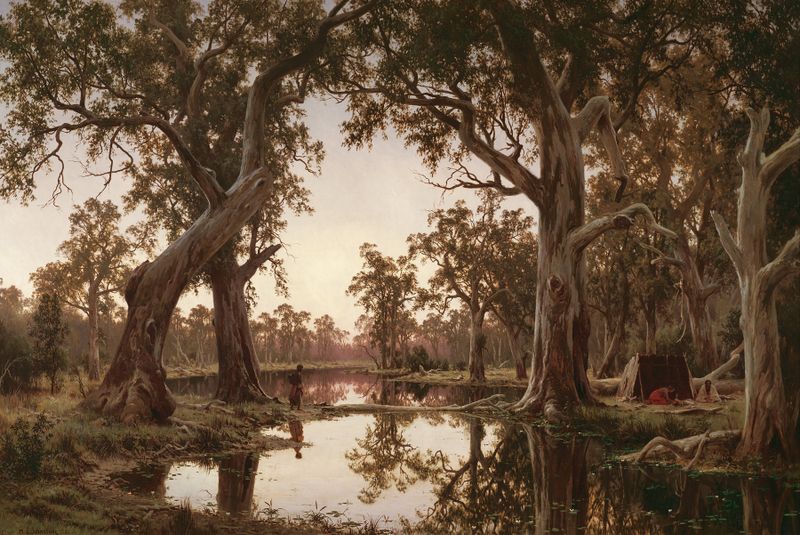
Could a single brushstroke hold eternity? In A billabong of the Goulburn, Victoria, the surface of water reflects not just light, but the very essence of nature’s tranquility, an eternal moment captured in a fleeting world. Look to the foreground where a gentle curve of the billabong invites your gaze. The still waters serve as a mirror, reflecting the surrounding trees in hues of muted greens and earthy browns. Notice how the sunlight filters through the branches, creating delicate patterns of light and shadow on the water's surface.
Johnstone’s mastery of color and texture draws your eye deeper into the scene, where soft blues blend seamlessly with hints of amber, evoking a sense of harmony between the elements. Digging deeper, the painting speaks to the tension between the serenity of the landscape and the undercurrents of obsession that define the artist's vision. The way the water holds the reflection suggests a moment suspended in time, yet the slight ripples hint at unseen movements—perhaps a lurking sense of longing or a desire to capture the ineffable. These contrasts mirror the balance of stillness and life, urging the viewer to contemplate their relationship with nature. Henry James Johnstone painted this scene in 1884 while living in Australia, during a time when artists were increasingly drawn to the natural landscapes of their surroundings.
The Impressionist movement was gaining momentum, and Johnstone, influenced by the beauty of the Australian bush, sought to convey the sublime through delicate brushwork and a focus on light. This painting encapsulates his quest for a deeper connection with the environment, reflecting the societal shift towards embracing the natural world in art.