Evening shadows, backwater of the Murray, South Australia — History & Facts
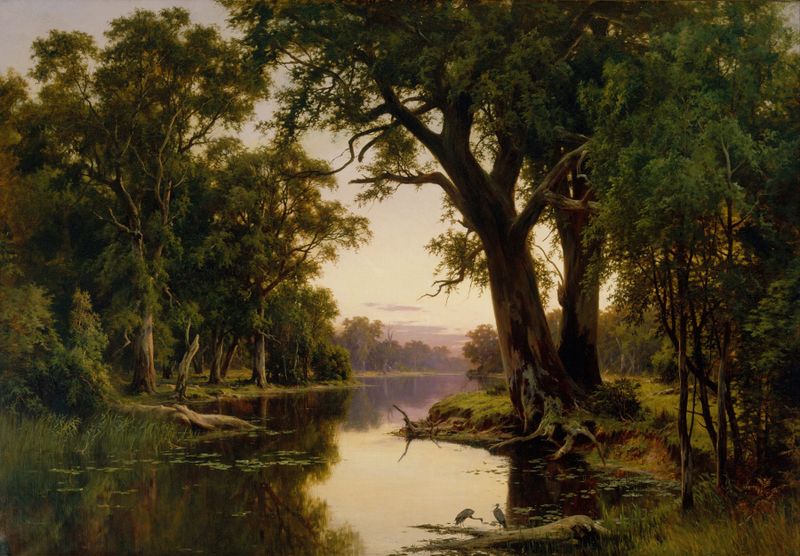
What secret hides in the quiet of the canvas? In Evening shadows, backwater of the Murray, South Australia, a stillness envelops the scene, inviting the viewer to embark on a journey of awakening amidst nature’s embrace. Look to the left at the gentle curve of the water, reflecting the soft hues of twilight. The brushstrokes, fluid and harmonious, guide your gaze across the tranquil surface, where shades of deep blue and muted gold intertwine. Notice how the silhouettes of trees frame the composition, their delicate forms emerging from the darkness, suggesting a tender balance between light and shadow, solitude and connection. Beneath the serene exterior lies an exploration of contrast and duality.
The still water mirrors the encroaching dusk, symbolizing a moment of transition and contemplation. Each shadow cast by the trees carries whispers of untold stories, evoking a sense of nostalgia for a world both familiar and distant. The painting speaks to the fragile beauty of nature and the inevitability of change, urging viewers to reflect on their own journeys towards awakening. In 1880, Henry James Johnstone worked in South Australia, a period marked by his deepening connection to the Australian landscape.
At that time, the art world was shifting towards a greater appreciation for local subjects, and Johnstone's focus on the evening light cast upon the Murray River reflects this burgeoning movement. The serenity of his surroundings allowed him to capture the unique beauty of the region, as he sought to depict not just a place, but a feeling that resonates through time.