A bornholmish paddock — History & Facts
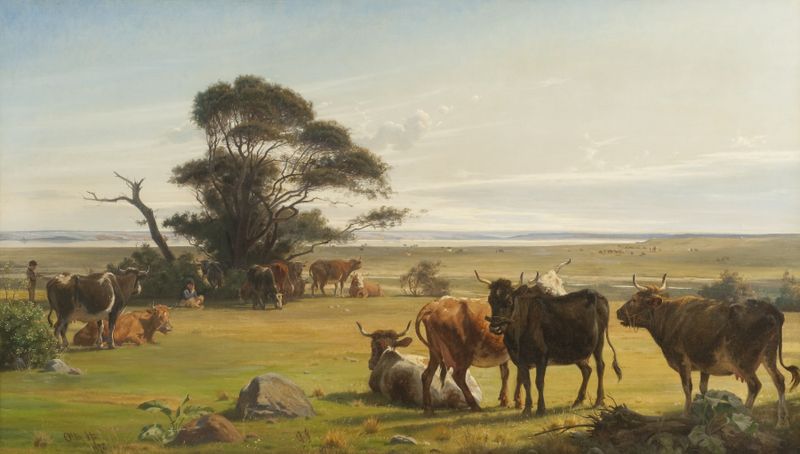
Where does light end, and longing begin? In the delicate embrace between the earth and sky, the passage of time seems to stretch and contract, inviting contemplation. Look to the bottom left corner, where a gentle slope rises towards the horizon, bathed in a warm, golden hue. Notice how the brushstrokes capture the lush greenery of the paddock, a vivid tapestry of soft greens and earthy browns that speak of life and fertility. The sunlight filters through, creating a dappled effect on the grass, grounding the scene while drawing the viewer's eye upward, toward the expansive sky.
The clouds swirl softly, painted in shades of blue and white, evoking a sense of movement and change. Hidden within this pastoral scene are the echoes of fleeting moments and the cyclical nature of existence. The contrast between the vivid foreground and the airy background underscores the tension between permanence and transience. Each blade of grass sways gently, whispering stories of seasons passed, while the vast sky suggests an endless journey, a yearning for freedom that transcends the confines of the paddock.
The viewer is left to ponder what lies beyond the horizon, where time flows inexorably onward. Created in 1871, this work reflects Otto Haslund's exploration of rural life in Denmark during a period marked by industrial change and a renewed interest in natural landscapes. Settling in Bornholm, Haslund was influenced by the romantic movement, infusing his canvases with a sense of nostalgia and a profound connection to the land. His pursuit of beauty and meaning in everyday scenes resonated with contemporaries, as shifting societal dynamics prompted a reevaluation of the relationship between humanity and nature.