Cows in a Meadow — History & Facts
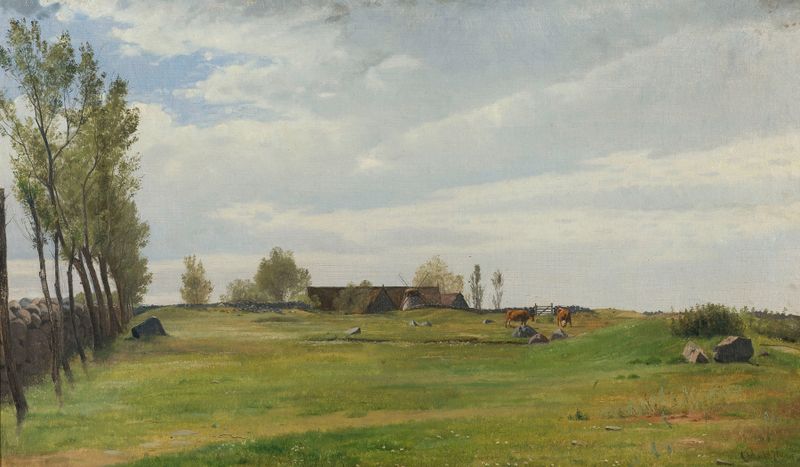
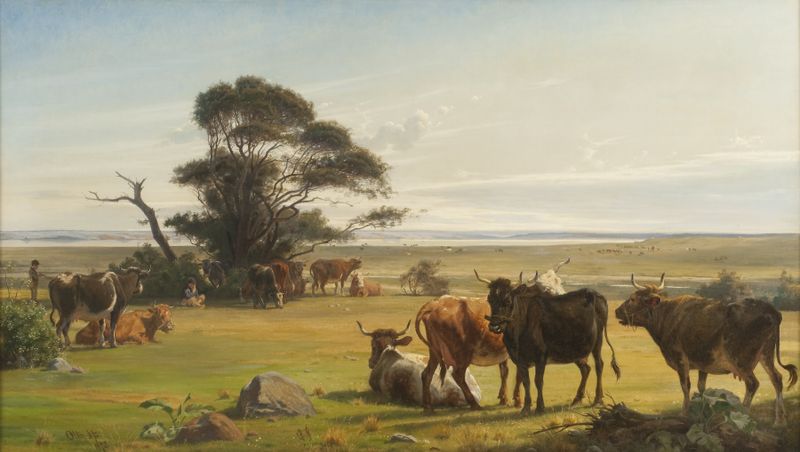
Could a single brushstroke hold eternity? In Cows in a Meadow, vibrant hues intertwine to create a pastoral symphony, celebrating the beauty of a fleeting moment in nature. Look to the foreground, where the cows graze, their coats rendered with delicate strokes of brown and white. The lush greens of the meadow stretch outward, inviting the eye to wander through a sunlit landscape. Notice how the dappled light filters through the trees, casting playful shadows that dance across the ground.
This interplay of color and light not only captures the essence of a serene rural day but also reflects the artist’s mastery in blending naturalism with an impressionistic touch. Beneath the tranquil surface lies a contrast between the peace of the animals and the vastness of the undulating meadow. The cows appear content, embodying a simple joy, while the expansive sky looms overhead, hinting at the limitless possibilities beyond the horizon. This duality evokes a sense of harmony within nature, yet it subtly reminds us of the fleeting moments that define our existence.
Each stroke seems to whisper the significance of peace amidst life's relentless march. In 1872, Otto Haslund painted this piece during a period of artistic exploration in Europe, influenced by the burgeoning Impressionist movement. Living in Denmark, he sought to capture the essence of rural life, striving to depict not just scenes but also emotions and experiences tied to the landscape. This work represents a pivotal moment in his journey as an artist, where he embraced both spontaneity and meticulous observation, creating a lasting homage to the pastoral beauty surrounding him.