A Brescian Shore — History & Facts
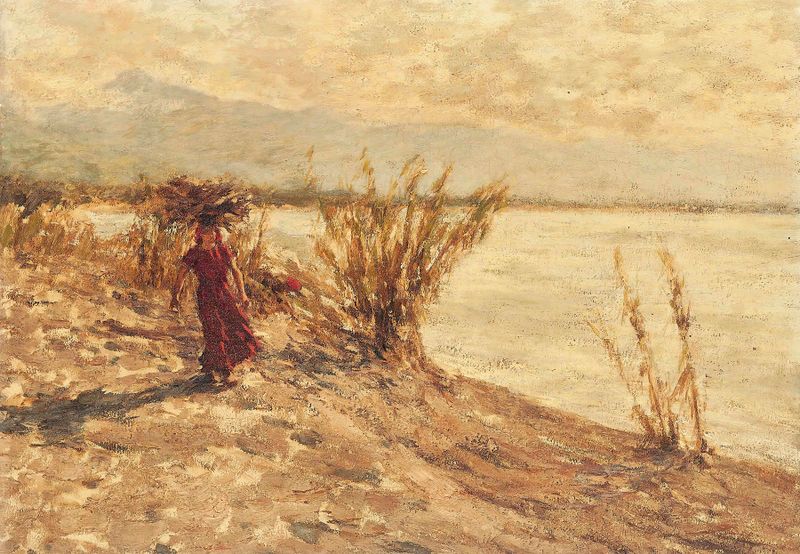
The delicate balance between reality and illusion is a dance seldom captured with such finesse. In the hands of a skilled artist, the shoreline transforms into a dreamscape that captivates the viewer’s imagination. Look closely at the shimmering waters; notice how La Thangue masterfully blends blues and greens, creating an ethereal reflection of the sky above. The soft, dappled sunlight bathes the scene, casting an enchanting glow on the sandy shore.
Your eyes should trace the gentle curves of the waves as they caress the land, finding harmony in the interplay of color and movement. The textured brushstrokes convey both the fluidity of water and the solidity of earth, harmonizing the elements into a cohesive whole. Within this serene vista lies a profound tension between the transient and the enduring. The lapping waves, both inviting and ephemeral, whisper secrets of time, while the solid cliffs stand like guardians of the shore.
This juxtaposition invites contemplation on the fleeting nature of beauty and existence, suggesting that even the most tranquil moments are layered with complexity and fragility. La Thangue’s meticulous attention to detail invites viewers to explore the depths of this illusion, reflecting on their own relationship with nature and time. Henry Herbert La Thangue painted this piece during a period marked by a growing interest in realism and Impressionism in the late 19th century. Working primarily in the West Midlands and the south of England, he was influenced by the surrounding landscapes and the changing light of the seasons.
This artwork reflects his dedication to capturing not just the visual beauty of the shore but also its deeper emotional resonance, revealing a moment of connection between the artist, his environment, and the viewer.