
A Brook in the Meadows — History & Facts
What secret hides in the quiet of the canvas? In the stillness of A Brook in the Meadows, the tranquility of nature offers a compelling contrast to the chaotic world beyond its borders. Look to the left at the gentle brook, winding its way through the verdant grass and wildflowers. The brushstrokes create a sense of movement in the water, reflecting dappled sunlight that dances across its surface. Notice how the soft greens and browns are punctuated by bursts of vibrant color, evoking a lushness that feels alive.
The careful arrangement of trees frames the scene, drawing the viewer's eye deeper into this pastoral paradise, inviting them to linger. Yet, beneath this serene tableau lies an emotional tension. The brook, a symbol of calm, runs parallel to the chaotic energy of life, suggesting the hidden struggles that may ripple just out of sight. The juxtaposition of the untamed flora with the orderly placement of the water's flow hints at nature's duality: both nurturing and uncontrollable.
This subtle interplay invites contemplation on how chaos exists even in the most tranquil settings. In 1872, the artist found himself immersed in the pastoral beauty of England, where he painted this work during a time of great change in the art world. The rise of the Pre-Raphaelite Brotherhood had shifted the focus towards realism and nature, and Cooper, primarily known for his animal paintings, adapted his style to capture the idyllic landscapes of his surroundings. This period marked a significant evolution in his artistic approach, as he sought to breathe life into the serene moments of rural existence.
More Artworks by Thomas Sidney Cooper
Browse all →
Cows and sheep resting beside a stream
Thomas Sidney Cooper

A Frosty Morning
Thomas Sidney Cooper

April Showers
Thomas Sidney Cooper

A Goat In A Landscape, Cattle Beyond
Thomas Sidney Cooper

Inquiring For The Tilbury Ferry
Thomas Sidney Cooper
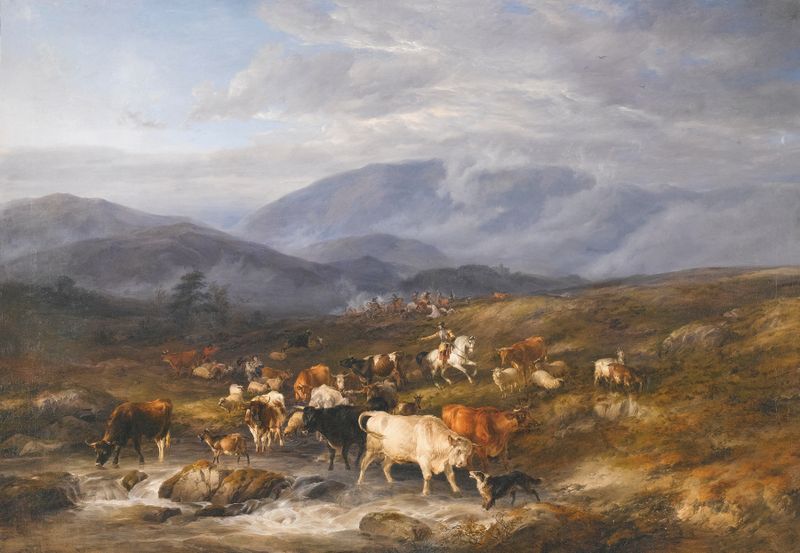
An Intercepted Raid, Ettrick Shepherd
Thomas Sidney Cooper
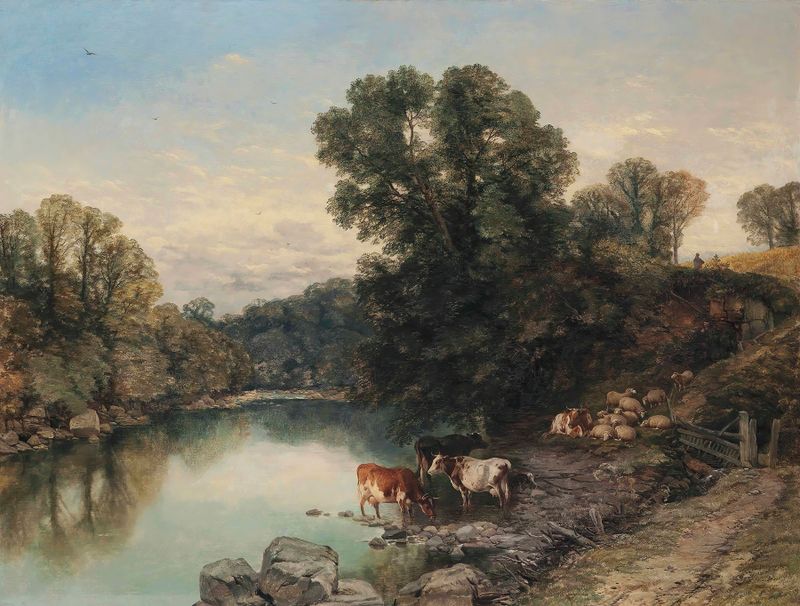
Cattle And Sheep At The River’s Edge
Thomas Sidney Cooper

Fording a brook, suburbs of Canterbury
Thomas Sidney Cooper
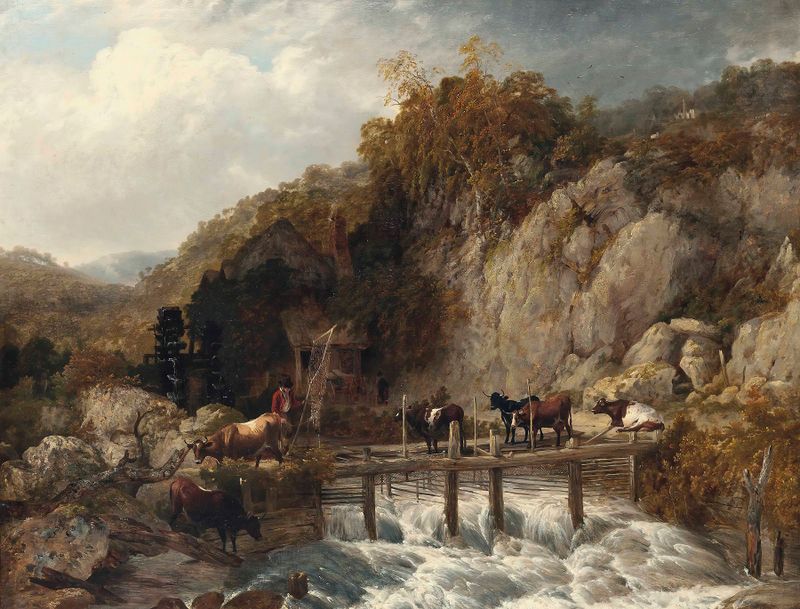
Umberleigh Mill, River Taw, Devon
Thomas Sidney Cooper
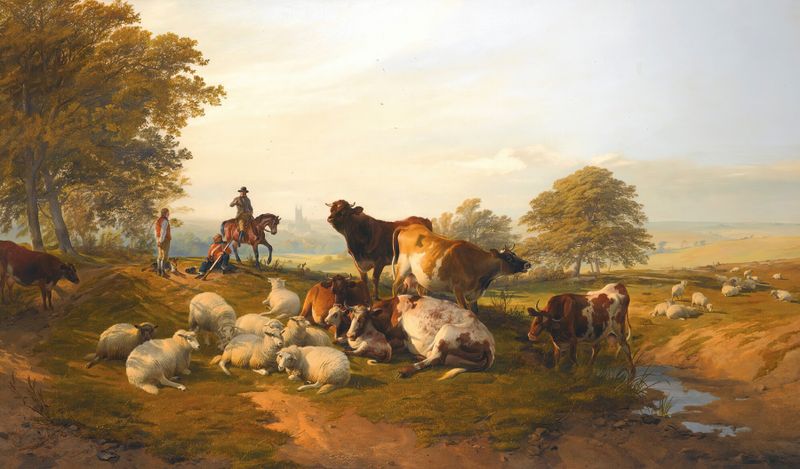
An Evening Repose
Thomas Sidney Cooper





