
Umberleigh Mill, River Taw, Devon — History & Facts
In the tranquil embrace of nature, where the soft murmur of the river meets the sturdy mill, a divine stillness reigns. This setting invites contemplation, urging the viewer to listen closely to the whispers of the wind and the secrets held by the water. Look to the left at the mill's weathered facade, where light dances across the textured stones, revealing the passage of time. The rich greens of the surrounding landscape contrast beautifully with the warm earth tones, highlighting the harmony between man-made structures and the natural world.
Each brushstroke conveys a sense of peace, drawing your eyes toward the flowing river that courses through the scene, reflecting the soft pastel hues of the sky above. At the heart of this painting lies a poignant tension between the vitality of nature and the enduring presence of human craftsmanship. The mill stands as a symbol of industriousness, yet, surrounded by the serene flow of the River Taw, it becomes a humble reminder of our transience in the face of the divine. The juxtaposition of the solid structure against the ethereal quality of the water evokes a deep emotional resonance, prompting reflections on our place within the broader tapestry of existence. Created in 1830, this work marks a significant period for its creator, who was deeply engaged in the Romantic movement's exploration of nature’s beauty.
At this time, he was establishing his reputation as a prominent landscape painter in England, often focusing on pastoral scenes that captured both the charm of the countryside and the sublime. The artwork not only reflects his technical skill but also his desire to represent a world where humanity and divinity coexist harmoniously.
More Artworks by Thomas Sidney Cooper
Browse all →
Cows and sheep resting beside a stream
Thomas Sidney Cooper

A Frosty Morning
Thomas Sidney Cooper

April Showers
Thomas Sidney Cooper

A Goat In A Landscape, Cattle Beyond
Thomas Sidney Cooper

Inquiring For The Tilbury Ferry
Thomas Sidney Cooper
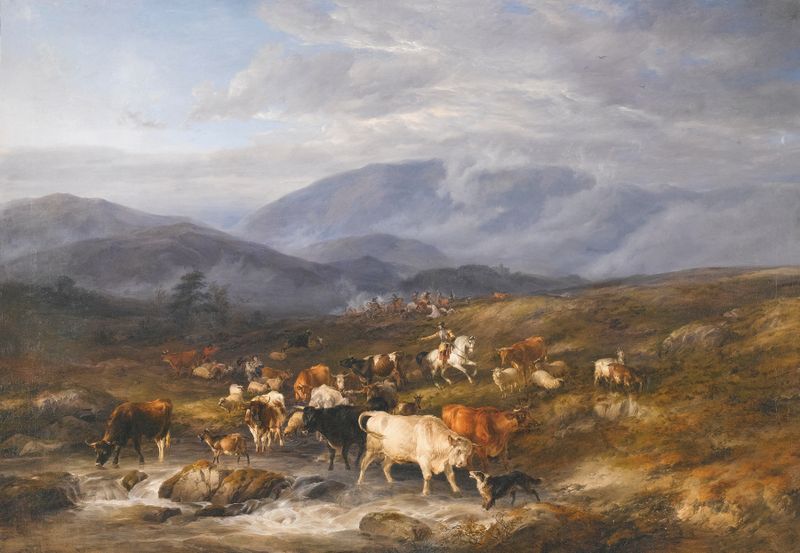
An Intercepted Raid, Ettrick Shepherd
Thomas Sidney Cooper
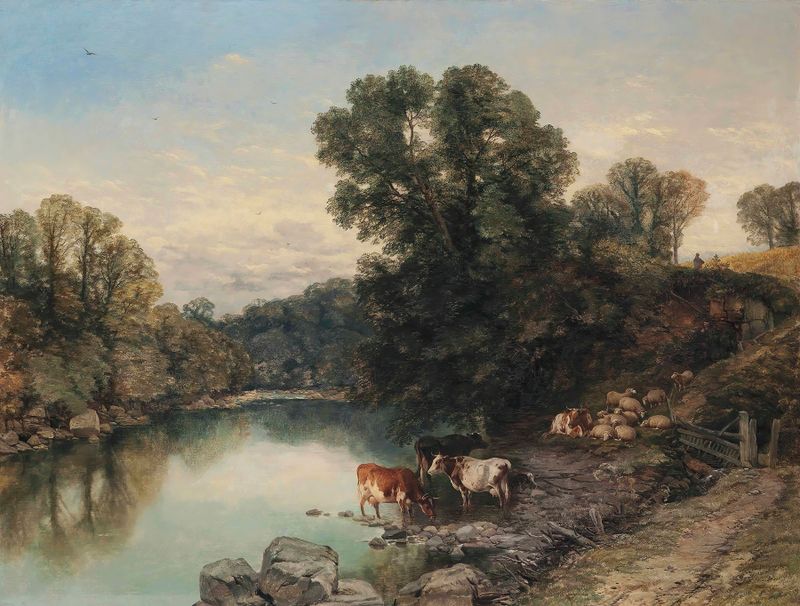
Cattle And Sheep At The River’s Edge
Thomas Sidney Cooper

Fording a brook, suburbs of Canterbury
Thomas Sidney Cooper
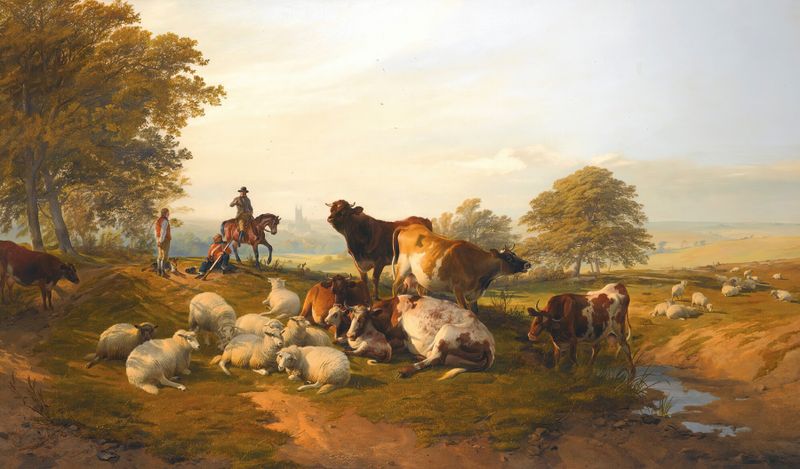
An Evening Repose
Thomas Sidney Cooper
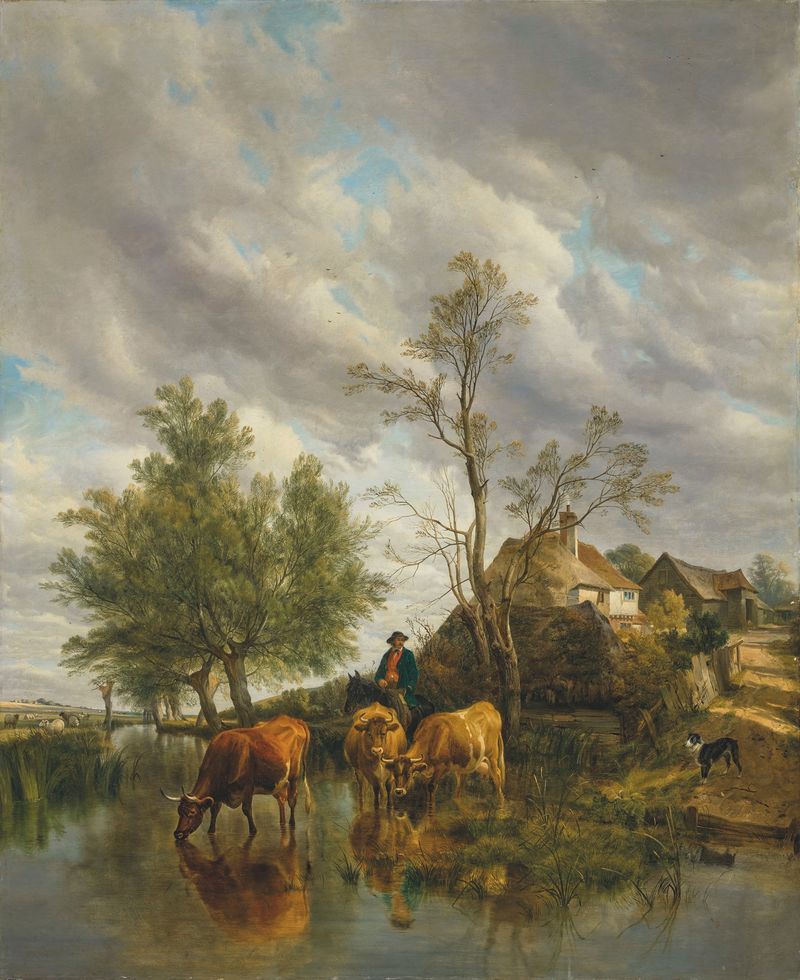
A Brook in the Meadows
Thomas Sidney Cooper





