
A capriccio with an ionic portico, a fountain, a two story loggia, a Gothic palace, and figures on a quay — History & Facts
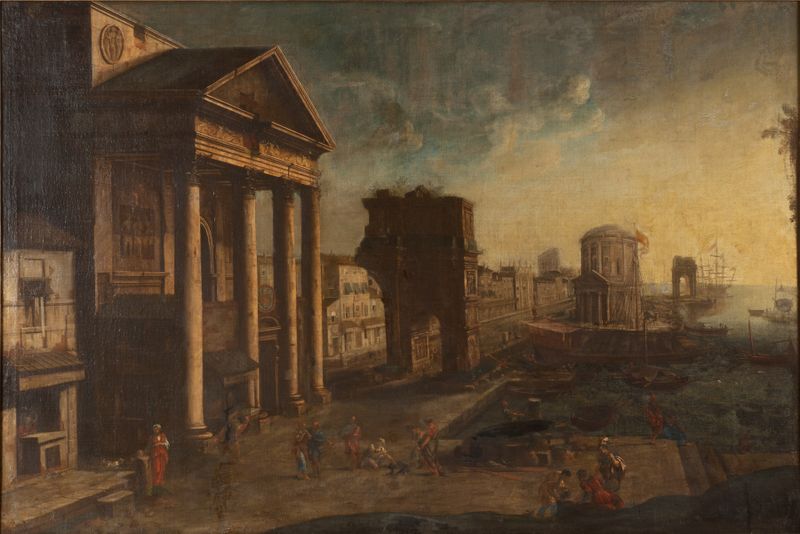
In this vivid capriccio, reality bends and reveals the dreamlike nature of architecture and scenery, beckoning the viewer to explore the layers of imagination it presents. Focus on the intricate details of the ionic portico that gracefully frames the scene, drawing your gaze toward the fountain whose water dances in the light. Notice how the soft pastels blend seamlessly, illuminating the figures on the quay as they engage in silent conversation, their gestures frozen in time. The loggia, with its delicate arches, invites you to step closer, while the Gothic palace looms in the background, a grand testament to an era long past. Yet, beneath the idyllic charm lies a subtle undercurrent of tension.
The juxtaposition of classical and Gothic styles suggests a conversation between tradition and innovation, while the fountain, a symbol of life, contrasts with the stillness of the figures. This dynamic interplay hints at deeper ruminations on the passage of time and the fleeting nature of existence, as if each element in the painting holds a story waiting to be unveiled. Salucci painted this work during a period when artistic exploration was flourishing, infusing his landscapes with fantastical elements that merged reality and imagination. The precise date is unknown, but it reflects an era when artists were experimenting with perspectives and idyllic scenery.
Creating in Italy, he was part of a vibrant community that pushed the boundaries of architectural representation, embracing the capriccio style to evoke wonder and reflection.
More Artworks by Alessandro Salucci
Browse all →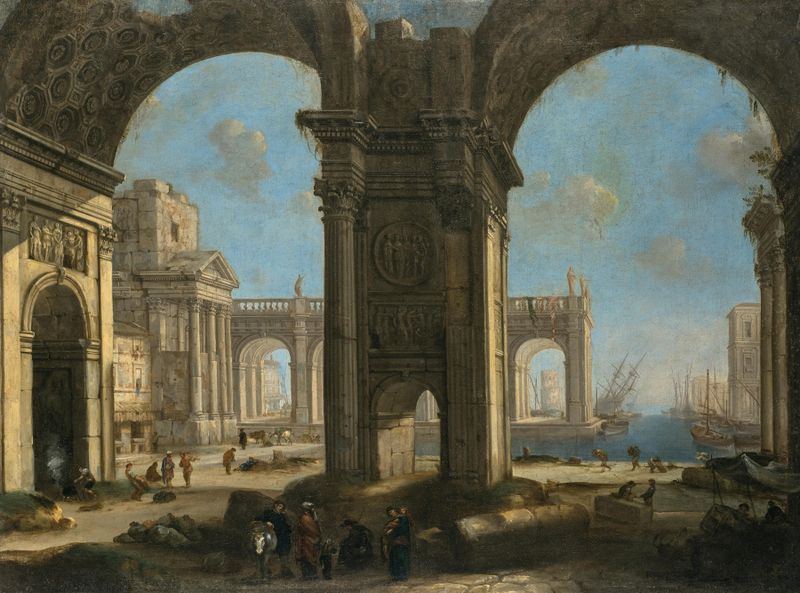
More Architecture Art
Browse all →
The statue of Liberty
Frédéric Auguste Bartholdi

View of Houses in Delft, Known as ‘The Little Street’
Johannes Vermeer

View of Houses in Delft, Known as ‘The Little Street’
Johannes Vermeer

The Cathedral in Rouen. The portal, Grey Weather
Claude Monet

The yellow house
Vincent van Gogh

The Church in Auvers-sur-Oise, View from the Chevet
Vincent van Gogh