
Architectural capriccio with a harbour — History & Facts
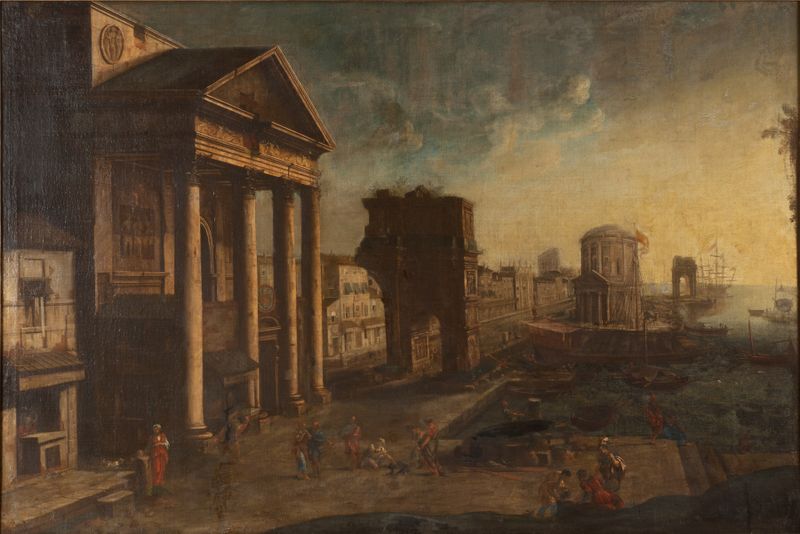
Could a single brushstroke hold eternity? In Architectural capriccio with a harbour, the viewer is drawn into a world where desire shapes the landscape — a vision both ambitious and intimate, echoing the longing for connection between humanity and the architecture we create. Look to the center of the canvas, where a grandiose structure rises, meticulously rendered with precise lines and soft shadows. The golden light bathes the scene, illuminating the intricate details of the buildings while casting gentle reflections on the tranquil waters below. Notice how the horizon meets the sky, a delicate blend of blues and whites, imparting a sense of limitless potential.
The composition invites you to wander, your eye meandering through the carefully plotted pathways and open spaces, all seemingly designed for the eye of a dreamer. Deeper meanings pulse beneath the surface; architectural grandeur hints at humanity's relentless ambition and the fleeting nature of dreams. The juxtaposition of vibrant life bustling in the harbor against the stillness of the structures speaks to the dichotomy of desire—the yearning for permanence versus the acceptance of transience. Each stroke of paint reflects not just a scene, but the emotional tension of longing for a place that feels both familiar and unattainable. Salucci painted this work during a period when Italy was grappling with both artistic innovation and the remnants of its grand past.
The date remains uncertain, but the piece reflects a time when artists began exploring capriccio as a genre, blending imagination with architectural ideals. Salucci's life and artistic endeavors were deeply intertwined with the evolving landscape of baroque art, capturing the essence of a world in transition.
More Artworks by Alessandro Salucci
Browse all →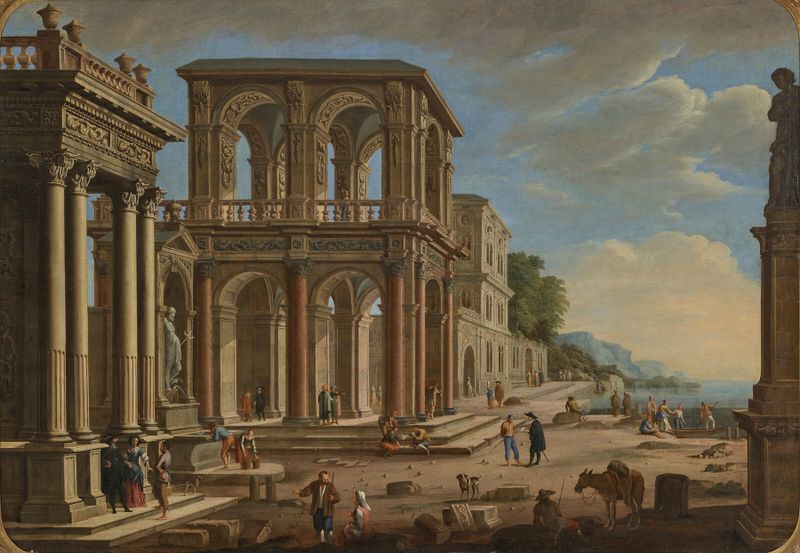
More Architecture Art
Browse all →
The statue of Liberty
Frédéric Auguste Bartholdi

View of Houses in Delft, Known as ‘The Little Street’
Johannes Vermeer

View of Houses in Delft, Known as ‘The Little Street’
Johannes Vermeer

The Cathedral in Rouen. The portal, Grey Weather
Claude Monet

The yellow house
Vincent van Gogh

The Church in Auvers-sur-Oise, View from the Chevet
Vincent van Gogh