A classical interior with elegant figures — History & Facts
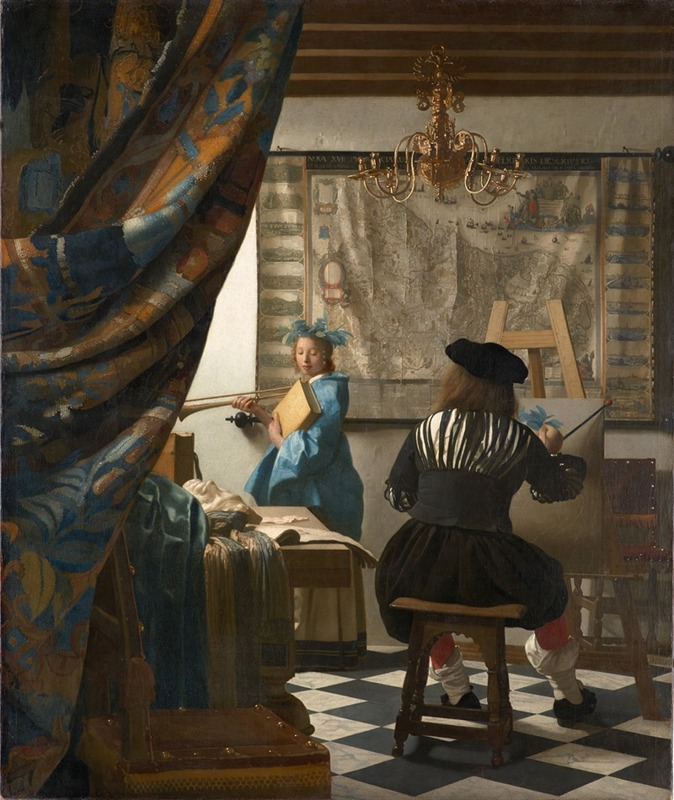
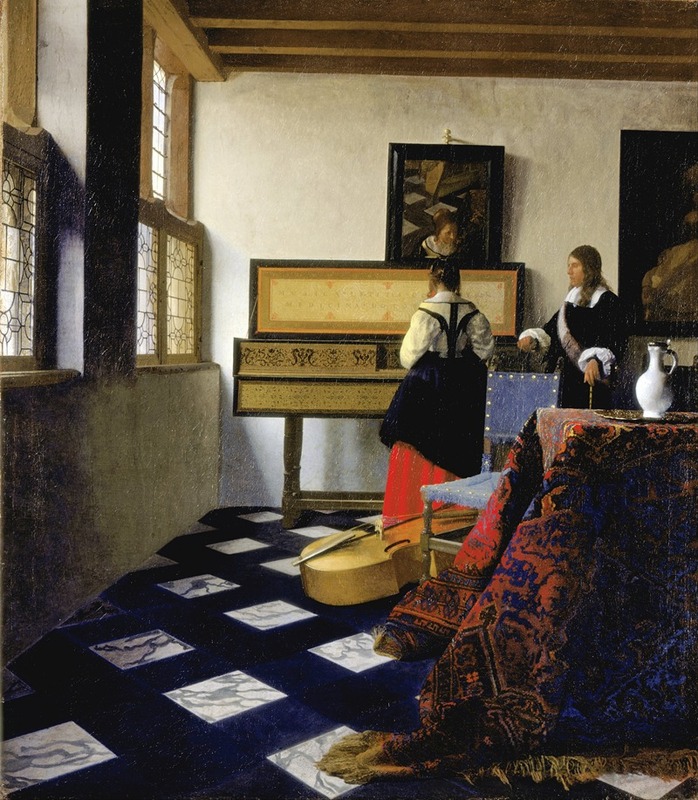
In the realm of art, the tension between reality and illusion often begs the question: what deeper truths lie beneath the surface of our everyday experiences? Focus your gaze on the left side of the canvas, where a group of elegantly attired figures engages in spirited conversation, each gesture laden with unspoken words. The muted palette, dominated by soft golds and warm browns, envelops the scene in a gentle glow, while the subtle play of light bouncing off their garments adds a tactile richness. Observe how the arrangement of figures leads the eye, creating a dynamic flow that draws you deeper into this intimate moment. Yet, beneath the surface of this serene gathering lies a complex interplay of social hierarchy and personal aspirations.
The carefully posed figures hint at their inner lives—perhaps yearning for connection or wrestling with societal expectations. The towering window, filled with daylight, symbolizes enlightenment, contrasting with the shadowy corners that suggest the weight of unexpressed emotions. Each detail, from the delicately arranged tableware to the graceful lines of drapery, contributes to a narrative that invites contemplation of authenticity and facade. In 1647, Jan Juriaensz.
van Baden crafted this piece in the Netherlands during a time of cultural flourishing. The Dutch Golden Age was marked by a fascination with interiors and still-life, reflecting the societal shifts towards individualism and domestic life. As artists explored the subtleties of light and detail, van Baden positioned himself within this vibrant milieu, capturing not just the elegance of his subjects, but also the deeper truths of their existence.