A Dutch Squadron under the Command of Cornelis Simonsz van der Veer Carrying Out a Surprise Attack on Three Portuguese Galleons in the Bay of Goa Velha — History & Facts
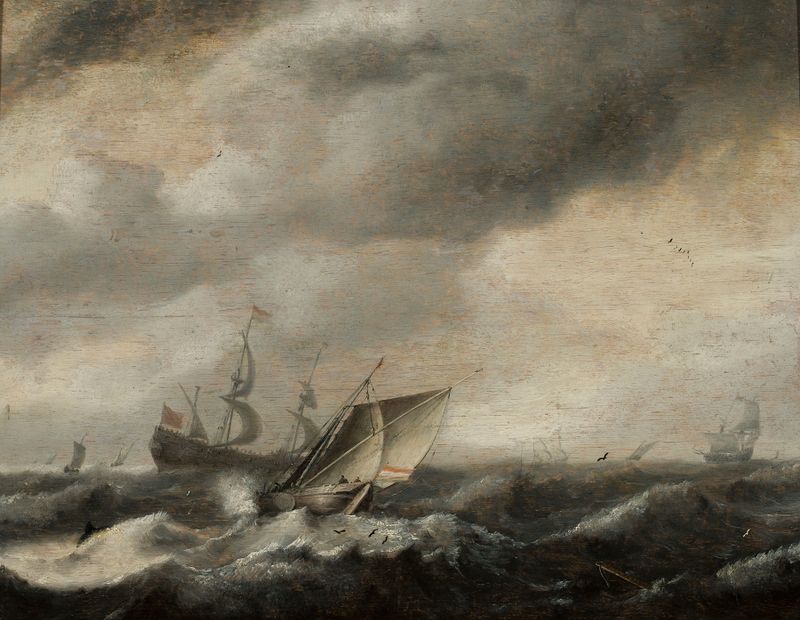
In the vivid portrayal of naval warfare, light dances over the tumultuous waters, illuminating both valor and human fragility. The shimmering surface reflects a deeper conflict, where moments of glory and tragedy intertwine in the chaos of battle. Look to the center, where the Dutch squadron, poised in formation, dominates the canvas. The meticulously rendered ships, with their billowing sails and intricate rigging, command attention, enhanced by the fiery hues of the sunset.
Notice how the light falls upon the water, creating a stark contrast between the bright colors of the Dutch fleet and the ominous shadows of the Portuguese galleons, hinting at the tensions nestled within their fierce encounter. Yet, it is the small details that reveal the emotional undercurrents of this composition. Observe the expressions on the sailors’ faces, a blend of determination and trepidation, as they engage in a life-or-death struggle. The stark juxtaposition of light and dark mirrors the moral complexities of imperialism, inviting the viewer to ponder the cost of conquest amid beauty and chaos. In 1653, the artist was deeply embedded in the world of Dutch maritime art, reflecting the nation’s naval prowess during a period of intense colonial ambition.
The painting emerged against a backdrop of war and expanding trade routes, encapsulating the fervor of the Golden Age through a lens of conflict and triumph. As the artist painted, he not only captured a moment in history but also offered a timeless meditation on the duality of human endeavor.