A Farm at Lysaker — History & Facts
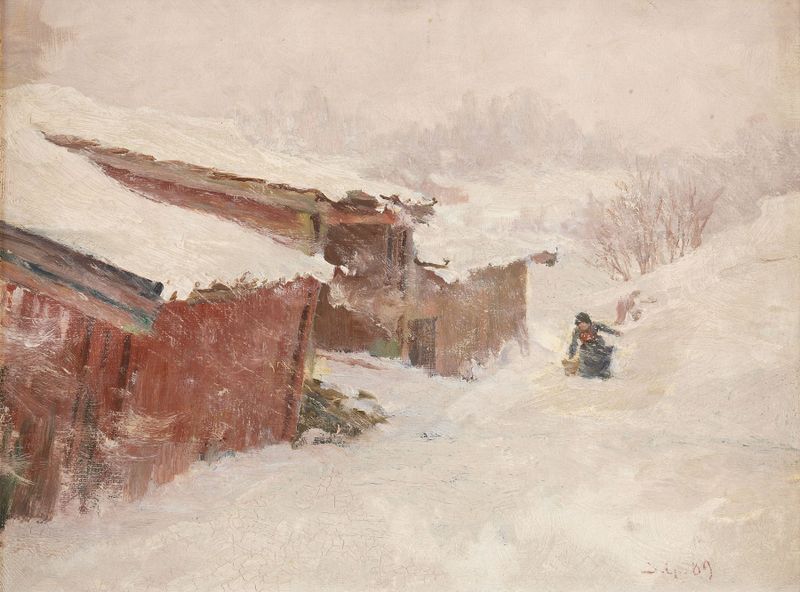
In a world brimming with fragility, nature holds secrets that beckon us to pause and reflect. Look to the foreground of the painting, where delicate strokes capture the gentle sway of grass, inviting you to feel the whisper of the breeze. Focus on the quaint farmhouse, its weathered facade bathed in soft, golden light that illuminates the surrounding landscape. The artist's use of muted colors melds harmoniously, suggesting a tranquil moment yet brimming with unspoken stories. Amidst the serene composition lies an unsettling juxtaposition: the sturdy homestead, a symbol of human endeavor, stands resilient against the ethereal backdrop of a fading sunset.
Notice how the vibrant hues of orange and pink contrast with the earth-toned fields, embodying the tension between permanence and transience. Each brushstroke reflects a fleeting beauty, urging us to consider the cycle of life and the fragility of existence. In 1892, the artist painted this piece during a period of introspection and change in Norway. As the country began to embrace modernity, Gløersen found solace in the rural landscapes that connected him to his heritage.
This artwork reflects not only his personal journey but also the broader movement in art towards capturing the essence of everyday life, revealing both the beauty and vulnerability inherent in the world around us.