Winter — History & Facts
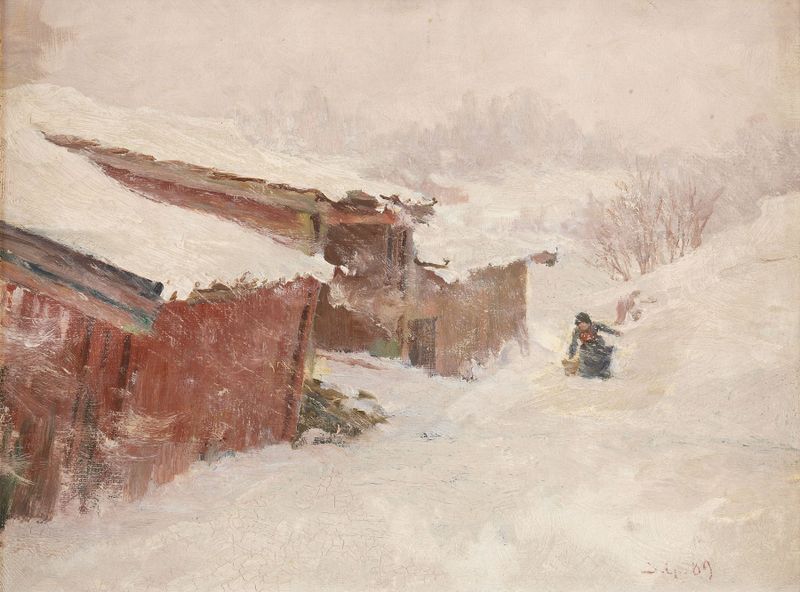
What secret hides in the quiet of the canvas? In a world where transformation takes center stage, the stillness of winter invites contemplation and introspection. First, look to the sweeping expanse of white that dominates the scene, a pristine blanket of snow that envelops the landscape. The muted blues and grays of the sky cast an ethereal glow, guiding your gaze to the delicate interplay between light and shadow. Notice how the faint outlines of bare trees emerge from the horizon, their skeletal forms stark against the frost.
Each brushstroke conveys a sense of solitude, while the soft texture of the snow suggests a transformation not just of the season but of the world itself. Delving deeper, one can sense the emotional weight beneath the tranquil exterior. The contrast between the vibrant, budding life that waits beneath the snow and the heavy, cold stillness above speaks to a cyclical nature of existence. Each tree, each snowdrift holds stories of resilience, hinting at the inevitable return of spring.
The silence is not empty but rich with potential, as if the canvas breathes in anticipation of what is to come. Created in 1894, during Gløersen’s time in Norway, Winter encapsulates his fascination with the changing seasons and their reflection on human experience. This period was marked by a rise in naturalism and a devotion to capturing the essence of landscapes. Gløersen, influenced by the beauty of his surroundings, rendered a scene that transcends mere representation, inviting viewers to explore the depths of transformation inherent in nature and, by extension, life itself.