A Field of Waving Rye — History & Facts
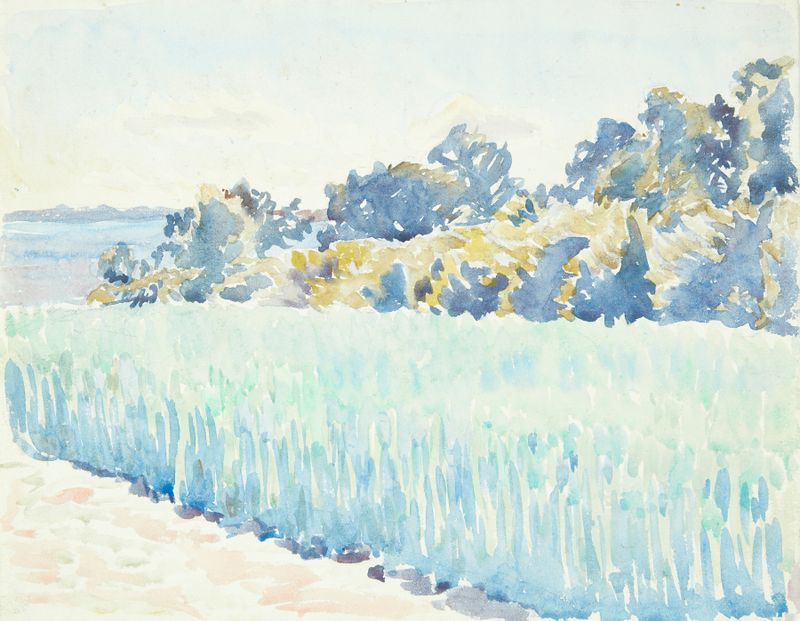
Is this a mirror — or a memory? In A Field of Waving Rye, the artist captures the ethereal dance between reality and dreams, drawing us into a world where the ordinary transforms into the extraordinary. Look to the foreground, where the golden waves of rye sway gently in a playful breeze. Notice how the varying shades of gold and amber interplay with the soft greens of the surrounding landscape. The light, diffused and warm, bathes the scene, creating an inviting atmosphere that beckons the viewer to step into this tranquil moment.
The brushwork is fluid yet deliberate, lending a sense of movement to the grass while maintaining a serene stillness throughout the composition. Beneath the surface, the painting reveals emotional tensions inherent in nature's rhythm. The undulating rye can symbolize both freedom and nostalgia, inviting contemplation of life's transitory beauty. Here, the viewer may find a reflection of longing—a connection to a past moment, forever captured but never fully grasped.
The interplay of light and shadow further accentuates this dichotomy, suggesting a fleeting glimpse into a dreamlike state where memories linger. In 1894, Peter Hansen painted this work during a period of artistic exploration in Denmark. Emerging from the influence of the Skagen painters, he sought to capture the essence of rural life and the beauty of nature. At this time, the art world was grappling with the transition toward modernism, yet Hansen remained committed to the impressionist sensibilities that evoke emotion and nostalgia in A Field of Waving Rye.