Bjergskråning med oliventræer og en villa — History & Facts
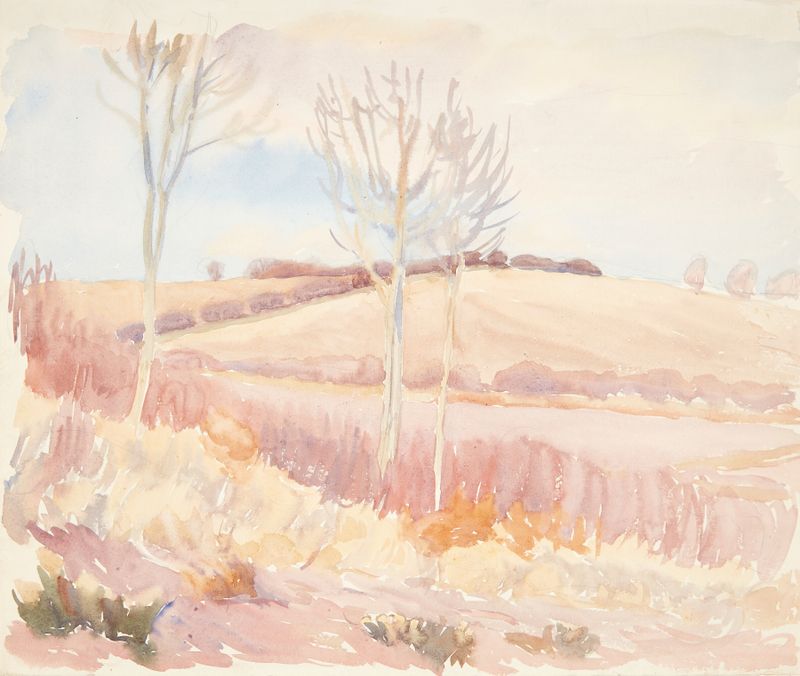
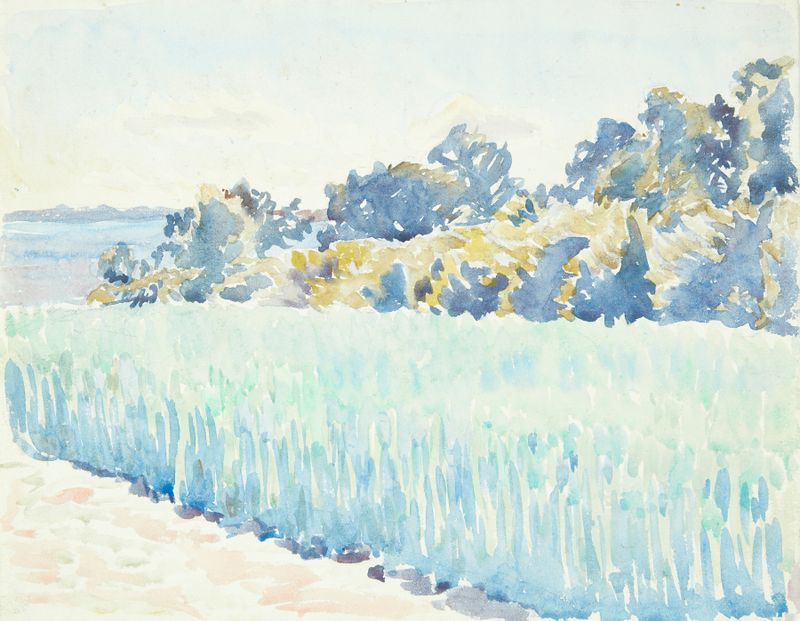
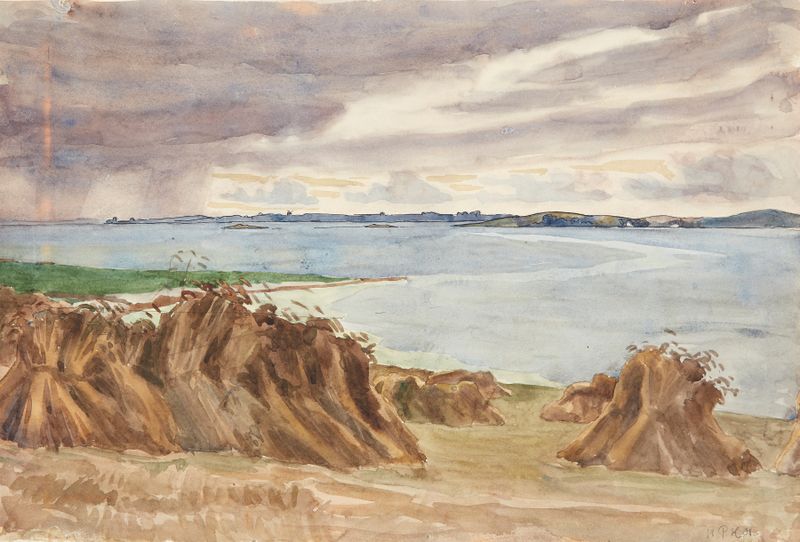
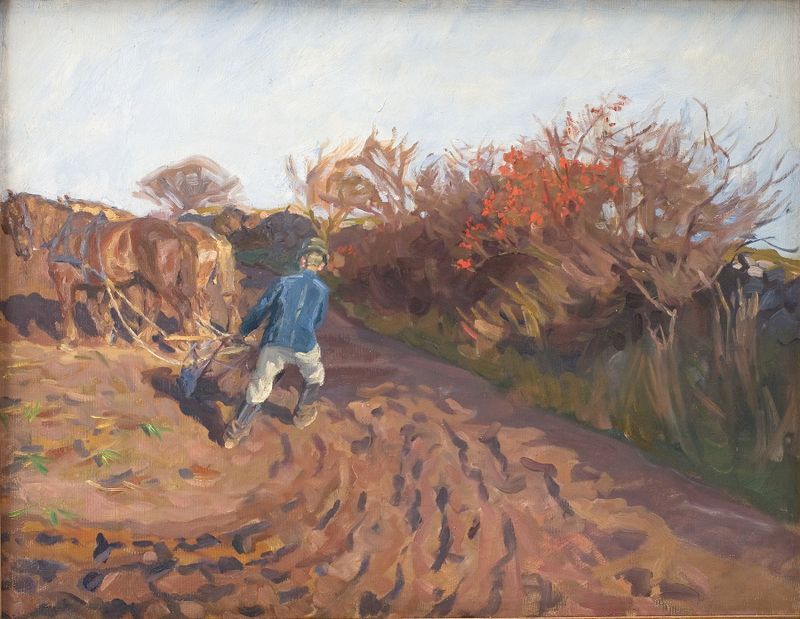
Could a single brushstroke hold eternity? In the world of art, where fleeting moments are captured, every stroke carries the weight of legacy, whispering stories long forgotten. Look to the left at the cascading hills adorned with olive trees, their gnarled trunks echoing the resilience of time. The artist’s palette is a harmonious blend of greens and earthy tones, bathing the landscape in a warm, golden light that suggests late afternoon. Notice how the villa, nestled amidst the foliage, stands as a testament to human presence, its soft lines contrasting against the rugged terrain.
The composition draws the eye in a gentle curve from the foreground to the horizon, inviting contemplation and connection. The juxtaposition of nature and architecture speaks volumes about coexistence. The olive trees symbolize peace and longevity, while the villa represents human aspiration and permanence. Wisps of clouds float above, hinting at the transitory passage of time versus the steadfastness of the land.
Each element in the painting offers a tension between the ephemeral and the enduring, provoking reflections on what we leave behind. Created in 1920, this work emerged during a transformative period in Peter Hansen's life, as he explored the relationships between humanity and nature in a rapidly modernizing world. Living in Denmark, he embraced a style that merged Impressionist influences with a personal touch, capturing the fluctuating dynamics of his environment. As artists sought new expressions following the devastation of World War I, this piece embodies a yearning for tranquility and permanence amidst change.